

.webp)

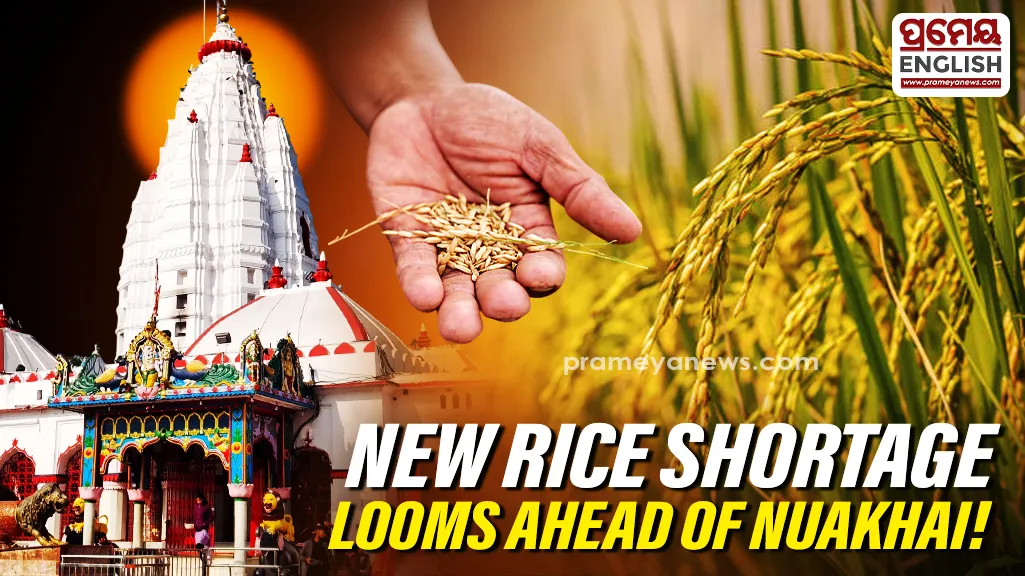
Bargarh, Sept 10: Preparations for the grand agrarian festival Nuakhai have gained momentum across Western Odisha, with auspicious timings already announced at the shrines of Maa Samaleswari and other presiding deities. However, with just five days left for the festival, a major concern has emerged over the availability of the most important ingredient — the newly harvested rice.
Farmers and residents, particularly in Bargarh, are worried as paddy crops in the region are yet to mature. Farmers estimate that the crop will require at least another 15 days before it becomes ready for harvest.
📲Follow our WhatsApp Channel for the latest news, breaking updates, and important headlines. Stay connected with us for more updates!
Bargarh, often referred to as the rice bowl of Odisha, witnessed a significantly delayed kharif cultivation this year. Even though September has already entered its first week, paddy cultivation in many areas is yet to reach the later stages.
Neither the long-duration nor the short-duration varieties have matured for harvesting yet. Paddy planted in low-lying bahal lands is still at the tillering stage, while crops in upland mal areas are at the grain formation stage. Farmers say it may take at least another 15 days for the panicles to emerge in many fields.
The short-duration varieties are expected to mature only after October 15, while harvesting of the longer-duration varieties may extend beyond October.
The situation is reportedly similar across several districts of Western Odisha, raising questions over how families will procure the traditional new rice for Nuakhai this year.
Why Is Paddy Harvest Delayed?
Farmers attribute the delay to unusual weather conditions and other difficulties faced during cultivation. They said June witnessed inadequate rainfall, while excessive rainfall in July triggered floods in several areas.
Although farmers initially hoped to recover and complete cultivation on time, delays associated with rules and processes such as AgriStack reportedly affected agricultural activities and contributed to the late start of cultivation.
Traditionally, farmers cultivate short-duration paddy varieties that can be harvested within 55 to 60 days specifically for Nuakhai. In Bargarh, Saria and Sathia are commonly used, while Guda and Karanga are traditionally relied upon in Deogarh. In Kalahandi, varieties such as Setka and Pahadi Jeera are associated with the festival.
This year, however, the delayed kharif season has made procurement of new rice increasingly difficult.
Also Read: Odisha’s UAE Push: IHC, Adani sign pact to explore 14 projects worth ₹2.1 Lakh crore
Power Supply Issues Add to Farmers' Woes
Farmers in irrigated areas had traditionally looked to early-harvest paddy as a possible solution during delayed cultivation. But frequent power cuts, low-voltage problems and disconnection of electricity connections over pending bills have reportedly added to their difficulties.
With locally grown new rice unlikely to be available before Nuakhai, discussions have already begun over whether people in Western Odisha may have to depend on paddy from neighbouring Chhattisgarh to maintain the festival tradition.
Different Rice Varieties for Nuakhai
Nuakhai traditions vary across Western Odisha depending on the local rice variety.
People in Bargarh, Sambalpur, Balangir and Nuapada traditionally observe Nuakhai with Saria rice. In Kalahandi, Setka rice is traditionally used.
Similarly, people in Boudh, Redhakhol and Subarnapur depend on varieties such as Sathia, Guda and Karanga for the festival.
With signs of mature paddy currently absent across these regions, the possibility of new rice becoming scarce and expensive ahead of Nuakhai has become a growing concern among farmers and residents.
For Western Odisha, where Nuakhai is deeply linked with the first consumption of the season's new harvest, the coming days will be crucial.
Also Read: New Delhi Prepares for Crucial Modi Xi Bilateral Meeting as Chinese Leader Lands for BRICS Summit
.webp)