
.webp)

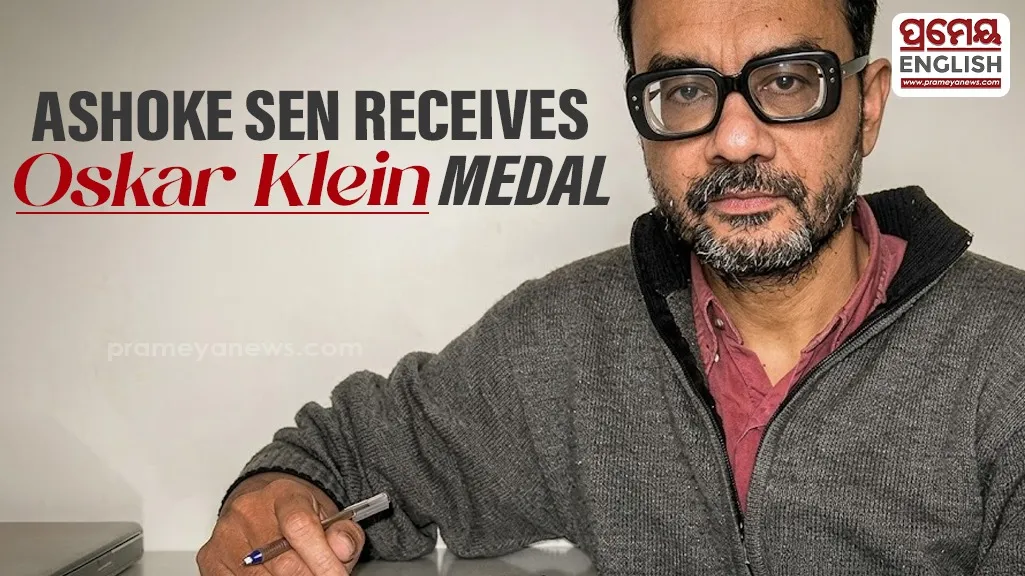
Indian physicist awarded the prestigious 2026 Oskar Klein Medal
Indian theoretical physicist Ashoke Sen has won the 2026 Oskar Klein Medal, becoming the first scientist from the country to earn this prestigious global honour. Established in 1988, Stockholm University and the Nobel Committee for Physics of the Royal Swedish Academy of Sciences present this award annually. Sen, currently serving as the Infosys-Madhava Chair Professor at the International Centre for Theoretical Sciences in Bengaluru, delivered the Oskar Klein Memorial Lecture on October 22. He spoke on "gravity from strings and strings from gravity" at the AlbaNova Centre in Stockholm. This distinction places him alongside legendary past recipients, including Stephen Hawking, Peter Higgs, and Steven Weinberg.
Groundbreaking ‘String Theory Research’
Organisers recognised his pioneering work in string theory, specifically his efforts to decode black hole entropy and string field theory. These ideas continue to shape modern theoretical physics by attempting to explain the fundamental nature of the universe. He holds the Padma Shri and Padma Bhushan for his extensive academic contributions. His educational background includes foundational studies at Presidency College and Calcutta University in Kolkata.
Also read: Sudarsan Pattnaik creates 8-foot sand sculpture in Puri to welcome PM Modi
Beyond his scientific research, Sen maintains a strong public voice on social and humanitarian matters. He joined over 4,000 global scientists in 2025 in writing to the United Nations and the Israeli Prime Minister regarding the humanitarian crisis in Gaza, calling the food shortages and denial of basic healthcare "unbearable." Earlier this year, he signed a solidarity statement supporting academics in Palestine, Lebanon, and Iran following attacks on educational institutions. Previously, in 2015, he joined top Indian scientists in a joint statement raising concerns about the domestic political climate. Recognising his latest academic triumph, the Office of the Principal Scientific Adviser to the government extended congratulations through a social media post.
.webp)