
.webp)
For four days every June, Odisha slows down to the rhythm of swings, folk songs, new clothes and the aroma of pitha. But beneath the colour and celebration, Raja Parba carries a deeper meaning- it is a festival that honours womanhood, fertility and the creative power of nature.
Raja, derived from the Sanskrit word Rajaswala meaning menstruation, is rooted in the belief that Mother Earth undergoes her annual menstrual cycle with the arrival of the monsoon. During this period, the earth is considered fertile and sacred, and agricultural activities such as ploughing or digging are traditionally avoided. Just as a woman’s body is respected during menstruation, the earth too is given rest.
A festival that celebrates femininity
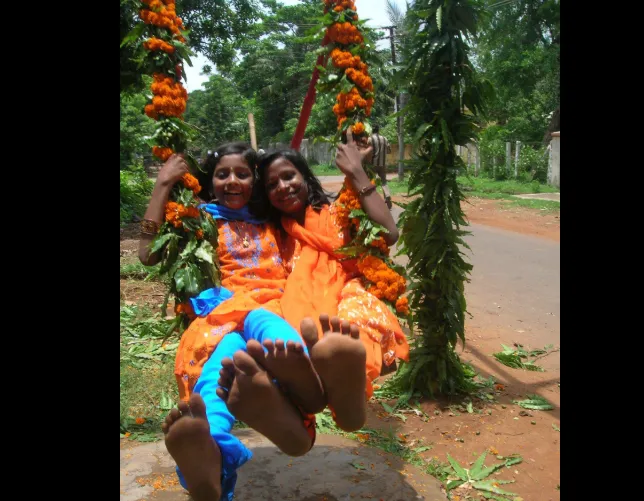
Unlike many festivals centred on gods or rituals alone, Raja places women and girls at the heart of the celebration. Young girls dress in new sarees or dresses, apply alta on their feet, adorn themselves with flowers and jewellery, and spend the days swinging on beautifully decorated doli (swings). Folk songs known as Raja Geeta fill the air, celebrating youth, love and femininity.
For many women, Raja is also a symbolic break from routine labour. Traditionally, women are encouraged to rest, avoid strenuous household work and enjoy the festivities. In a society where women’s work often goes unacknowledged, Raja becomes a rare cultural moment that publicly recognises their importance and dignity.
The agricultural soul of Raja
Raja arrives with the first rains of the monsoon, marking the beginning of the agricultural season in Odisha. Farmers see the festival as a transition from the harsh summer to a time of renewal and cultivation. The connection between women’s fertility and the fertility of the soil lies at the core of the festival’s philosophy.
By pausing farming activities for three days, communities symbolically allow the earth to rejuvenate before sowing begins. This ancient ecological wisdom reflects a respectful relationship between humans and nature- one that modern environmental thought increasingly values.
More than tradition, a living identity
Today, Raja is celebrated in villages, towns and cities across Odisha, and even by Odia communities abroad. While swings and pitha remain central attractions, the festival’s enduring appeal lies in its message: womanhood is not something to be hidden or stigmatised, but something to be celebrated.
In recent years, conversations around menstrual health and women’s rights have given Raja a renewed relevance. Many educators and activists now use the festival to promote awareness about menstruation, hygiene and gender equality, linking ancient tradition with contemporary social change.
A celebration of life and creation
Raja Parba is more than a seasonal festival. It is a cultural tribute to the cycle of life — to women, to the earth, and to the power of creation that sustains both family and society. As the swings rise and fall and the monsoon clouds gather over Odisha, Raja reminds people of a simple but profound truth: life begins with womanhood, and prosperity begins with fertile earth.
.webp)