


.webp)
Molecular Magic of Poda Pitha
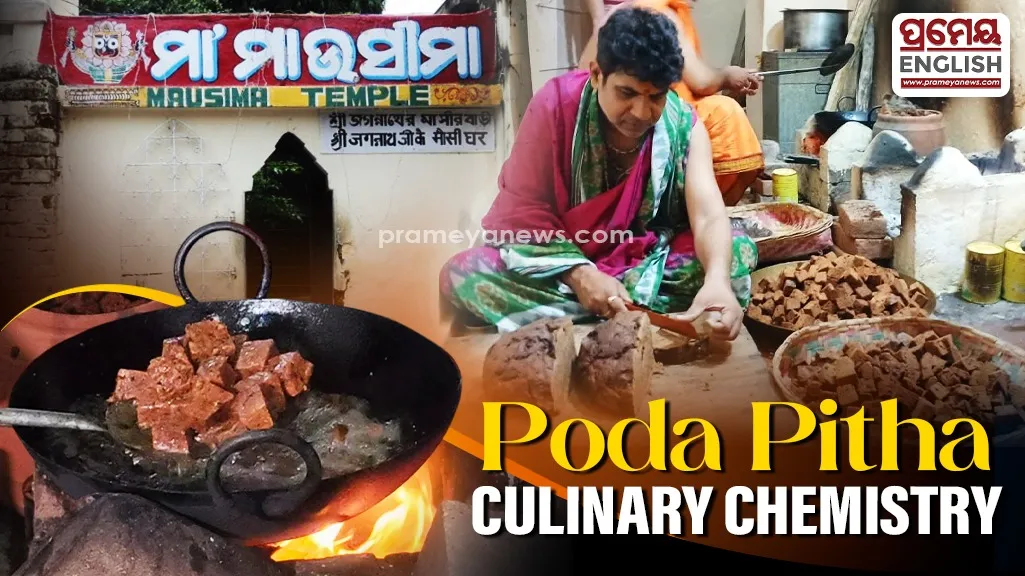
Sacred temple traditions often hide brilliant food science. Temple cooks craft this revered Bahuda Yatra delicacy through a precise sequence of chemical reactions. This famous offering combines diverse structural elements to build an incredible texture. Wheat flour provides necessary complex carbohydrates to build a sturdy framework. Fresh cottage cheese adds rich casein proteins and dairy fats into the dense dough. Sweeteners like jaggery introduce vital reducing sugars that play a massive role during the final cooking stages. Chopped coconut pieces add insoluble fiber and extra plant fats that slowly melt into the surrounding matrix. Essential spices deliver volatile aromatic compounds that give this dish its signature festive scent.
Preparation Chemistry
Mixing these fresh ingredients initiates the first wave of important chemical changes. Temple servitors carefully work pure cow ghee into the wheat flour to coat gluten proteins. This thick lipid coating acts as a mechanical barrier to prevent tough elastic gluten networks from forming. Pure ghee ensures a highly tender and crumbly internal crumb. Kneading in jaggery and fresh cottage cheese creates a dense physical emulsion of water, dairy fats, and dissolved sugars. Essential oils from cloves and cardamom begin to permeate this heavy lipid matrix. This critical resting and mixing phase ensures volatile flavor molecules distribute evenly across the entire batter.
Thermal Transformations
Cooking this heavy sweet involves two highly distinct thermodynamic phases over several hours. Cooks first steam the rich batter inside traditional earthen vessels for nearly eight hours. Slow moist heat initiates gradual starch gelatinization without drying out the delicate edges. Wheat starches absorb available moisture and swell into a soft structural gel network. Simultaneously, casein proteins from the fresh cheese denature and coagulate to form a stable solid matrix. Thick earthen pots ensure gentle and uniform heat transfer to prevent rapid boiling. Cooling this massive cooked block allows critical starch retrogradation. Starches realign into a much firmer crystalline structure so cooks can slice the cake perfectly. Finally, deep frying these cooled slices in hot ghee triggers intense surface reactions. High temperatures rapidly evaporate surface moisture to form a wonderful crisp crust. This intense heat drives the Maillard reaction between denatured dairy proteins and reducing sugars. Amino acids bond with sugars to create hundreds of delicious brown flavor compounds. Traditional jaggery also undergoes rich caramelization to add deep amber colors and nutty aromas. This stark contrast between a steamed interior and a fried exterior makes this dish scientifically brilliant.

.webp)