


.webp)
Unveiling Biryani Chemistry and Molecular Changes in Dum Cooking
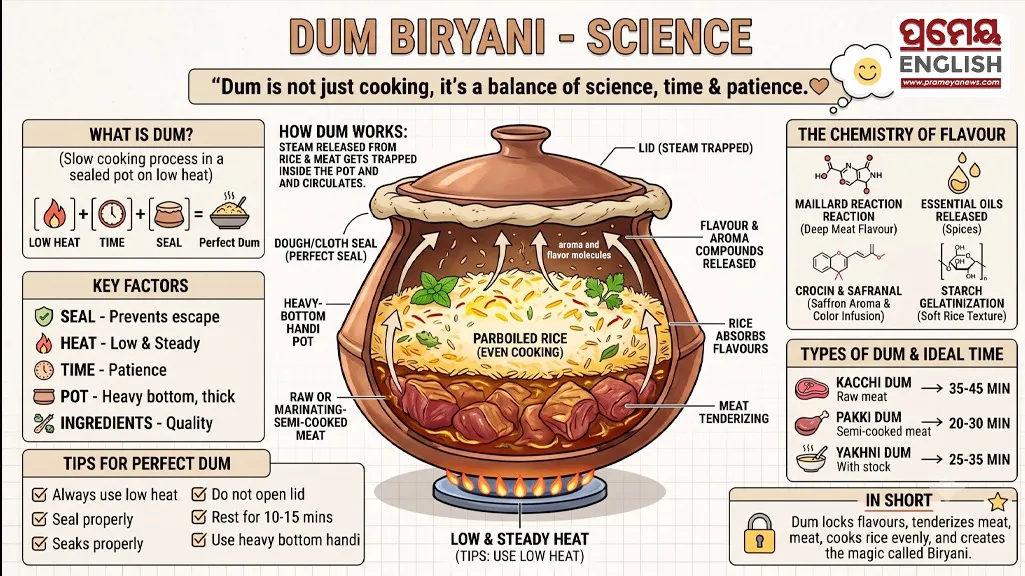
Biryani cooked using traditional dum methods represents a true masterpiece of culinary chemistry. This technique involves a slow cooking process inside a sealed pot placed over low heat. By combining a tight seal, extended cooking time, and low heat, chefs create an ideal cooking environment known as perfect dum. Inside this closed vessel, complex chemical reactions completely transform raw ingredients. The trapped steam circulates constantly, cooking the biryani gently and evenly. Ultimately, this technique requires a careful balance of science, time, and absolute patience.
Breaking Down Molecules during Preparation
Preparing ingredients for this slow cooking process initiates several vital chemical changes. When cooks use the Kacchi dum technique, they combine raw marinated meat directly with the rice. Alternatively, the Pakki dum style involves partially cooking the meat first, whereas Yakhni dum utilizes rich stock to add deeper flavour. During marination, acidic ingredients gently denature complex protein structures within the meat. This acidic breakdown unravels tightly bound muscle fibers, significantly tenderizing tough cuts. Furthermore, mixing herbs and spices starts the early extraction process of flavor compounds. Fat molecules act as a solvent, capturing fat-soluble flavors from whole spices before heat is even applied. These preliminary stages build a foundational chemical profile that will eventually permeate every single bite of the dish.
Heat Dynamics and Thermal Transformations
Once a heavy-bottomed pot sits on a steady, low heat source, intricate thermodynamics take over. Using dough or cloth creates a firm seal that entirely prevents steam from escaping. This trapped vapor continuously circulates within the vessel, ensuring all ingredients cook perfectly evenly. As temperatures gradually rise, the Maillard reaction occurs within the meat, generating incredibly deep and complex flavors. Meanwhile, the circulating steam causes spices to release their essential oils. Saffron strands introduce crocin and safranal, infusing vibrant color and rich aroma into the dissolving vapor. These aromatic compounds dissolve into the steam and get readily absorbed by both the rice and the meat. Simultaneously, the rice starch slowly gelatinizes, yielding a wonderfully soft texture. The sealed pot brilliantly prevents moisture loss, keeping the rice light, fluffy, and highly aromatic. Finally, resting the biryani for ten to fifteen minutes after removing it from the heat stabilizes these magical flavours.
With Inputs from: Subho Biswas, Area Vice President, Swosti Group of Hotels and Resorts Pvt Ltd.
.webp)