
.webp)


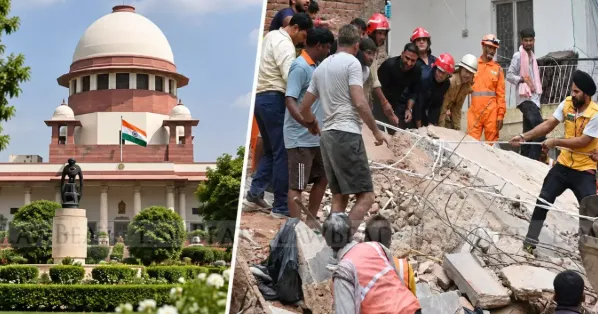
New Delhi, September 8: The Supreme Court on Tuesday indicated that it may examine the issue of the recent collapse of a paying guest (PG) accommodation in South Delhi’s Satya Niketan on a pan-India basis. The incident has claimed the lives of seven students so far and left several others injured.
A bench comprising Justices Ahsanuddin Amanullah and R. Mahadevan has listed the matter for hearing on Thursday.
The development came after senior advocate Ajit Sinha, the court-appointed amicus curiae in an earlier case concerning regulatory compliance with the Supreme Court’s directions on illegal buildings and structures across the country, drew the court’s attention to the September 6 collapse.
In his report submitted to the court, Sinha highlighted that the latest tragedy occurred in an area that had witnessed another building collapse in April 2022, when two people were killed and four others injured.
The amicus said the recurrence of such incidents in the same locality raised serious questions about the effectiveness of existing systems for inspecting buildings, identifying dangerous structures and enforcing building by-laws.
According to the report, construction-related activity was being carried out in or around the basement of the building before the latest collapse. There were also reports of waterlogging in the basement shortly before the structure came down.
In view of the incident, the amicus has sought a time-bound inspection and safety audit of PG accommodations, private hostels and similar student housing facilities located around colleges and universities across Delhi.
The proposed audit would examine several aspects, including sanctioned building plans, actual construction and the number of floors, basement construction and alterations, permissible land use, structural and fire safety measures, entry and exit arrangements, and whether buildings are in dangerous or ruinous condition.
The matter is expected to come up before the Supreme Court on Thursday, when the bench may consider the broader implications of the Satya Niketan tragedy and the need for stronger enforcement mechanisms.
.webp)