ଓଡ଼ିଆ | ENGLISH
ଓଡ଼ିଆ | ENGLISH

shooting-incident-outside-salman-khans-residence-mumbai-police-nab-2-shooters-

Published By : Chinmaya Dehury
shooting-incident-outside-salman-khans-residence-mumbai-police-nab-2-shooters-

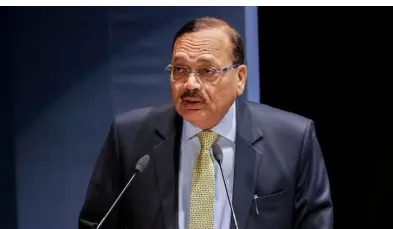
Bhubaneswar, Feb 17: Governor Hari Babu Kambhampati on Tuesday said the Odisha government is working toward building a “Samruddha, Sashakt and Samavesi Odisha” where economic growth is guided by compassion and development ensures dignity for all.

Addressing the Budget Session of the Odisha Assembly, the Governor highlighted the state’s roadmap for clean energy transition, industrial expansion, social welfare and infrastructure growth.

He said Odisha aims to install 10 GW of renewable energy capacity by 2030 through solar, wind and advanced energy storage systems as part of its commitment to achieve Net Zero.

The Governor noted that Odisha has emerged as a power-surplus state, providing 24×7 reliable electricity and successfully meeting a peak demand of 6,242 MW in 2025.

On the industrial front, Odisha continues to maintain its leadership in India’s steel sector. The state has 55 operational steel plants with a combined production capacity of 45.62 million tonnes, contributing 23 per cent of the country’s total steel output. The government is preparing to scale up production to 100 million tonnes by 2030.

In 2025, as many as 85 industrial projects were inaugurated or grounded, creating 1.65 lakh jobs. Additionally, 343 large projects approved during the year are expected to generate employment potential for another 4.65 lakh people, he said.

The Governor also informed about the launch of the Aspirational Godabarish Adarsha Primary School Scheme, under which ₹12,000 crore will be invested over four years to upgrade 2,200 schools with modern classrooms, digital learning tools and sports infrastructure.

In line with the National Education Policy, the minimum age for admission to Class I has been fixed at 6+ years. More than 45,000 pre-primary “Shishu Batika” classes have been introduced, enrolling nearly 3.2 lakh children aged between 5 and 6 years. The state adopted the National Curriculum Framework with local contextualisation in January 2025, and revised textbooks for Classes I to VIII will be implemented from the 2026–27 academic session.

Highlighting women empowerment initiatives, the Governor said over 16.42 lakh women have become ‘Lakhpati Didis’ since the present government assumed office. Under the Subhadra scheme, more than ₹1,500 crore has been disbursed to over one crore women beneficiaries. The Mamata scheme has transferred ₹3,767 crore directly to 68.42 lakh pregnant and lactating women, and will be integrated with the PM Matru Vandana Yojana from April 1, 2025.

In the education sector, ₹760 crore has been sanctioned for pre-matric scholarships and ₹532 crore for post-matric scholarships for SC, ST, OBC and EBC students in 2025–26.

The Governor said farmers’ incomes have improved through schemes such as Samruddha Krushak Yojana and CM Kisan, with more than ₹8,000 crore spent on income support. Crop production reached a record 150.48 lakh metric tonnes in 2024–25, nearly three times higher than in 2000–01.

Food security coverage has been expanded with the addition of over 6.40 lakh new beneficiaries, while rice continues to be distributed to more than 12.36 lakh families under the Antyodaya Anna Yojana.

On internal security, the Governor said Maoist activity has declined significantly over the past five years. During this period, 48 Maoists were neutralised, 78 arrested and 82 surrendered. The government has also intensified action against illicit liquor and narcotics, leading to thousands of arrests.

He added that governance reforms remain a priority. The Chief Minister’s grievance cell resolved 94 per cent of complaints received between June 2024 and December 2025. Infrastructure development will continue to receive focus, with 648 roads covering 2,711 km planned this year, along with the completion of several mega drinking water projects across the state.