



Mayurbhanj farmer converts local land into thriving solar enterprise
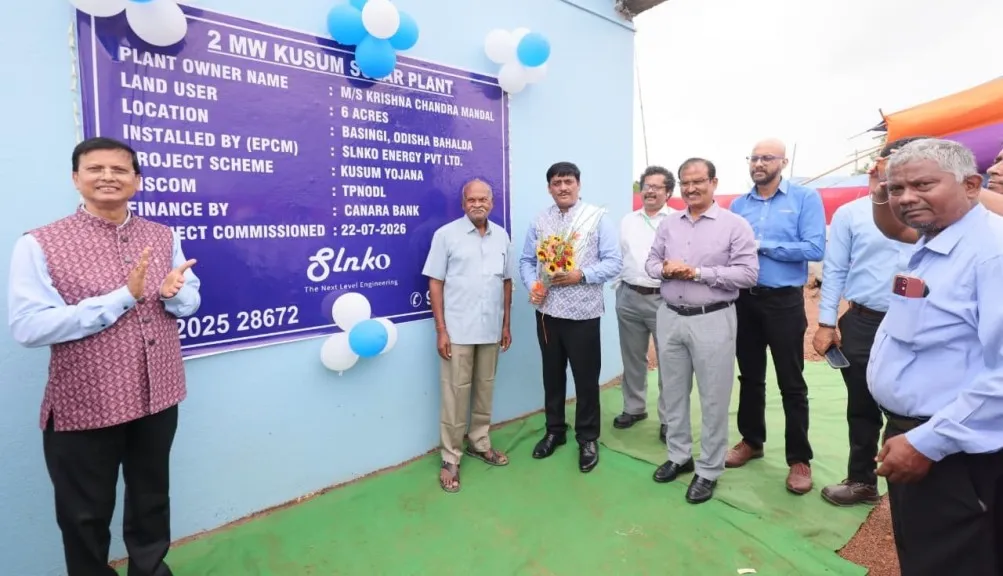
Odisha took an important step toward sustainable electrification today when a brand-new 2 MW solar facility began operating in Mayurbhanj district. Krishna Chandra Mandal, a local farmer from Basingi village, transformed six acres of his own property to establish this green power plant. He utilized the central government PM-KUSUM Scheme to become a rural clean energy entrepreneur. TPNODL Chief Executive Officer Dushyant Kumar Tyagi officially opened the project at the Bahalda Section primary substation.
Clean Energy Reaches Rural Networks
M/s Slnko Pvt. Ltd built the facility following a Build-Own-Operate model. Furthermore, Mandal secured a long-term commercial agreement with GRIDCO and TPNODL. This arrangement guarantees a steady, reliable income stream for his family over several decades while simultaneously boosting local infrastructure. Generating approximately 8,000 units of electricity daily under ideal conditions, the station feeds power directly into the local grid via a dedicated line. Supplying power at the distribution edge drastically cuts transmission losses and strengthens voltage stability for roughly 5,000 nearby consumers.
Powering Regional Growth
Historically, remote northern Odisha districts faced significant voltage fluctuations due to their geographical distance from major centralized generating stations. Adding localized renewable capacity directly solves these longstanding transmission challenges. Mandal expressed deep gratitude for the opportunity to secure his family's financial future while serving his immediate community with reliable electricity.
Tyagi emphasized during the launch event that decentralized green energy builds resilient rural grids. He noted that connecting solar power straight to local lines speeds up clean technology adoption and improves overall system performance. The broader PM-KUSUM initiative encourages rural landowners to convert unused or barren agricultural areas into highly productive power sites. By establishing grid-connected stations up to 2 MW, farmers gain reliable revenue. Ultimately, this decentralized approach ensures better daytime power availability for both domestic households and agricultural workers across remote regions.