

.webp)

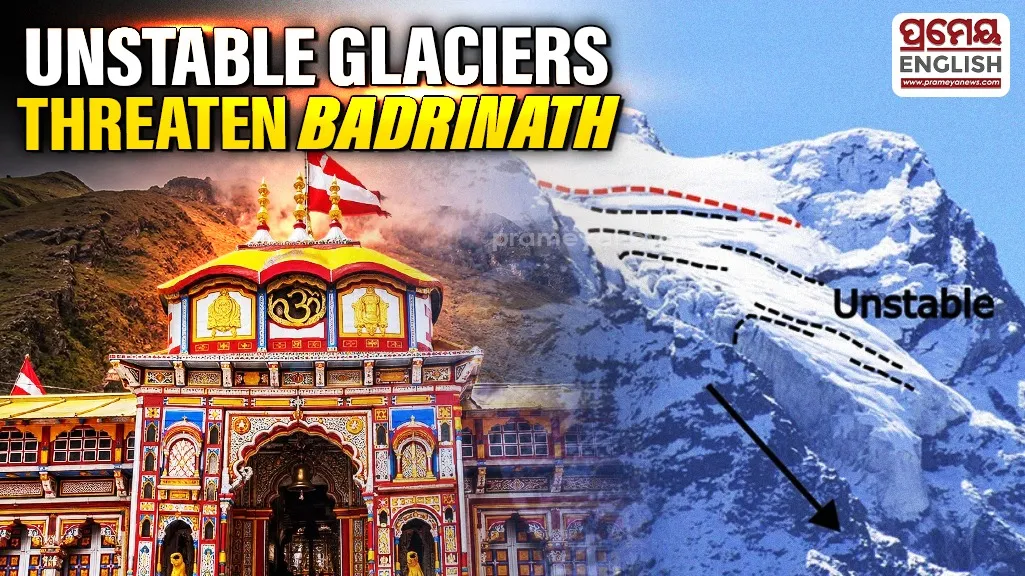
Glacier collapses threaten Badrinath infrastructure with catastrophic ice avalanches
Glacial instability above Badrinath poses a critical danger to the Himalayan pilgrimage site. Joint research funded by the Defence Research and Development Organisation evaluates the destructive capacity of three hanging glaciers suspended directly over the town. Published recently in the Landslides journal, the findings indicate that an ice avalanche from these detached ice bodies could devastate local infrastructure. Scientists calculate that a worst-case collapse might destroy nearly 400 structures, over two and a half kilometres of roadways, dual bridges, a helipad, and a dedicated parking zone.Himalayan communities constantly face escalating climate threats, making proactive hazard mapping essential for securing rapidly developing high-altitude settlements. Experts from the Indian Institute of Science, the University of Cambridge, and DRDO utilized high-resolution satellite imagery to assess these steep ice formations situated at elevations ranging from 4,700 to 5,465 metres above sea level.
Also read: Cyclone Arnab causes extensive damage in Ganjam and Gajapati, Says CM Mohan Charan Majhi
Evaluating destructive potential
Simulations pinpoint the second glacier site as uniquely hazardous. This frozen body contains an estimated 5.32 million cubic metres of ice perched on a steep 34.57-degree gradient. If structural failure occurs, displaced material could rush downward at 78.5 metres per second, generating a flow height of 73.5 metres. While predictive models suggest the main Badrinath Dham shrine escapes a direct hit, rock and debris buildup could still cause indirect damage. During the 2025 Char Dham yatra, roughly 1.7 million individuals visited this valley, emphasizing the immense scale of potential human risk.Rising global temperatures steadily reduce basal resistance, directly increasing the likelihood of sudden ice detachment. Researchers strongly recommend defining avalanche impact zones and restricting new commercial construction within vulnerable corridors. Senior glaciologist Anil V Kulkarni noted this specific modelling methodology will help standardize vulnerability assessments for other mountain towns. Previous surveys successfully identified 219 similar hanging glaciers, confirming that thirty percent of these unstable masses reside strictly within the Alaknanda basin.
.webp)