

More than the grand spectacle of towering chariots and millions of devotees, the Rath Yatra of Lord Jagannath is a spiritual journey that culminates in one of Hinduism's most profound rituals—Niladri Bije, the sacred homecoming of the Lord to his eternal abode.
Every year, the world watches as Lord Jagannath, accompanied by his elder brother Lord Balabhadra and sister Devi Subhadra, leaves the sanctum of the Shree Jagannath Temple to visit the Gundicha Temple. The nine-day sojourn symbolizes the Lord stepping out of His temple to bless humanity without distinction of caste, creed, or status. Yet, the true conclusion of this divine journey is not the return of the chariots during Bahuda Yatra, but Niladri Bije—the moment when the deities re-enter the temple and once again ascend the sacred Ratna Singhasana.
The term Niladri literally means the Blue Mountain, the sacred hill on which the 12th-century Shree Jagannath Temple stands, while Bije signifies "entering" or "taking one's seat." Together, they represent the ceremonial return of Lord Jagannath to His divine throne. According to the Skanda Purana, Rath Yatra, also known as Shree Gundicha Yatra, is the most celebrated among the twelve annual festivals of Lord Jagannath. Ancient scriptures further proclaim that devotees who behold the deities at the Gundicha Temple during their stay are blessed with immense spiritual merit.
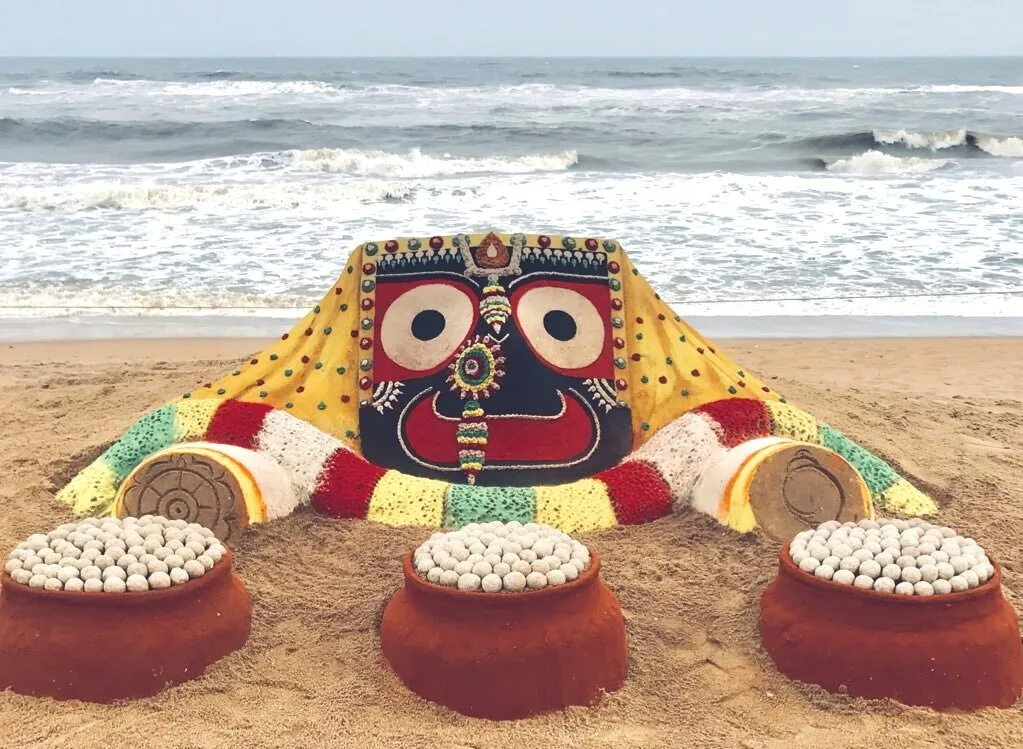
What makes Niladri Bije unique is that it transcends ritual and enters the realm of divine emotion. At the heart of the ceremony lies a timeless story of love, separation, and reconciliation. Temple tradition narrates that when Lord Jagannath departed for Gundicha Temple with His siblings, He left behind Goddess Lakshmi in the main temple. Feeling neglected, the Goddess closed the temple doors upon His return, refusing Him entry. The Lord, in a gesture of affection and humility, presented her with a Rasagola. The sweet offering melted her anger, and the temple doors were opened once again. This beautiful episode has evolved into the cherished tradition of Rasagola Dibasa, celebrating not merely a sweet delicacy but the values of forgiveness, understanding, and harmony in relationships.
Niladri Bije is therefore much more than the final ritual of Rath Yatra. It is a celebration of the human emotions reflected in divine form. Lord Jagannath, despite being the Supreme Being, accepts the feelings of His consort and wins her affection through love rather than authority. The episode reminds devotees that compassion, reconciliation, and mutual respect form the foundation of every enduring relationship.
The rituals performed on Niladri Bije are steeped in centuries-old traditions. The deities are ceremonially brought down from their chariots in the majestic Pahandi procession before being escorted into the sanctum amidst Vedic chants, conch shells, cymbals, and devotional music. Temple servitors then perform elaborate rites as Lord Jagannath, Lord Balabhadra, and Devi Subhadra are reinstated on the magnificent Ratna Singhasana. The offering of Rasagola, special bhoga, aarti, and devotional hymns completes the sacred proceedings.
For devotees, Niladri Bije is a reminder that every journey, however extraordinary, ultimately leads home. It marks the restoration of divine order after days of joyous celebration, reaffirming the eternal bond between the Lord and His devotees. While the towering chariots may stop rolling and the festive chants gradually fade, the spiritual essence of Rath Yatra lives on through Niladri Bije—a timeless celebration of homecoming, devotion, forgiveness, and divine love.
As the doors of the Srimandir close after the completion of Niladri Bije, the annual Rath Yatra comes to a graceful end. Yet, in the hearts of millions, the Lord's homecoming is not an ending but a promise—that He will once again step out of His sanctum next year to bless the world, reminding humanity that the path to the Divine is always open to those who seek it with faith.