

.webp)

Israel Vetoes Washington Peace Strategy
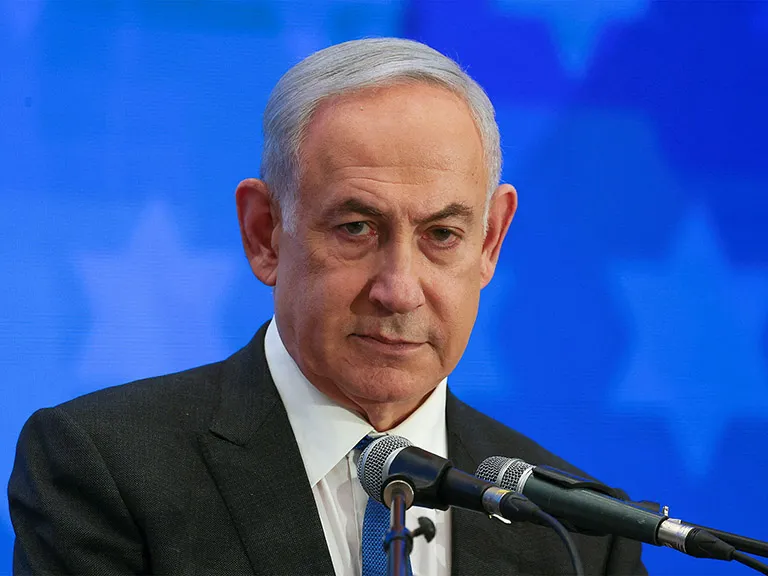
Israeli Prime Minister Benjamin Netanyahu officially dismissed US President Donald Trump's 15-point peace roadmap for Gaza during a Sunday briefing. He clarified that Israeli troops will remain stationed across the enclave until Hamas undergoes genuine disarmament. Speaking to his cabinet, Netanyahu confirmed his administration refuses to accept the late-July document, a proposal that Hamas had already endorsed. He explicitly stated that military personnel will stay firmly in place to neutralize potential threats against Israeli citizens until full demilitarization becomes a reality.
Washington has historically struggled to balance Israeli security demands with Palestinian territorial aspirations during decades of complex Middle Eastern diplomacy, and this latest rejection highlights those ongoing friction points.
Political Pressures Dictate Military Decisions
Netanyahu currently faces intense demands from right-wing coalition allies who are aggressively pushing for an official cabinet vote to discard this American roadmap entirely. With recent opinion polls showing him locked in a highly competitive electoral race, the Prime Minister acknowledged that diplomatic discussions with Washington remain active. He pointed out that while American officials present certain acceptable concepts, other ideas are simply unworkable for his government. He confidently added that his leadership team knows exactly how to stand firm on these critical national security matters.
Inside Trump’s Phased Transition Blueprint
This 15-point framework outlines a multi-stage strategy designed to end the prolonged conflict and smoothly transfer governance of the strip to a Palestinian technocratic group, officially named the National Committee for the Administration of Gaza. According to this specific timeline, all military sites, underground tunnels, arms depots, and heavy weaponry would eventually fall under committee oversight. To ensure peace, an international stabilization force would deploy to maintain a clear physical separation between Palestinian-managed neighborhoods and Israeli soldiers. Following these strict security measures, Israeli units would slowly pull back in organized phases. This gradual exit aims to facilitate large-scale reconstruction efforts and foster a long-term political process geared toward Palestinian self-determination.
Global Backlash Follows Continued Strikes
A major deadlock remains firmly intact today. Even though Trump previously claimed both factions accepted his framework and noted that Hamas agreed to surrender its weapons, Israel insists complete demilitarization must happen before any troop withdrawal. Consequently, Israeli forces continue executing military strikes, despite the initial ceasefire established last October. This widening diplomatic gap has provoked a rare, unified backlash from eight prominent Muslim-majority nations. Representatives from Egypt, Turkiye, Saudi Arabia, Pakistan, Indonesia, Jordan, Qatar, and the United Arab Emirates recently published a joint declaration strongly condemning the relentless Israeli operations. These influential foreign ministers warned that continuous military action severely threatens international peace efforts, risks ruining the entire political process, and deepens an already tragic humanitarian crisis across Gaza.
With Inputs from Agency Threads and Image Courtesy: ANI
.webp)