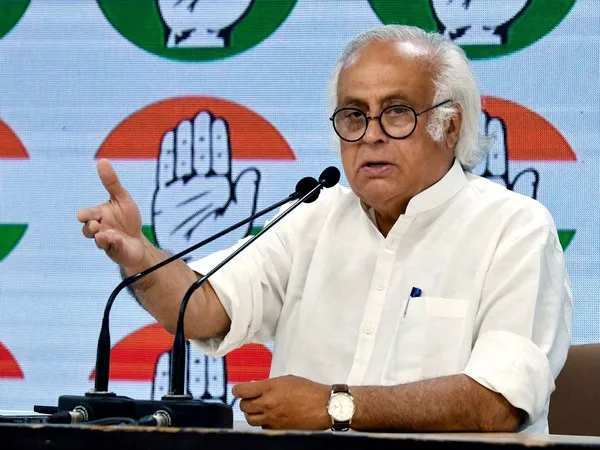
New Delhi, August 7: The Congress on Friday issued a formal three-line whip to all its Lok Sabha members, asking them to ensure strict attendance between August 10, 11 and 12.
The directive comes ahead of crucial and potentially contentious legislative business, including the expected discussion on the Foreign Contribution (Regulation) Amendment, or FCRA, Bill.
The whip was issued by Congress Parliamentary Party Chief Whip in Lok Sabha Kodikunnil Suresh.
"Very important issues will be taken up for discussion in the Lok Sabha on Monday, Tuesday, & Wednesday i.e. 10th, 11th & 12th August, 2026," the whip said.
"All Members of Congress Party in the Lok Sabha are requested to kindly remain present in the House from 11:00 A.M. onwards till the adjournment of the House... and support the Party stand," it added.
It further said, "This may be treated as most important."
The Union Government is likely to take up the Foreign Contribution (Regulation) Amendment Bill, 2026, for discussion in Parliament on August 12, even as Opposition protests continue to disrupt proceedings during the Monsoon Session.
The development comes amid objections raised by Christian groups and minority organisations against the proposed legislation, with a delegation meeting Union Home Minister Amit Shah on Thursday to submit their concerns and seek changes in the Bill.
Mizoram Chief Minister Lalduhoma also met Shah to formally present regional concerns and recommendations regarding the legislation. He was accompanied by a delegation comprising Reverend John Raldosanga, Chairman of the Mizoram Kohhran Hruaitu Committee (MKHC), and Reverend Lalhmangaiha, General Secretary of the Council of Churches in Mizoram (CCM).
According to sources, the Christian representatives demanded that the Bill either be withdrawn or referred to a Joint Parliamentary Committee (JPC) for further scrutiny.
Meanwhile, a high-level delegation representing Christian denominations, minority forums, and charitable institutions across India met with Union Minister of Home Affairs Amit Shah in Parliament on Thursday to formally register their staunch opposition to the Foreign Contribution (Regulation) Amendment Bill, 2026.
The meeting concluded following the submission of a detailed representation and clause-wise analysis spearheaded by the Joint Action Forum on Minorities, led by Senior Advocate and DMK MP P Wilson.
The comprehensive representation presented to the Home Minister highlighted that while the delegation accepted the legitimate regulation of foreign funds as a state function, the 2026 Amendment Bill--introduced in the Lok Sabha on March 25, 2026--shifts from standard regulation into a confiscatory regime that threatens the very survival of charitable, educational, and medical institutions.
The delegation formally pressed for three primary remedial actions: Complete withdrawal of the FCRA Amendment Bill, 2026, or its referral alongside a comprehensive review of the Principal FCRA Act of 2010 to a Joint Parliamentary Committee (JPC), complete repeal of Section 15 of the Principal FCRA Act, 2010, to eliminate the principle of asset vesting from the statutory framework and ensuring that administrative or technical delays in certificate renewals do not trigger automatic cessation, provisional vesting, and the permanent absorption of community and religious assets into the Consolidated Fund of India.
The memorandum detailed how the proposed legislation impacts religious minorities and civil society. The delegation pointed out that under new provisions like Section 14B and Chapter IIIA, bureaucratic delays on the FCRA Online Portal or minor technical non-compliances could result in automatic certificate cessation, instantly triggering the provisional and permanent vesting of assets in a state-notified "Designated Authority".
Institutions built largely through domestic contributions, local community donations, and CSR funds face whole-asset confiscation even if only a fraction of their funding originated from foreign grants.The memorandum argued that the Bill infringes upon fundamental rights guaranteed under Articles 14, 19, 21, 25, 26, 29, 30, and 300A of the Constitution, particularly affecting minority-run educational institutions, hospitals, orphanages, and places of worship.
The Foreign Contribution (Regulation) Amendment Bill, 2026 was reintroduced in the Lok Sabha during the Monsoon Session. The Bill seeks to amend the Foreign Contribution (Regulation) Act, 2010, with the stated objective of enhancing transparency and accountability in the regulation of foreign contributions.
The proposed legislation provides that an organisation's FCRA registration will cease upon expiry, non-renewal or refusal of renewal by the government. It also provides for the creation of a designated authority to oversee the vesting, supervision, management and disposal of foreign contributions and related assets.