


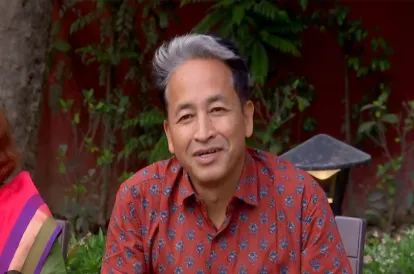
New Delhi, March 17: Ladakh-based climate activist Sonam Wangchuk described his nearly six-month detention in Jodhpur Central Jail as a "huge horror story" but expressed hope for ongoing dialogue with the government. Released after his detention under the National Security Act (NSA) was revoked, Wangchuk recounted the difficulties his wife, Gitanjali J Angmo, faced in seeking legal recourse.
During a press conference, Wangchuk said, "I was waiting to come out (of the jail) either as we win in the court or after 12 months. I was very well prepared to spend 12 months and come out and share the horror stories of all the wrongs that happened to me and to her (Sonam Wangchuk's wife, Gitanjali J Angmo). Right from how abruptly from my home I was, you know, bundled up and thrown into this jail, without any opportunity even to call my family or my lawyers for days, more than a week. Or of her, who could not even meet journalists to voice her anguish with heavy security positioning around the campus, and how she slipped out into Delhi to knock on the doors of the court, and how for two or three weeks there was a kind of cat and mouse chase on the streets of Delhi with her cars followed by people in cars and motorcycles. It was all a filmy scene."
"It was a huge horror story of how it was made so difficult to send anything to my lawyers. Otherwise, it was great. The jail, the staff, and the people there were very upright and very kind despite keeping to their laws and disciplines and so on. I'm happy that I won't have to go into those things... But now with this hand extended from the government, I'm spared from having to do any of those. I really hope that the dialogue process will go on. And only if they fail and we are compelled to again, appeal in other ways will we need to share those," he said.
Wangchuk welcomed the government's move towards meaningful dialogue, seeing it as a "win-win" for Ladakh, his cause, and the authorities. He emphasized that his struggle was not just for personal justice but also to promote environmental and regional causes. He expressed hope that this dialogue would guide future use of laws like the NSA, ultimately benefiting Ladakh and the wider community.