
.webp)


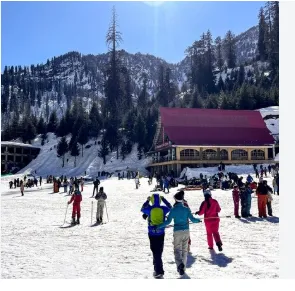
Shimla, October 12: Himachal Pradesh is likely to experience another spell of rain and snowfall from the evening of October 13 to October 15 under the influence of a western disturbance, with thunderstorms and lightning expected in several parts of the state, India Meteorological Department (IMD) Senior Scientist Sandeep Kumar Sharma said on Sunday.
Sharma said a western disturbance had affected the state over the past 24 hours, triggering light to moderate rainfall across Himachal Pradesh and snowfall in the higher reaches and mountain passes of Chamba, Kangra, Lahaul-Spiti and Kullu districts.
Sundernagar recorded the highest rainfall at 40 mm, while moderate precipitation was reported in Kangra, Bilaspur and Una districts.
The weather is expected to remain largely clear across the state on October 12, Sharma said. However, isolated places in Kangra, Mandi and adjoining areas may receive light rain during the late evening or night.
According to the IMD scientist, weather activity is likely to intensify from the late evening of October 13 as another western disturbance approaches the region and remains active until October 15.
“Thunderstorms and lightning, accompanied by light to moderate rainfall, are likely at a few places, particularly in the mid-hill districts,” Sharma said.
On October 15, the plains and adjoining areas of Una, Bilaspur, Hamirpur, Sirmaur and Solan districts may also experience light to moderate rainfall. Snowfall is likely in the higher reaches of Chamba, Kangra, Lahaul-Spiti and Kullu during the period, he added.
Weather activity is expected to weaken considerably on October 16, with light rain likely to remain confined mainly to Kangra, Mandi and adjoining areas. Dry weather is forecast to return across Himachal Pradesh from October 17 onwards.
Temperatures Drop Sharply After Rainfall
The recent spell of rain has brought a significant drop in daytime temperatures across the state, with maximum temperatures at several places recorded 6 to 10 degrees Celsius below normal, Sharma said.
Shimla recorded a maximum temperature of 16.4 degrees Celsius, around six degrees below normal. Kullu, Kangra, Chamba and Palampur reported maximum temperatures ranging between 18 and 19 degrees Celsius.
Chamba witnessed a particularly sharp departure from normal, with the maximum temperature settling at around 18 degrees Celsius, approximately 14 degrees below normal, he said.
With the weather clearing since Sunday morning, daytime temperatures are expected to rise. However, temperatures may fall again by an average of 4 to 6 degrees Celsius across the state between October 13 and 15 as the next western disturbance becomes active.
Western Disturbances Drive Post-Monsoon Rainfall
Explaining the prevailing weather pattern, Sharma said October, November and December constitute the post-monsoon season in Himachal Pradesh, when rainfall is primarily associated with western disturbances.
“When a western disturbance is active or particularly intense, as witnessed over the past 24 hours, widespread cloud cover and rainfall can cause temperatures to fall sharply, making people feel considerably colder,” he said.
Sharma said the state was gradually moving towards winter, but the current period should not be regarded as the peak winter season.
Snowfall in districts such as Shimla, Lahaul-Spiti, Kinnaur, Kullu and parts of Chamba normally begins around the second week of December, he said.
“October, November and December are classified as the post-monsoon season, and it is not yet winter in the strict meteorological sense,” Sharma added.
.webp)