

Bhubaneswar, Sept 14: What if a simple coconut could tell hundreds of stories? From the world’s biggest coconut to one of the smallest varieties, a unique museum near Kujimahal in Chandaka is showcasing the incredible diversity and uses of the humble fruit.
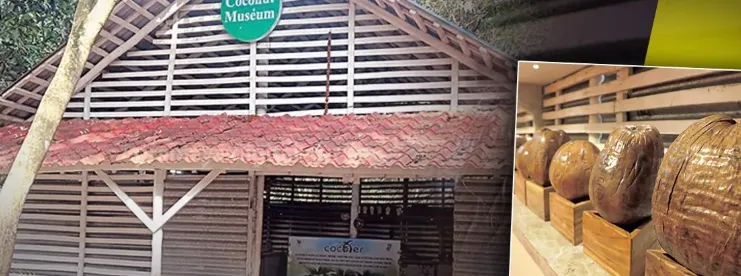
The one-of-a-kind Coconut Museum has been created by Dr Satya Tapas, popularly known as the “Coconut Man”, with the aim of educating people about different varieties of coconuts and their numerous uses.
The museum itself has been designed as a Kerala-style cottage made of bamboo and straw. Inside, visitors can explore a fascinating collection of coconuts, along with handicrafts, food products, oil, ropes and several other items made from different parts of the coconut.
Around 50 Varieties Collected
While coconuts are commonly associated with coconut trees, tender coconut water and food products, Dr Tapas has taken the idea much further.
He has so far collected around 50 varieties of coconuts from different parts of Odisha as well as other parts of India. Around 30 varieties are currently displayed at the museum.
The collection includes several rare varieties such as Andaman Giant, Lakshadweep Micro, Singapore Giant, Andaman East Coast Tall, Andaman Hazari and Andaman Dhriti.
The Andaman Hazari variety is particularly interesting as it is known for producing around 1,000 coconuts.
The museum also features commercial varieties, different hybrids, dwarf varieties and coconut varieties cultivated in various parts of Odisha.
The differences in their size, colour and shape make the collection particularly fascinating for visitors.
More Than Just a Coconut Collection
The museum does not stop at displaying different varieties of coconuts.
Visitors can also see a range of handicrafts, household products, food items, oil, ropes and other useful products made from coconuts.
Dr Tapas has been working with coconuts for the past eight years. He inaugurated the museum on September 2, World Coconut Day, after spending nearly two years developing the facility.
For now, entry to the museum has been kept free for the general public.
A coconut farm named ‘Cocotor’ is also located beside the museum, where coconut saplings are available for sale.
‘The Goal Is to Educate People’
Explaining the idea behind the museum, Dr Tapas said his primary objective was to educate people about coconuts.
According to him, many people are familiar with different varieties of mangoes but know little about the different varieties and names of coconuts or which variety can offer specific benefits and uses.
He also highlighted the growing demand for coconut-based products in international markets.
Through the museum, Dr Tapas hopes to create greater awareness about coconut diversity, encourage its wider use and showcase the economic and cultural potential of one of India’s most familiar fruits.
What appears to be an ordinary coconut, therefore, becomes something entirely different inside this unique museum- a lesson in agriculture, biodiversity, traditional knowledge, food and livelihoods.