
.webp)

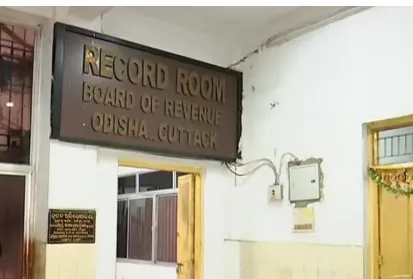
Bhubaneswar, October 8: The Odisha Board of Revenue has rejected a claim seeking recording of government land in favour of a private individual in the Jatani-Janla area of Khordha district and ordered a detailed investigation into the circumstances surrounding the land’s original lease, subsequent transfer and the claims made over it.
The order was passed by Board of Revenue Member Satyabrat Sahu while hearing a revision case relating to government land at Ogalpada Mouza, near Janla under Jatani Tahasil. The disputed property, spread over more than 4.20 acres and situated near the Bhubaneswar-Khurda National Highway-16 and Bata Bhuasuni Temple, is estimated to be worth more than Rs 120 crore.
The land continues to be recorded as government property in the revenue records. However, the proceedings have raised questions over how the land was originally leased, how it was subsequently transferred and on what basis a private individual later sought recognition of ownership.
According to the case records, the matter dates back to 1968, when the government land was reportedly leased in favour of an Odisha Administrative Service (OAS) officer under the provisions of the Odisha Government Land Settlement (OGLS) Act, 1962.
The records subsequently indicated that the land was sold and transferred to another individual. The Board questioned how government land granted on lease could later be sold, particularly when the original lessee was an officer whose official responsibilities reportedly included matters relating to land acquisition.
The Board also examined whether the original allotment was made in accordance with the OGLS Act, 1962 and the OGLS Rules, 1963. Government land is subject to prescribed procedures concerning eligibility, priority and approval by the competent authority and cannot ordinarily be dealt with in the same manner as privately owned property.
Under the provisions governing agricultural settlement, priority is accorded to specified categories, including landless agricultural labourers’ cooperative societies, landless labourers of the village or neighbouring villages, certain categories of ex-servicemen and raiyats holding land below the prescribed ceiling.
Against this backdrop, the Board raised questions about the basis on which the OAS officer was granted the land at Ogalpada, including the category under which the allotment was made, the basis for consideration of the application and whether the officer’s official position had any bearing on the grant.
The original lease file has emerged as a crucial piece of evidence in determining these issues. However, according to a report submitted by the Jatani Tahasildar, the original lease records are presently unavailable at the Tahasil office.
The disappearance or non-availability of the original records has added to the complexity of the case and prompted the Board to seek a detailed investigation into the entire transaction.
The proceedings have also brought to light discrepancies in old revenue records, maps and field inspection reports concerning the extent of the property. Questions have been raised over the area originally leased, the extent subsequently transferred and the reasons for differences between recorded measurements and the corresponding maps.
The Board further examined discrepancies in the description of ownership contained in the subsequent sale deed vis-à-vis the land’s original status as government property. If the property had originated from a government lease, the Board questioned the legal basis for subsequently describing it as privately owned in the sale document.
The Jatani Tahasildar’s report has also reportedly stated that more than 30 acres of government land in the area is under encroachment, adding to concerns over the protection and management of government property in the locality.
After examining the available records and circumstances, the Board of Revenue rejected the request to record the disputed land in favour of the subsequent purchaser.
It further directed that the existing government records should not be altered on the basis of disputed documents or mutations until the matter is examined in accordance with law.
The Board has directed the concerned authorities to trace and collect the original lease file and examine the relevant revenue records, maps, mutation documents, sale deed and field inspection reports. These materials are to be placed before the Revenue and Disaster Management Department for a special investigation.
The proposed inquiry will examine the legal basis of the original lease, the eligibility of the original lessee, the role of officials involved in the allotment process, the circumstances surrounding the non-availability of the original lease records, discrepancies in measurements and maps, the subsequent transfer of the property and whether the government suffered any financial or other loss.
The development assumes significance amid the state government’s efforts to safeguard government land, curb encroachment and protect public property.
The Board’s decision, while rejecting the private claim over the high-value property, has therefore opened the way for a deeper examination of the circumstances surrounding its historical lease, subsequent transfer and the records supporting the competing claims.
.webp)