


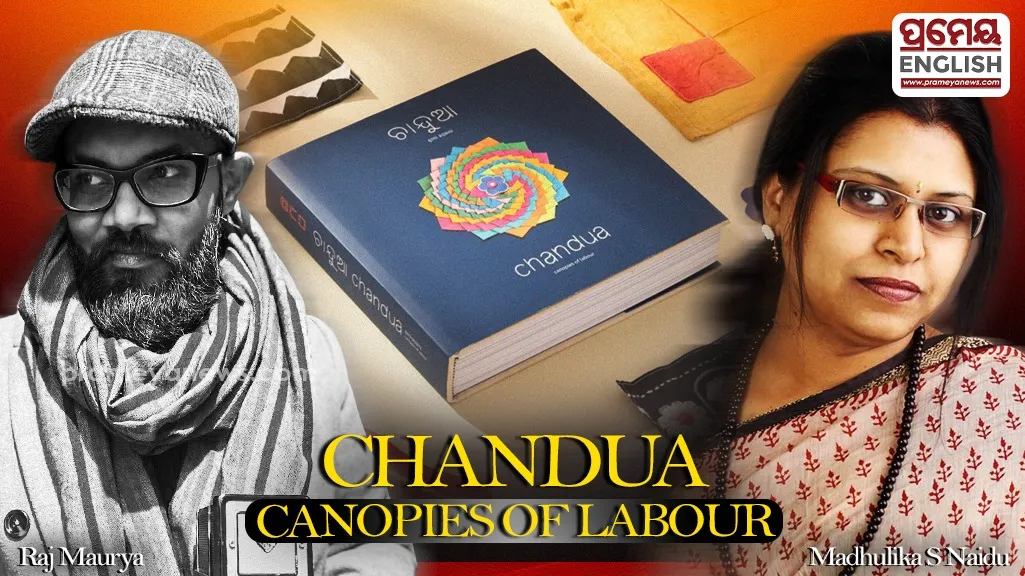
New publication reveals deep social histories behind traditional appliqué work
Scholars and researchers recently published the second bilingual volume of the Odisha Craft Odyssey, titled "Chandua: Canopies of Labour". Edited by Sibdas Sengupta and Premjish Achari, this new publication moves past basic ornamental definitions to examine deep-rooted histories of work, social resistance, and community identity shaping regional appliqué traditions. Direct encounters with craftspersons formed the foundation of this research, replacing distant observation with lived social practice inside artisan courtyards and open studios. For centuries, Odisha’s vibrant appliqué work has defined its cultural aesthetic, yet the physical toll and social hierarchies behind its creation have rarely received formal academic recognition.
Tracing regional heritage: Researchers documented how regional craft consciousness develops through inherited knowledge systems. Interdisciplinary researcher Madhulika S Naidu, drawing on her expertise in qualitative ethnography, explores the historical narrative, craft economy, and nomenclature of appliqué across the state. Her chapters trace the shifting forms of this tradition, noting how production moves fluidly across varying geographies, from temple thresholds and village squares to self-help groups and master workshops. These transitions reveal complex layers of gendered emancipation and belief systems inherent to the artisan community.
Visualizing generational dynamics: Archival documentation provides critical insight into the physical reality of regional textile production. Multidisciplinary artist and archivist Raj Maurya contributes a visual ethnography focusing on cloth, labour, and circulation. His visual storytelling connects material culture with collective memory, documenting everyday negotiations around work and the fragility of lived histories. This photographic evidence shifts attention away from static objects toward the active distribution of artisanal identity, capturing the true conditions that shape modern makers.
Also Read: Lovlina Borgohain outpunches Chinese rival to win Asian Games boxing gold
Redefining economic realities: Conversations between designers, artists, and state-recognized makers fostered a shared participatory field for this inquiry. The publication addresses design reformations and contemporary economic models impacting large-scale production today. By highlighting gaps in existing documentation, the project reframes the decorative canopy as an active site of quiet political negotiation rather than just an ornamental object. Introductory pieces by Charudutta Panigrahi and Rajeev Sethi further anchor the text in rigorous developmental discourse. Readers gain an intimate understanding of how both generational mastery and modern commercial studios shape the current parameters of craftsmanship in Odisha.