
.webp)
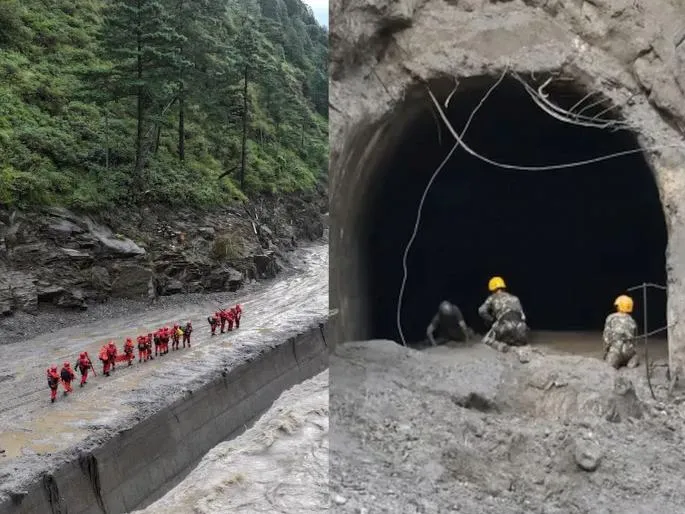
Kathmandu permits international tunnel experts for crucial search operations.
Facing mounting diplomatic pressure, Nepal government officials have overturned their initial ban on foreign emergency responders. Kathmandu will now accept specialized international assistance for complex search operations in areas destroyed by flash floods along the Bhotekoshi and Trishuli rivers. Rescuers from India, China, South Korea, and Australia will deploy to assist with tunnel extractions, DNA sampling, and forensic analysis.
Also Read: Nepal Floods: Researchers Uncover Exact Chain of Geological Events That Sparked Deadly Rasuwa Flash Flood
Hydropower Tragedy and Missing Nationals
Recent deluges have devastated Himalayan infrastructure, claiming over 550 lives. According to disaster management authorities, 1,924 individuals remain missing. This catastrophe highlights the region's historical vulnerability to monsoon-driven river flooding, which frequently disrupts cross-border connectivity and energy projects.
Foreign nationals represent a significant portion of those lost. Current records show 288 Indians, 100 Chinese, and dozens of Western tourists are untraceable. Rescue efforts are highly critical at the Upper Trishuli-1 hydropower site, where 576 workers vanished after disaster struck. Uttam Bhlom from the Independent Power Producers' Association noted that while workers are completely cut off from communication, reaching those trapped inside underground tunnels could still save lives.
International Medical and Relief Deployments
India quickly activated support mechanisms to aid its neighbor. External Affairs Minister S. Jaishankar confirmed the dispatch of an 11-member squad comprising doctors, paramedics, and tunnel extraction specialists, accompanied by National Disaster Response Force personnel. New Delhi also flew in 10 tonnes of humanitarian cargo, including water purification tablets, food, and portable generators.
Also Read: Nepal Floods: Temporary Morgues Built for Unidentified Nepal Flood Victims
South Korea is preparing a disaster response unit, while local authorities evaluate using private helicopters to reach isolated sites. Destroyed roads and widespread communication blackouts continue to hamper ground teams. Specialized foreign laboratories will help expedite forensic identifications, ensuring grieving families receive timely answers.

With Inputs from Agency threads and Image Courtesy: ANI, The Kathmandu Times
.webp)