


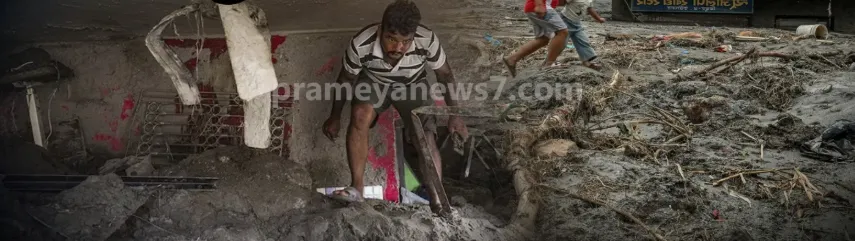
Kathamandu, Sept 1: Nepal continues to grapple with the devastating aftermath of catastrophic flash floods and landslides that struck the country’s Himalayan region, with the death toll climbing above 900 and thousands of people still reported missing.
The disaster, which also affected areas along the Nepal-China border, has severely damaged homes, roads, bridges and hydropower infrastructure. Rescue teams are continuing search operations in some of the worst-hit districts, including Nuwakot and Rasuwa. Recent reports put the number of missing people at more than 4,000, raising fears that the death toll could rise further.
23 Bodies Recovered From One House
A shocking development emerged from Betrawati in Nuwakot district, where rescue teams reportedly recovered 23 bodies from a single house during search operations. The incident has highlighted the enormous scale of destruction caused by the floodwaters and landslides.
Meanwhile, several bodies carried downstream by the Gandak River have reportedly reached India. Indian authorities are preparing to coordinate with the Nepal government for their identification and repatriation.
Workers Feared Trapped in Hydropower Tunnels
Rescue efforts have also focused on hydropower projects in Rasuwa and Nuwakot. Hundreds of workers are feared trapped inside tunnels after mud, water and debris entered the project sites.
Authorities have deployed the Nepal Army, specialist engineers, drones and other equipment to search the affected tunnels. Reports indicate that around 900 hydropower workers remain unaccounted for across several damaged projects, with roughly 500 believed to be trapped inside tunnels.
The rescue operation has become increasingly difficult because of blocked access routes, unstable terrain, mud-filled tunnels and concerns over oxygen supplies. Some tunnel searches have been temporarily suspended after rescuers failed to find signs of survivors.
China Rejects Nepal's Allegations
The disaster has also triggered a dispute between Nepal and China over the availability of information concerning glacier and water-level conditions.
Nepal had raised concerns that timely information about glacier movements and rising water levels from the Chinese side could have helped authorities issue earlier warnings and potentially reduce the loss of life. China has rejected the allegations.
The flooding has been linked to a major ice-rock or glacial collapse in the Himalayan region, which sent enormous volumes of water, mud and debris downstream. Scientists have warned that warming temperatures are contributing to increasing instability in high-altitude Himalayan environments, although the precise role of climate change in this particular event is still being assessed.
Rescue Operations Continue
More than 20,000 security personnel and rescuers have been involved in rescue and relief operations, while thousands of people have been evacuated from affected areas. Helicopters have been used to reach communities cut off by destroyed roads and bridges.
With thousands still missing and several areas difficult to access, authorities fear the final toll from Nepal's worst recent flood disaster could be significantly higher. Rescue teams continue to search for survivors while families wait anxiously for information about their loved ones.