
.webp)


India strongly rebukes US Vice President over his offensive remarks
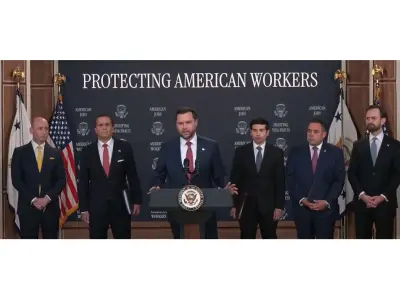
India firmly condemned United States Vice President JD Vance for labeling H-1B visa holders as indentured servants. Officials from the Ministry of External Affairs termed his comments unwarranted and deeply offensive. This strong reaction follows Washington suspending applications for the Permanent Labour Certification Programme, commonly known as PERM. Suspending this program temporarily halts green card sponsorships by eight major technology firms, including Tata Consultancy Services, Microsoft, Infosys, Wipro, and HCL.
Diplomatic tensions flared after Vance stated these tech giants should hire American workers rather than rely on foreign labour. Indian authorities quickly defended professionals working in America, highlighting their significant contributions to innovation and economic growth. Employing terminology tied to colonial-era exploitation carries painful historical weight. During the 19th and early 20th centuries, hundreds of thousands of Indians were transported across British colonies as indentured workers under brutal conditions. MEA representatives firmly rejected this characterization for modern, highly skilled tech professionals.
Talent mobility serves as a crucial engine for both nations. Generations of immigrants have actively built American prosperity through enterprise and technical skill. Suspending PERM applications risks disrupting the permanent residency process for eligible foreign employees. Indian officials pointed out that skilled workers provide crucial research and productivity capabilities for US corporations. Creating shareholder wealth and driving global competitiveness requires consistent access to global talent. Restrictive measures ultimately undermine shared bilateral interests rather than protecting local jobs.
While this current suspension targets the labor certification step for green cards, it does not immediately invalidate active H-1B visas. However, it creates severe processing delays for foreign workers seeking long-term stability in America. Government sources maintain that restricting high-tech immigration hurts American companies just as much as it impacts Indian job seekers. Global tech leadership relies heavily on cross-border talent pipelines to sustain research and development over time.
.webp)