
.webp)

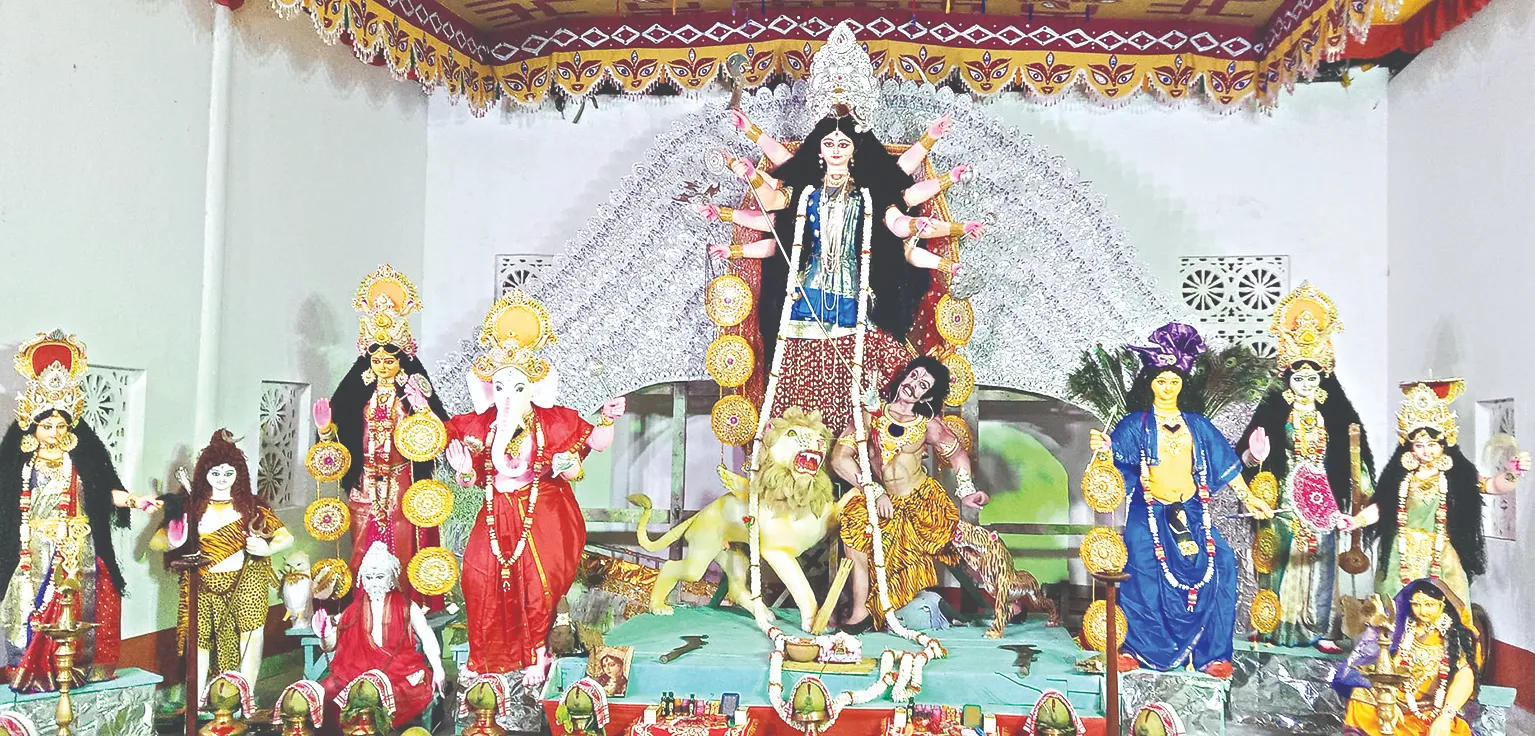
Jalpaiguri, Sept 9: Before the first layer of clay is applied to the bamboo frame of Goddess Durga, an age-old ritual unfolds at the Baikunthapur royal palace, a tradition where mud itself becomes sacred.
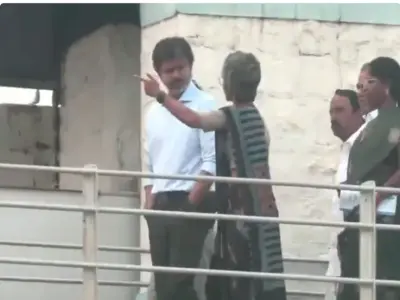
A day after Janmashtami, members of the Baikunthapur royal family joined local children and youngsters for the traditional mud-play ritual of Nandotsav, marking the beginning of preparations for the palace’s historic Durga Puja.
📲Follow our WhatsApp Channel for the latest news, breaking updates, and important headlines. Stay connected with us for more updates!
As the beats of dhaks and the sound of kashors reverberated through the palace grounds, an arati was performed before participants smeared one another with mud in a celebration rooted in faith, folklore and centuries-old tradition.
But this is no ordinary mud.
The mud used during the ritual is carefully collected and preserved for the making of the Durga idol. When artisans begin sculpting the Goddess, the sacred clay is applied to the bamboo framework, gradually transforming the structure into the magnificent image of Maa Durga.
A Ritual Inspired by Krishna’s Childhood
The unusual tradition is associated with the childhood of Lord Krishna.
According to popular belief, infant Krishna played with mud during Nandotsav, celebrated a day after Janmashtami. The Baikunthapur royal family has preserved this tradition for generations.
The mud-play takes place after Kathamo Puja, the ceremonial worship of the bamboo framework that will eventually become the Durga idol.
This year, the ritual worship of the framework was performed by royal family priest Shibu Ghoshal at the palace temple.
The Durga Puja itself begins with prayers to Baikunthanath, the presiding deity of the royal family. The worship of the idol’s framework is also associated with prayers to Lord Krishna.
517 Years of Unbroken Tradition
The Baikunthapur royal Durga Puja has now entered its 517th year.
Historical accounts trace the beginning of the royal worship to Bishu Singha and Shishu Singha in 1510. The Puja was initially held at Subarnapur, the capital of the Raikat dynasty.
When the capital of the Baikunthapur kingdom later shifted to Jalpaiguri near the Teesta, the Durga Puja also moved with it and eventually found its permanent home at the royal palace.
The kingdom may have disappeared and royal authority may have faded into history, but the family’s sacred rituals have continued.
Year after year, the palace once again becomes a meeting point of faith, history and community.
More Than a Puja
For generations of Jalpaiguri residents, the royal Durga Puja has been more than a religious celebration. It has become part of the cultural identity of the region.
Pranata Basu, a member of the royal family, said the worship continues according to ancient customs.
“Our Durga Puja begins with Janmashtami and follows the rituals prescribed in the Kalika Purana. The Mother Goddess is envisioned as having the complexion of molten gold,” she said.
For local residents, watching the Puja at the royal palace is a childhood memory passed from one generation to another.
One resident said the celebration does not truly feel like Durga Puja unless one witnesses the royal worship, adding that the traditional mud-play ritual is particularly moving.
When Mud Becomes Memory
Amid the laughter of children, the rhythmic beats of dhaks and the ringing of kashors, an ancient tradition comes alive once again.
The same mud that children play with during Nandotsav will later become part of the sacred form of Maa Durga.
And when the golden-hued Goddess finally takes shape, it will represent much more than an idol.
It will be a reminder that even after a kingdom disappears, its traditions can continue to live—generation after generation, ritual after ritual, and Puja after Puja.
.webp)