
.webp)


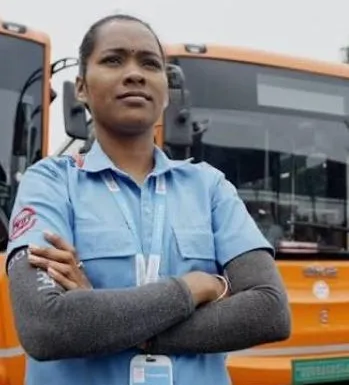
Bhubaneswar, Oct 14: Every morning, as an electric bus pulls out of the Ama Bus depot in Kendujhar, it carries more than passengers. Behind the wheel is Shubhalakshmi Mahananda, recognised as Odisha’s first woman to drive an electric bus, navigating a profession that women have traditionally had limited access to.
Her presence in the driver's seat challenges a familiar stereotype—that driving a passenger bus is a man's job. It also brings a human dimension to the changing landscape of public transport, where the transition to cleaner mobility is creating opportunities for women to enter non-traditional occupations.
An electric-bus driver with Capital Region Urban Transport (CRUT), Shubhalakshmi works in a role that demands technical competence, alertness, discipline and responsibility for the safety of every passenger. Operating a passenger bus is no small undertaking, and driving an electric vehicle adds the need to understand its specific operating systems and requirements. Through specialised training and practical experience, she has taken on these responsibilities in a sector where women remain underrepresented.
Her achievement is significant not simply because she is the first, but because of what her journey represents. When women enter occupations traditionally dominated by men, they challenge assumptions about gender and work while expanding the possibilities available to others. Their participation also underscores an important dimension of inclusive development: access to opportunity should not be determined by gender.
Kendujhar's growing electric-bus network provides the setting for this change. The district currently has 25 electric buses and a dedicated Ama Bus depot, reflecting the expansion of cleaner public transport beyond the state's larger urban centres. Electric buses can help reduce tailpipe emissions and local air pollution, while offering a more sustainable mode of everyday travel. When the mobility transition also creates opportunities for women, its benefits extend beyond the environment to the workplace and society.
Shubhalakshmi's story comes at a time when questions of accessibility, sustainability and inclusion are gaining greater attention in India's urban transport discourse. Bhubaneswar will host the 19th Urban Mobility India (UMI) Conference & Expo 2026 on 23–24 October, becoming the first city in Eastern India to host the event. This year's theme, “Urban Accessibility & Liveability in the Digital Age,” places the focus on how transport systems can better serve people's everyday needs.
While discussions on the future of mobility often centre on electric vehicles, digital services and infrastructure, the experience of people like Shubhalakshmi offers a reminder that progress must also be measured by who gets to participate in shaping that future. Public transport is not only about moving people efficiently; it is also about creating livelihoods, widening access to opportunity and making mobility more inclusive.
For a young woman considering a career traditionally seen as beyond her reach, seeing another woman at the wheel can make that possibility feel more real. Shubhalakshmi's journey from Kendujhar therefore carries a message that extends beyond one bus, one depot or one district: meaningful change begins when long-standing barriers are challenged in everyday life.
As Odisha continues to expand its cleaner mobility initiatives, her story offers a compelling example of how environmental progress and social inclusion can move forward together. The future of transport will be shaped not only by the vehicles on the road, but also by the people who are given the opportunity to drive that change.
.webp)