
.webp)


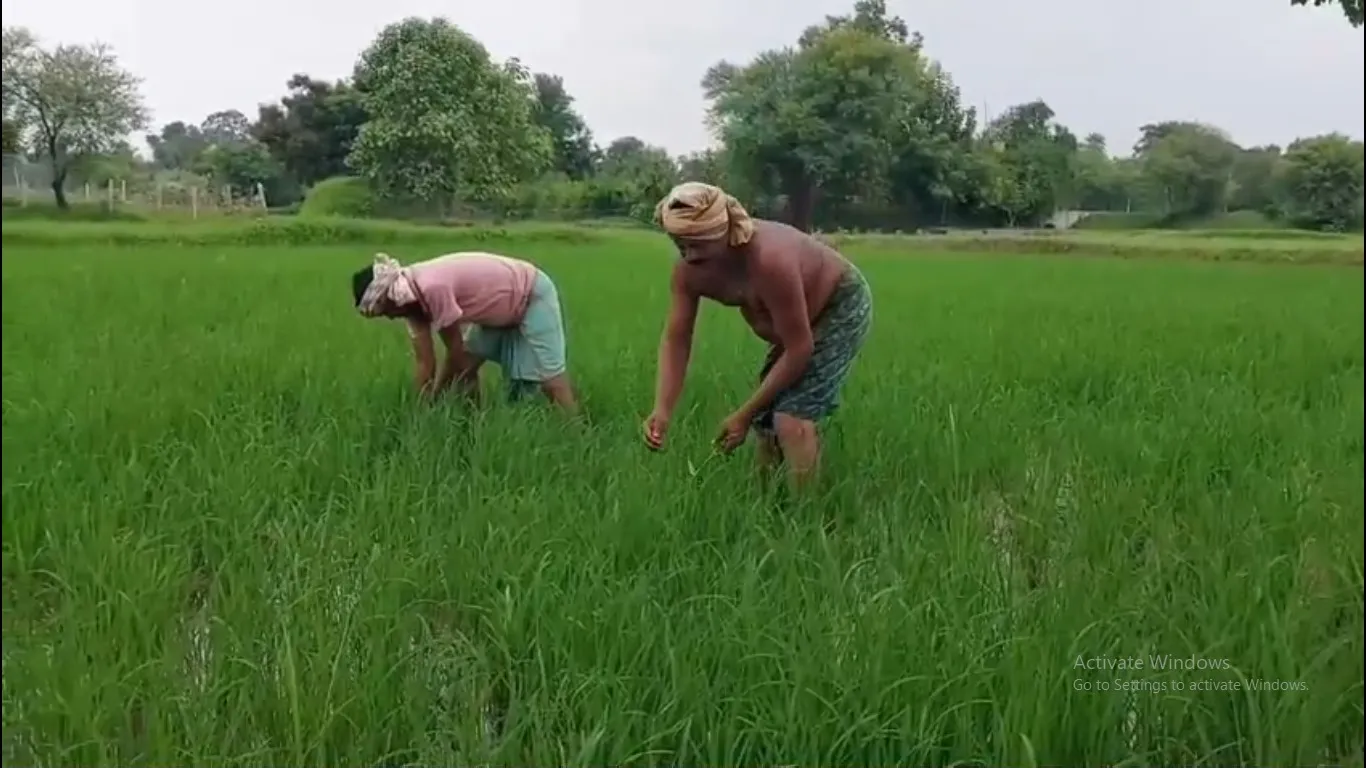
Balangir, August 3: For the first time, organically grown rice from Odisha's Balangir district will be offered at the Shree Jagannath Temple in Puri as part of the temple's ‘Kotha Bhoga’ rituals. Under the state government's 'Amruta Anna' scheme, farmers have begun cultivating the aromatic ‘Gobindabhog’ and traditional ‘Jhili’ rice varieties exclusively for offering to Lord Jagannath.
The initiative is being implemented through completely organic farming practices, with no use of chemical fertilisers or pesticides. Following the paddy harvest, green gram (moong) will be cultivated on nearly 20 hectares under the same programme.
Farmers in Muribahal, Agalpur, Patnagarh and Puintala blocks have already started transplanting paddy seedlings. The Agriculture Department has identified farmers with prior experience in organic cultivation and provided them with technical guidance on crop management, pest control and post-harvest marketing.
Expressing his pride, farmer Brundaban Patel of Gaintala village in Puintala block said cultivating rice for Lord Jagannath is the greatest honour of his life.

"I have many labourers working in my fields, but working as a labourer for Lord Jagannath is a blessing beyond words. I grew up listening to the devotional song praying to become Lord Jagannath's farmhand in the next life. Today, that dream has come true," he said.
To improve soil fertility, farmers were supplied with dhaincha seeds in July for green manuring. After the crop decomposed naturally, cow dung manure was applied before the paddy nursery was prepared and transplanted.
The farmers are cultivating the highly aromatic, short-grain ‘Gobindabhog’ variety alongside the indigenous ‘Jhili’ rice. The crop is expected to be harvested approximately 130 days after transplantation, around December.
Officials said the harvested paddy will not be sold in open markets or government procurement centres. Instead, designated Cluster-Based Organisations (CBOs) will procure the produce, market it and ensure farmers receive their payments.
As part of the organic cultivation protocol, farmers have been instructed not to use chemical pesticides even if pest infestations occur. Instead, they will rely on natural alternatives such as neem oil and ‘Bijamrita’ for crop protection.
Chief District Agriculture Officer Dhiren Singh Bariha said the project has been launched in Balangir for the first time and will continue for the next five years.
He clarified that the harvested rice will not be sent directly to the Puri temple. Samples will first be tested by the Odisha State Seed and Organic Product Certification Agency (OSSOPCA) to verify compliance with organic standards. Only after receiving certification will the rice be supplied to the Shree Jagannath Temple for use in ‘Kotha Bhoga’ offerings.
.webp)