
.webp)


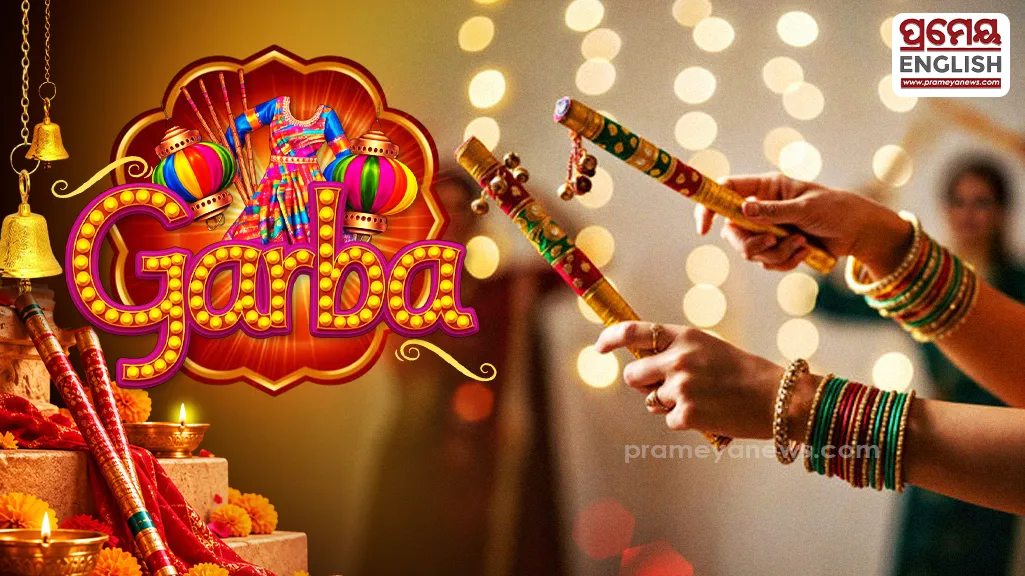
Garba is one of the most popular traditional dance forms performed during Navratri, the nine-night festival dedicated to Goddess Durga. Originating in Gujarat, this vibrant folk dance has gradually gained popularity across India, including Odisha, where people enthusiastically participate in Garba and Dandiya nights during the festive season.
Beyond its colourful costumes, energetic music and lively dance moves, Garba carries deep religious and cultural significance. It is traditionally performed to honour the divine feminine energy and seek the blessings of Goddess Durga. The circular dance formation symbolises the cycle of life, unity and continuity, while the lamp or garbo placed at the centre represents life, divine energy and the womb as a source of creation.
Why is Garba performed during Navratri?
Garba is closely associated with the worship of Goddess Durga. During Navratri, devotees celebrate the victory of good over evil and the power of the Goddess to protect the world from negative forces.
Traditionally, dancers move in circles around a centrally placed lamp or an image of the Goddess. The circular formation represents the cyclical nature of life and the belief that the divine remains at the centre of existence. The rhythmic clapping, traditional songs and coordinated movements create an atmosphere of devotion and collective celebration.
Over time, Garba has evolved beyond a religious ritual into a social and cultural celebration that brings people together, irrespective of age or background.
When did Garba begin?
Garba has its roots in Gujarat and is believed to have developed from ancient folk traditions associated with fertility, motherhood and the worship of the Goddess. The exact date when Garba first began is not known, as the tradition evolved over centuries.
The name Garba is commonly linked to the Sanskrit word garbha, meaning womb, and to the traditional earthen pot known as a garbo, which is often associated with the dance. The pot, sometimes featuring holes through which a lamp shines, symbolises life and the divine feminine.
Historically, Garba was performed by women as part of devotional celebrations honouring the Goddess. Over the years, it expanded into larger community gatherings, with men and women dancing together to traditional folk songs and modern music.
Today, Garba is celebrated not only in Gujarat but also in cities across India and among Indian communities worldwide.
Why is Garba so popular today?
Garba's popularity comes from its unique combination of devotion, music, dance and community participation. Unlike many formal performances, it allows people to join in regardless of their dancing experience.
Traditional Gujarati attire, colourful chaniya cholis, kediyus, jewellery, folk music and energetic rhythms have also made Garba a major attraction during Navratri. Modern events often combine traditional songs with Bollywood music, live performances, DJs and elaborate lighting, attracting younger audiences as well.
Garba also provides an opportunity for people from different cultural backgrounds to experience Gujarati traditions. In cities such as Bhubaneswar, organised Garba and Dandiya events have become an increasingly visible part of Navratri celebrations.
Garba and dandiya: What is the difference?
Although Garba and Dandiya Raas are often organised together, they are distinct dance forms.
Garba traditionally involves rhythmic clapping and circular movements performed around a central lamp or an image of the Goddess. Dandiya Raas, on the other hand, involves pairs of dancers striking decorated wooden sticks in rhythm with the music.
Both dance forms are closely associated with Navratri and celebrate devotion, joy and togetherness.
.webp)