

.webp)


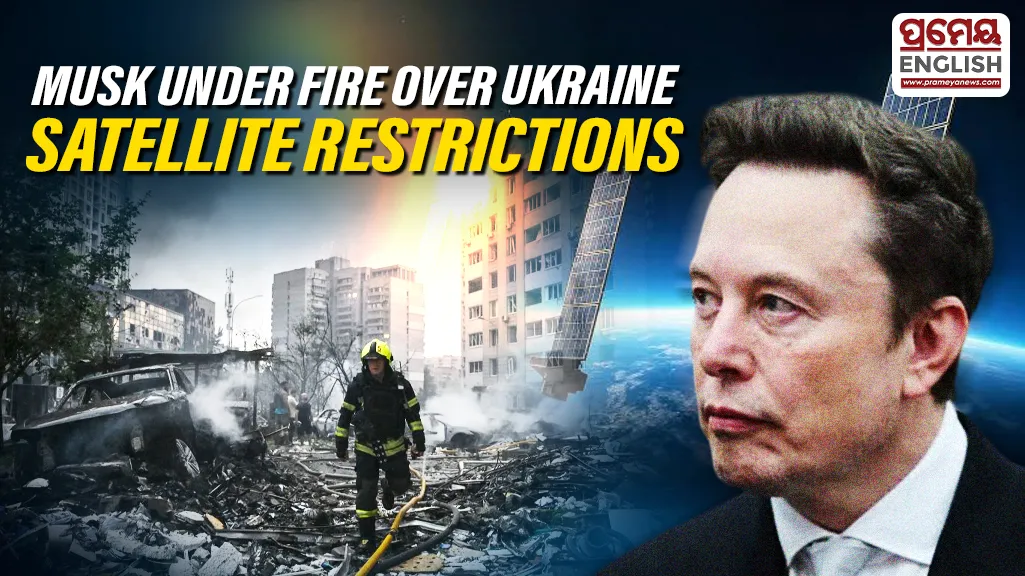
Billionaire Elon Musk faces mounting international backlash over satellite disruptions
SpaceX founder Elon Musk is currently facing severe criticism following reports of restricted satellite communications in Ukraine during recent Russian bombardments. Ukrainian forces rely heavily on these private networks for drone operations, intelligence gathering, and frontline logistics. Disruptions to both commercial and military-grade systems have sparked intense debates regarding corporate influence over national defense strategies.
Impacts on Defence operations
Ukrainian President Volodymyr Zelenskyy recently highlighted severe consequences stemming from these connectivity issues. Speaking to British broadcaster Piers Morgan, Zelenskyy stated that restricted access directly hindered their ability to intercept incoming strikes. He pointed out that civilian lives were lost because defence mechanisms failed to operate properly without network support. Former Defence Minister Mykhailo Fedorov confirmed that commercial network speeds up to 160 km/h are gradually returning. Fedorov also urged administrators to remove speed limits on the military-specific systems to bolster immediate defense capabilities across occupied territories.
Addressing the escalating situation, Musk clarified the operational differences between his two primary satellite platforms. He emphasised that the US government owns and completely controls the military-grade system. Decisions regarding its usage or speed limits ultimately rest with US authorities and military leaders. Furthermore, Musk maintained that his commercial service cannot participate in offensive military actions, citing boundaries appropriate for a private technology corporation. Recent media reports indicate that some US officials claim these recent limitations were not directed by high-level national policy, leaving Ukrainian authorities caught completely off guard.
Lawmakers question foreign conflict interventions
Democratic members of the US House Foreign Affairs Committee have openly condemned the access limitations. Representatives argued that cutting off communications while ballistic missiles strike civilian areas is entirely unacceptable. Congresswoman Pramila Jayapal warned that such actions establish a dangerous precedent for private corporations interfering in foreign conflicts. She stressed the urgent need for transparency when single entities hold the power to shut down critical battlefield communications at will.
Ripples across global regulatory frameworks
This controversy arrives as other nations evaluate the security implications of deploying private satellite internet infrastructure. India recently defended its telecommunications licensing framework after Musk claimed certain business interests blocked his company from operating there. Indian officials maintain that strict security compliance remains a non-negotiable requirement for all global satellite service providers. Ultimately, the unfolding situation highlights the complex vulnerabilities sovereign nations face when relying heavily on private tech companies for critical wartime infrastructure.
With Inputs from Agency Threads and Image Courtesy: ANI
.webp)