
.webp)

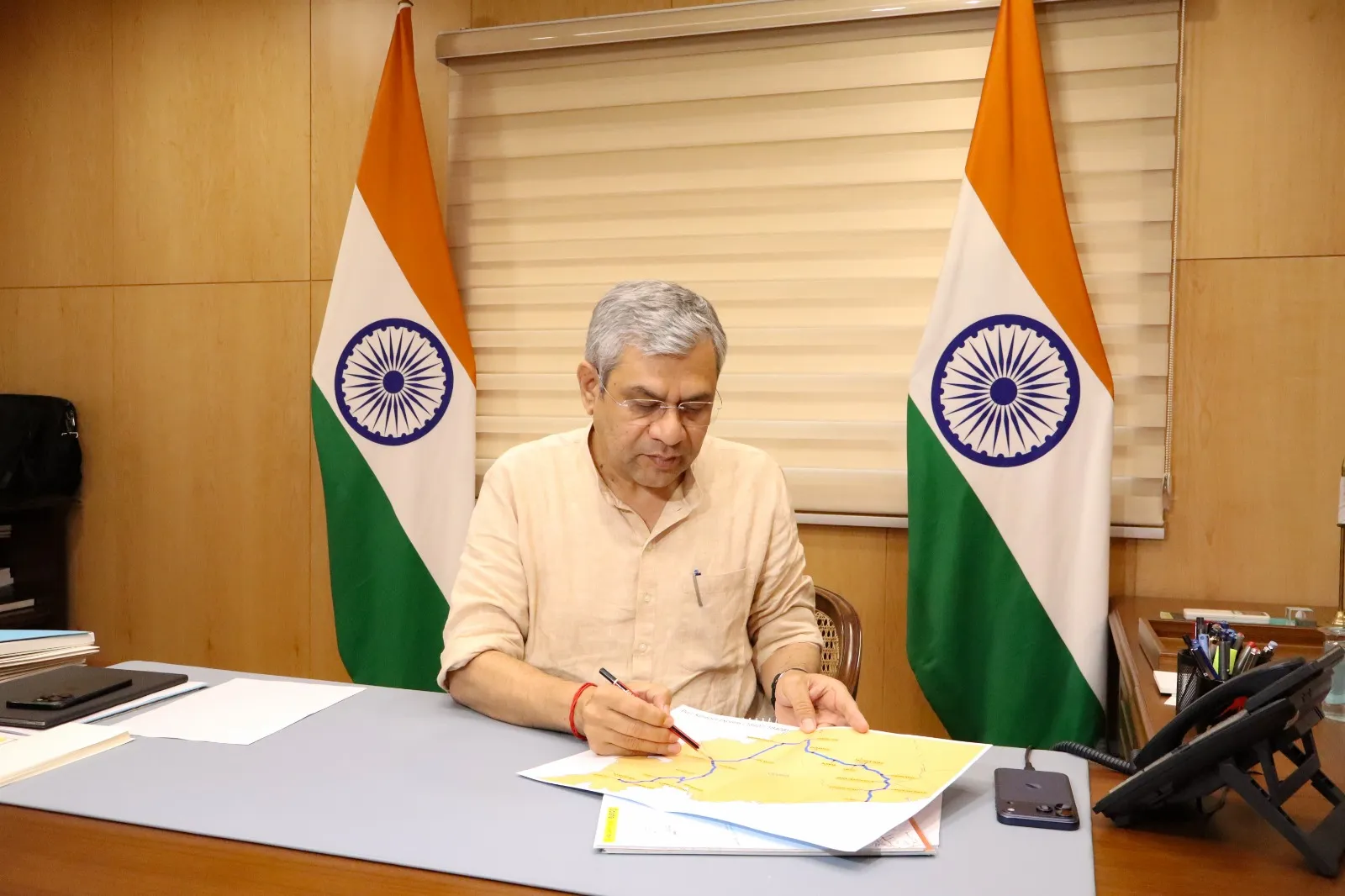
New Delhi, June 8: India is now designing some of the world's most advanced chips, including those of Nvidia, Union Minister for Electronics and Information Technology Ashwini Vaishnaw said on Monday.
In an interview with ANI, Vaishnaw highlighted the nation's growing technical prowess in the semiconductor sector, noting that more than 300 universities are teaching students to design chips.
"More than 300 universities are teaching students to design chips. Two-nanometer chips are designed in India. The most advanced chips in the world, including Nvidia chips, including Intel chips, they are all designed in India now," he said.
Nvidia, whose chips are being designed in India, is leading global manufacturer of high-end graphics processing units and Intel is a leading manufacturer of semiconductor computer circuits.
Vaishnaw, who is also Union Railways and Information and Broadcasting Minister, pointed to multiple initiatives, such as "Make in India" and said the world is looking at India with hope because of the huge talent in the country.
"The world today recognizes India as a country which will become a major semiconductor country, designing and manufacturing country in the coming years," he noted.
He referred to India's technology ambitions and steps under India Semiconductor Mission 2.0, which was announced in the Union Budget 2026-27.
"In the Semicon 2.0, our focus will be on getting the other parts of the ecosystem into place, the machines which manufacture semiconductors. These are extremely, extremely complex and highly concentrated in three or four countries. We would like to get those manufacturing and design activities to India. Second, we have a large talent base for designing chips," he said.
"In the first version of the semiconductor mission, we could get about 40 startups which design semiconductor chips, and they are getting VC (venture capital) funding now. That is the deep tech part of the startup world, and it has made very good progress. In Semicon 2.0, we would have design as the number one priority, the machines which go into manufacturing of semiconductors, the chemicals and the gases. There are about 250 chemicals and about 50 gases which go into manufacturing a chip. So, all that we would like to focus on in the second part of the mission," he added.
Vaishnaw expressed strong optimism about the country's future trajectory. "With the kind of interest that the world has today and the success with which our country has delivered, the world certainly will be coming up in much larger numbers (to us)," he said.
The NITI Aayog had last month released 'Future of India's Semiconductor Industry' Roadmap which charts path to India becoming an indispensable global semiconductor player.
Semiconductors are the foundation of national security, economic resilience, digital sovereignty and future competitiveness powering everything from defence systems, telecom networks and AI infrastructure to automobiles, healthcare devices, digital public infrastructure and advanced manufacturing.
With global semiconductor supply chains being reshaped by geopolitics, technology shifts and the race for trusted capacity, India is moving from being a large semiconductor market to becoming a critical node in the global value chain.
Vaishnaw had in February this year launched Qualcomm 2 nm semiconductor chip, marking a significant moment in advanced semiconductor design and India's key role in global engineering operations. (ANI)
.webp)