


Indian physicist Deepak Dhar bags highly prestigious Dirac Medal
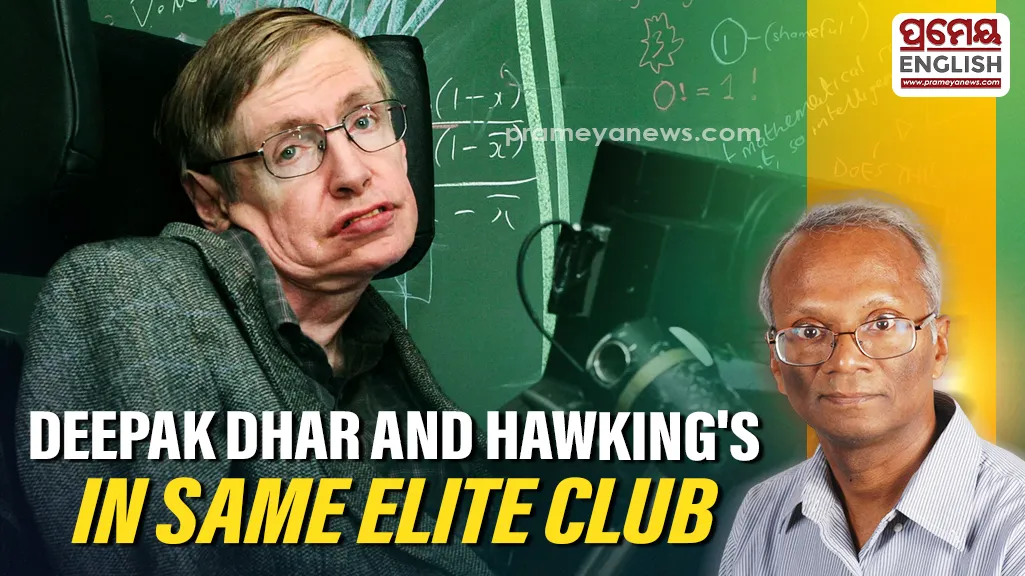
Deepak Dhar, an esteemed theoretical physicist from India, has just received the prestigious 2026 Dirac Medal from the International Centre for Theoretical Physics (ICTP). He shares this year's award with three other brilliant scientists for their outstanding work in statistical mechanics. Established back in 1985, this high honour is often associated with physics legends like Stephen Hawking. Historically, Indian scientists have made vital contributions to global physics, and Dhar continues this proud tradition on the world stage.
Small town roots to global recognition
Born during 1951 in Pratapgarh, Uttar Pradesh, Dhar grew up studying in Hindi-medium schools. His father nurtured his scientific curiosity by bringing home science magazines. Dhar later attended Allahabad University and IIT Kanpur before moving to the United States. He studied at the California Institute of Technology (Caltech) under a Richard Feynman fellowship. He even worked directly as a teaching assistant for the legendary Richard Feynman before completing his PhD in 1978.
Bringing knowledge back home
Many young scholars choose to stay abroad, but Dhar decided to return to India. He joined the Tata Institute of Fundamental Research (TIFR) in Mumbai, where he spent decades studying complex physical systems. He also taught for nearly eight years as a professor at IISER Pune, guiding hundreds of young students. Scientists explain that statistical mechanics helps us understand how large groups of particles behave, and these tools are now useful for artificial intelligence and financial markets. One of his most famous creations is the burning algorithm for sandpile models.
Building an inspiring legacy
This recent Dirac Medal joins a long list of previous honours. Back in 2022, Dhar became the first Indian to win the Boltzmann Medal. Shortly after, the Indian government awarded him the Padma Bhushan in 2023. His steady dedication shows how curiosity and persistence can truly shape a world-class scientific career right here in India.
Image Courtesy: IISER, Pune