

.webp)


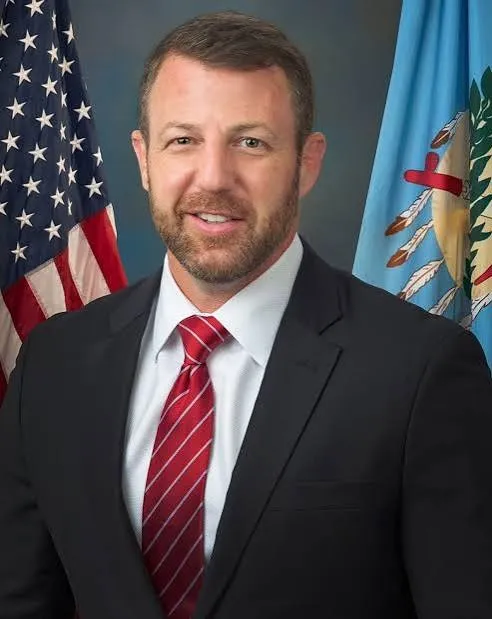
Washington DC [US], Nov 14: US Homeland Security Secretary Markwayne Mullin on Friday (local time) said there is no evidence so far of a cyberattack or rogue artificial intelligence behind the telecommunications outage which triggered a nationwide Federal Aviation Administration (FAA) ground stop. He said that the available evidence pointed to a mechanical failure and added that investigators were not ruling out any possibility.
“There's nothing completely certain right now. It doesn't appear that way. We've activated our teams...This is a national emergency. We have all of our assets...There is nothing that indicates it yet," Mullin said.
Explaining why authorities had not detected signs of a cyberattack, the Homeland Security Secretary said there had been no suspicious online activity, claims of responsibility or identifiable traces of an intrusion into the affected systems.
Mullin also described the disruption as a national security concern, backing Transportation Secretary Sean Duffy's demand for congressional funding to replace the country's ageing air traffic control infrastructure.
The Homeland Security Secretary called the existing air traffic control infrastructure “outdated” while stressing upon the need to modernize the existing air traffic control systems. He argued that the latest disruption was the result of the negligence of the government to take necessary action in upgrading critical systems. “…this is what happens when Congress kicks the can down the road,” he said.
Also read: ChatGPT can now shop and pay on your behalf: OpenAI
The remarks came after the FAA lifted the nationwide ground stop imposed across US airports following a telecommunications outage that disrupted air traffic control operations, triggering thousands of flight delays and cancellations.
Duffy had earlier attributed the technical failure to ageing telecommunications infrastructure, explaining that radar and communication systems at air traffic control centres and Terminal Radar Approach Control (TRACON) facilities experienced instability at approximately 3:36 pm local time.
He said air traffic controllers began receiving inconsistent radar data and communication signals from aircraft, prompting authorities to activate established safety procedures and halt flights as a precaution.
Duffy said more than 3,500 aircraft were airborne when the ground stop was issued, adding that authorities coordinated their safe landing. He also clarified that critical operations, including medical evacuation flights, cargo movements carrying essential medicines and law enforcement activities, were allowed to continue.
According to Duffy, the country's legacy telecommunications equipment, which operates on an analogue system, became overloaded with data, resulting in inconsistencies in information transmitted through its switches and routers. Newer Internet Protocol (IP) switches installed under the Trump administration continued functioning during the disruption, he said.
The Transportation Secretary renewed the administration's appeal to Congress for bipartisan funding to build an entirely new air traffic control system rather than relying on incremental repairs.
Meanwhile, the FAA confirmed that all flights had been accounted for, while international arrivals were handled on a case-by-case basis. According to flight-tracking platform FlightAware, approximately 7,000 flights were delayed or cancelled following the disruption.
The outage also prompted airlines to issue travel advisories. Air India warned of possible consequential disruptions to its flights to and from the United States, advising passengers to check their flight status before travelling to airports. (With ANI inputs)
.webp)