

.webp)

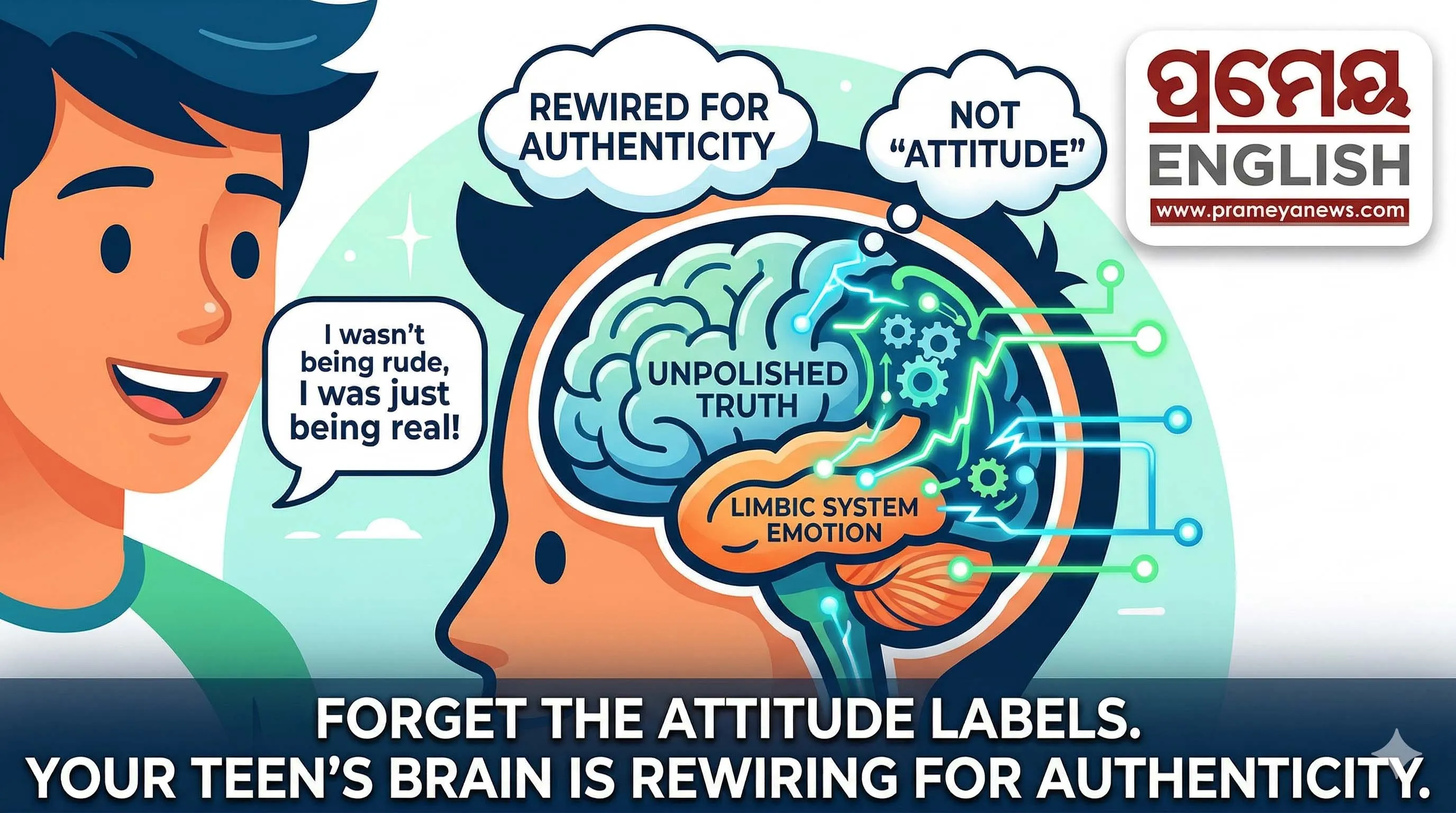
Adolescent bluntness stems from internal brain growth
Biological shifts in the adolescent brain often cause teenagers to speak with directness that parent’s mistake for hostility. While adults frequently view short, unfiltered answers as a sign of disrespect, neurological data suggests this behavior results from a developmental lag between the emotional limbic system and the logical prefrontal cortex. Because the limbic system matures faster, emotional expression takes the lead while the "social filter" remains under construction.
Experts categorise this specific period of life as a battle between identity and role confusion. Teens utilise raw, honest communication to test their boundaries and define their personal beliefs. This phase is less about defying authority and more about an internal search for authenticity. In many cultural contexts, including traditional households in Odisha where politeness is strictly equated with obedience, this natural psychological transition often creates unnecessary friction between generations.
Adolescents frequently prioritize being "real" over being socially polished. To a developing mind, the flowery language of social etiquette can feel dishonest or manipulative. They value integrity over tact, leading to interactions that feel abrasive to older listeners. Furthermore, experts point to the "imaginary audience" phenomenon, which makes teens hyper-focused on their own internal state, temporarily limiting their ability to process how their tone affects others.
Viewing these interactions as a skill gap rather than a character flaw changes the parenting dynamic. Instead of punishing the "attitude," specialists suggest modeling reflective listening and emotional labeling. Helping a child translate their blunt thoughts into empathetic sentences fosters maturity without crushing their emerging sense of self.
.webp)