
.webp)


By Santosh SinghDeo
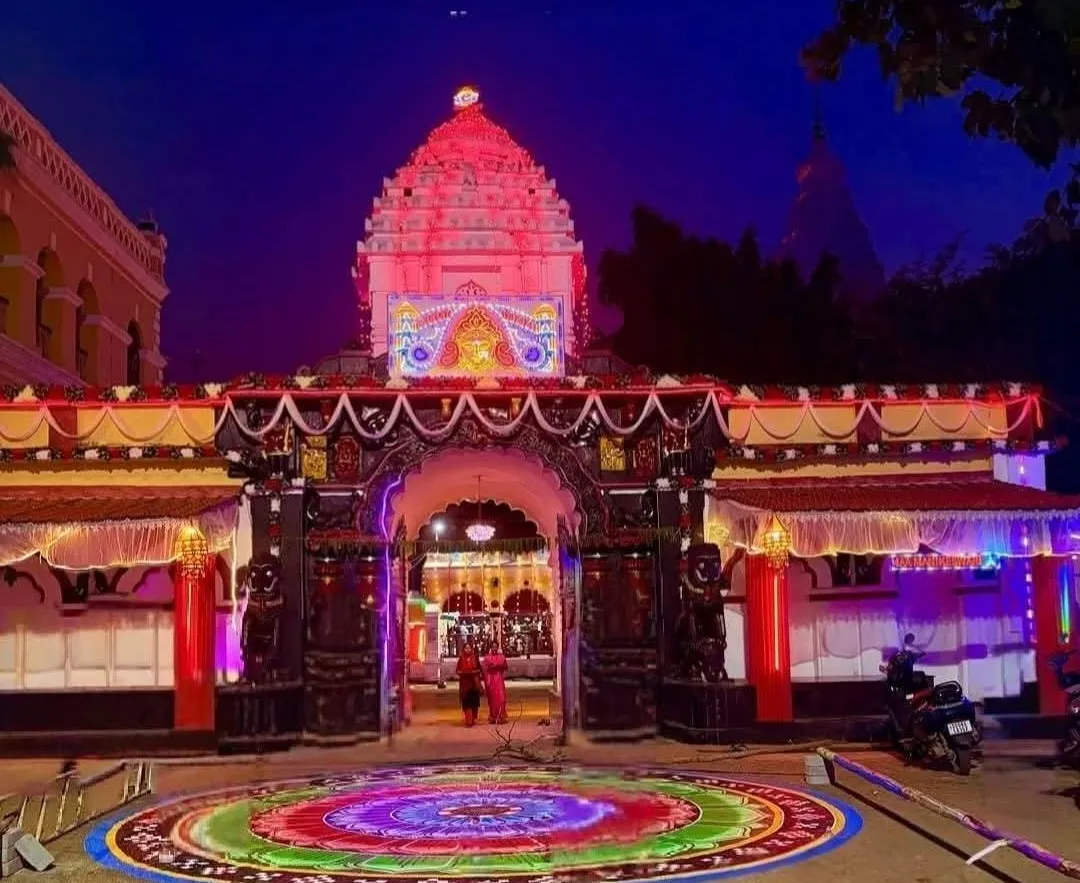
Bhawanipatna: Every autumn, as the rhythmic beat of the Ghumura drum reverberates through the streets of Bhawanipatna, Western Odisha witnesses one of eastern India's most compelling spectacles of devotion: the annual Chhatar Jatra of Maa Manikeswari.
Far more than a seasonal festival, this vibrant congregation marks the living intersection of a thousand-year-old royal lineage, indigenous tribal cosmology, and classical Shakta worship.
A Millennial Chronicle: From Chhindaka Nagas to Eastern Gangas
Maa Manikeswari's historical roots run deep into the medieval subcontinent. Historians note that during the 10th and 11th centuries, the Chhindaka Naga dynasty ruled the Chakrakota Mandala—a vast forested domain encompassing modern-day Kalahandi, Koraput, and Bastar. Stone epigraphs of King Someshwara Deva, preserved in the Nagpur Museum, document Maa Manikyadevi as the supreme tutelary deity of the realm.
When the Chhindaka Nagas fell to the Kalachuris, their close allies, the Eastern Gangas, launched military campaigns to push back the Kalachuris and restore the sacred deity. This restoration sparked the reverence of Maa Manikeswari across wider swathes of Odisha. Later, Gajapati Purushottama Deva commemorated her near Chilika Lake, while the royal house of Paralakhemundi in southern Odisha adopted her as their clan deity.
By around 1200 CE, amidst royal succession crises following the demise of King Harichandra Deo, the deity was brought back to Kalahandi alongside young prince Ramachandra Deo from Gadapur. Originally enshrined in Junagarh, the seat of the goddess was relocated to Bhawanipatna in 1849 by Maharaja Fateh Narayan Deo, cementing the goddess at the heart of the district's administrative and cultural life.
The Unarmed Mother: An Architectural and Iconographic Marvel
The temple in Bhawanipatna, constructed in the classic Odishan Rekha Deula architectural idiom, rises 56 feet high. Completed in 1947 under Maharaja Brajamohan Deo, the temple's outer walls feature intricate carvings of Matrikas including Vaishnavi, Narasimhi, and Varahi.
Also Read: Durga Puja 2026: Chaudhury Bazaar marks 154 yrs of tradition
Yet the goddess herself departs starkly from conventional martial iconography. While Goddess Durga is universally depicted wielding ten divine weapons, Maa Manikeswari is completely unarmed (nirashtra). In local theological belief, the primordial Mother does not require steel to subdue darkness; her divine presence alone dissolves demonic forces. Revered as Dharitri Mata (Mother Earth), she embodies pastoral abundance, harvest protection, and communal well-being.
The Synthesis of Rites: The Mud-Head Consecration
The liturgical traditions of the shrine present a seamless confluence of indigenous tribal rites and classical Vedic-Tantric customs:
Tantric Invocation: Worshipers invoke the goddess through the primary Mahavidya Mahakali using the potent Kreem seed mantra, blending sixteen classical Vedic offerings with esoteric Shakta rituals.
Mundabasa Festival: On Mula Ashtami (the eighth day of the dark fortnight of Ashwina), the goddess undergoes Nabakalebara—an annual ritual renewal. A designated potter family crafts a new head for the deity from raw clay on hereditary land grants. Local metalsmiths then inlay it with eyes, nose, and tongue of pure gold and silver, encrusted with rubies and pearls. At midnight, this clay head is consecrated onto the torso of the main idol amidst secret Tantric incantations.
The Triumphant Chhatar Jatra and Lakhamara Contest
The 16-day autumnal cycle culminates on Maha Navami with the world-renowned Chhatar Jatra.
Following midnight rituals and the symbolic vanquishing of demonic forces at Jenakhal at the base of Phasi Hill, the deity's moving emblem—a tall, decorated ceremonial umbrella known as the Chhatar—begins its 3-kilometer return journey to the main palace temple at dawn.
The procession draws lakhs of pilgrims from across Odisha, Chhattisgarh, and Andhra Pradesh. Amid the booming cadence of Nishan, Birakahali, and tribal Ghumura dancers, thousands of devotees release white pigeons above the passing Chhatar—a soaring appeal for peace and fulfillment of vows. Upon reaching the temple's Lion Gate, the scion of the Kalahandi royal family receives the emblem and conducts it back to the sanctum sanctorum.
The grand observance concludes on Vijaya Dashami with the historic Lakhamara ceremony at Naktiguda, where local marksmen test their aim against an earthen target suspended from a sacred tree, continuing an age-old tradition of martial preparedness and community gathering.
From its remote forest roots to its grand urban pageantry, Maa Manikeswari's worship remains an enduring testament to Odisha's pluralistic spiritual tapestry—unbroken, distinct, and fiercely preserved across centuries.
.webp)