
.webp)


By Santosh SinghDeo
Bhawanipatna: The Kutia Kandhas of Niyamgiri hills, a Particularly Vulnerable Tribal Group (PVTG) in south-western Odisha, have preserved their rich cultural heritage and forest-based traditions for generations. However, poverty, rapid modernisation and limited access to basic services threaten their livelihoods and traditional way of life.
A living canvas of art and craft: The Kutia Kandha express their cultural identity through traditional crafts, sacred objects and body art. Their Dhokra metal craft uses a 5,000-year-old lost-wax casting technique to create brass and bronze figurines of animals, dolls and ancestral spirits, which are kept in domestic shrines and used in rituals seeking blessings and healing.
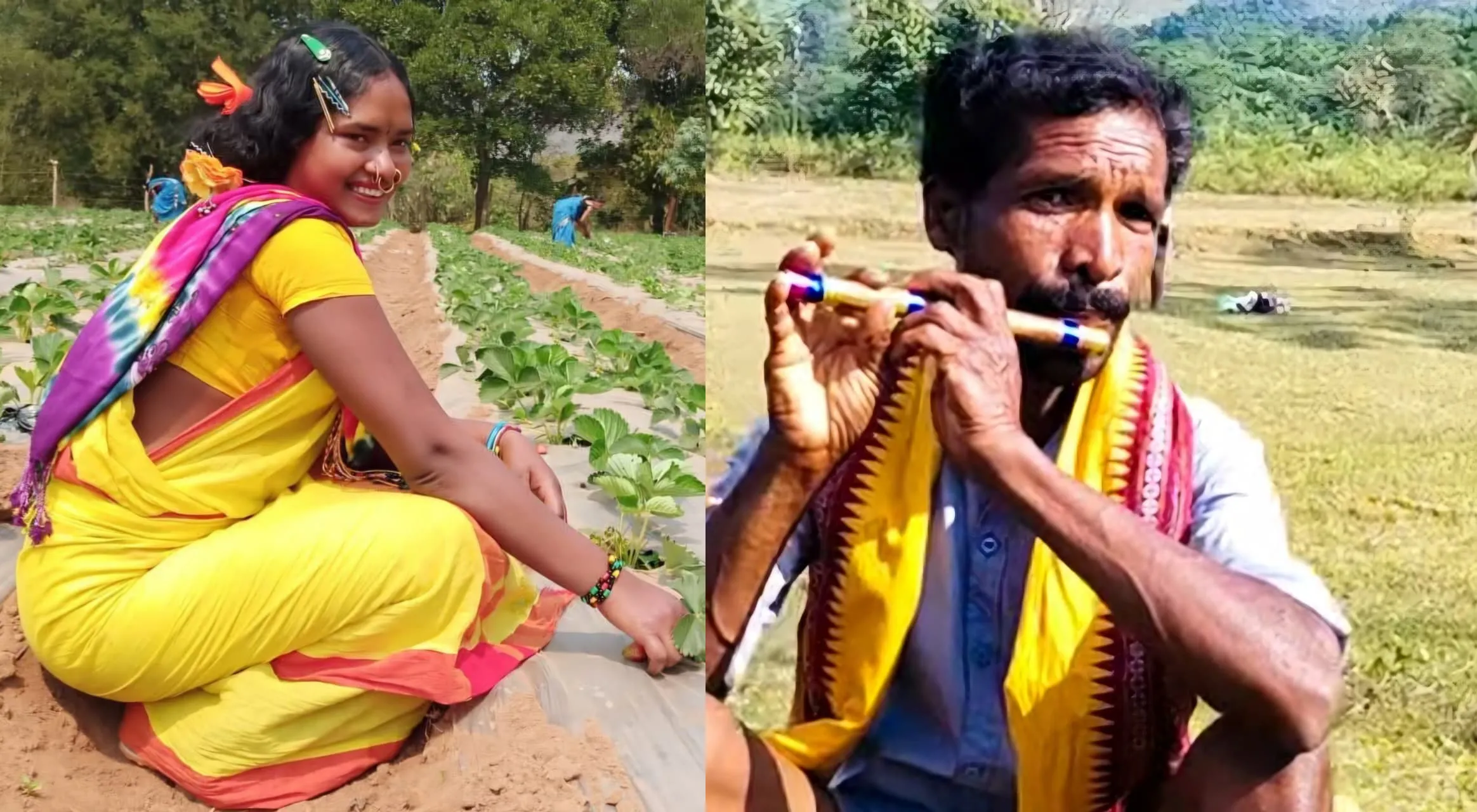
Kutia women practise Tikanga, a traditional tattooing art using soot, turmeric, castor oil and needles to create geometric patterns on their faces and arms, symbolising tribal identity and beauty. Traditional adornments include sambar deer horn hair accessories, colourful glass- bead necklaces, carved bamboo tobacco containers and ceremonial masks made from dried wild gourd shells.
Distinctive village architecture: Houses in Kutia Kandha villages feature two rows facing each other across a central path, which houses the sacred altar of Dharani Penu, the Earth Goddess and the community’s supreme deity. The houses follow the traditional Khadika design, with adjoining dwellings sharing a front veranda and continuous thatched roof.
During Burlang Yatra, a festival celebrating seed worship and community exchange, women decorate earthen walls with geometric patterns and images of Bhima Penu using red ochre, charcoal and rice flour. Intricately carved wooden doors add to the homes’ distinctive craftsmanship.
Music, dance and oral traditions: Music, dance and oral literature are central to Kutia Kandha social life. Traditional youth dormitories — Dhangda Basa for unmarried boys and Dhangdi Basa for girls — promote socialisation, cultural continuity and community bonding.
During seasonal festivities, young men and women dance in separate rows, moving to the beats of the madal, the mahuri and Gopal flute, and the Deka, a traditional two-stringed bamboo fiddle with a gourd resonator. Sung in the ancestral Kuvi dialect, their songs mourn ancestral losses and celebrate seasonal blooms.
Persistent poverty and deprivation: Despite their rich cultural heritage, however, Kutia Kandha families in remote areas of Lanjigarh, Rampur and Thuamul Rampur continue to struggle with poverty and limited livelihood options. They depend largely on shifting cultivation (podu), growing finger millet, minor millets and oilseeds, supplemented by foraging for roots, mushrooms, mahua flowers, lac and Sal leaves.
Despite the establishment of the Kutia Kandha Development Agency (KKDA) in 1978, deprivation persists. More than 80% of Kutia Kandhas in Kalahandi district live below the poverty line (BPL). Besides, nearly 12% of households lack food ration cards, while only 4.8% belong to the Above Poverty Line (APL) category.
Remote hamlets such as Phuldumer, Khemundipadar and Palberi in Lanjigarh block for instance face near-zero literacy, high school dropout rates, child malnutrition and anaemia.
Many families live in dilapidated straw shelters after missing out on rural housing schemes. The eight-year Odisha PVTG Empowerment and Livelihoods Improvement Programme (OPELIP), supported by the International Fund for Agricultural Development (IFAD), aimed to strengthen farm-based livelihoods, land security and food security. However, villagers allege that bureaucratic indifference and fund misappropriation have hampered its implementation.
Preserving heritage while improving livelihoods: Preserving Kutia Kandha heritage requires better access to healthcare, motorable roads and clean drinking water, alongside stronger market linkages for Dhokra metalcraft, organic millets and forest produce. Targeted, transparent interventions are essential to protect their cultural heritage, livelihoods and traditional role in conserving Niyamgiri’s ecology.
.webp)