
.webp)

By Santosh SinghDeo
Bhawanipatna: Kalahandi district has carved out a unique place on Odisha's agricultural map. Extensive government plans have been drawn up to develop this region of Western Odisha into an organized cotton cluster. However, poor-quality seeds and agricultural corruption now stand as major roadblocks before this promising future.
Under the state government's 'Viksit Odisha 2036' vision, Kalahandi and Nabarangpur have been slated to become an integrated cotton production hub. Beyond cultivation alone, it is essential to focus on value addition by setting up spinning mills and textile industries within the district. New irrigation projects like Utei-Raul are also required to bring full irrigation coverage to cotton-growing areas. Currently, around 75,000 hectares in the district yield nearly 1,000,000 quintals of cotton each year. Yet, farmers complain that despite higher production, the absence of local processing units deprives them of fair prices, forcing most raw cotton to be transported to neighboring Andhra Pradesh and Telangana.
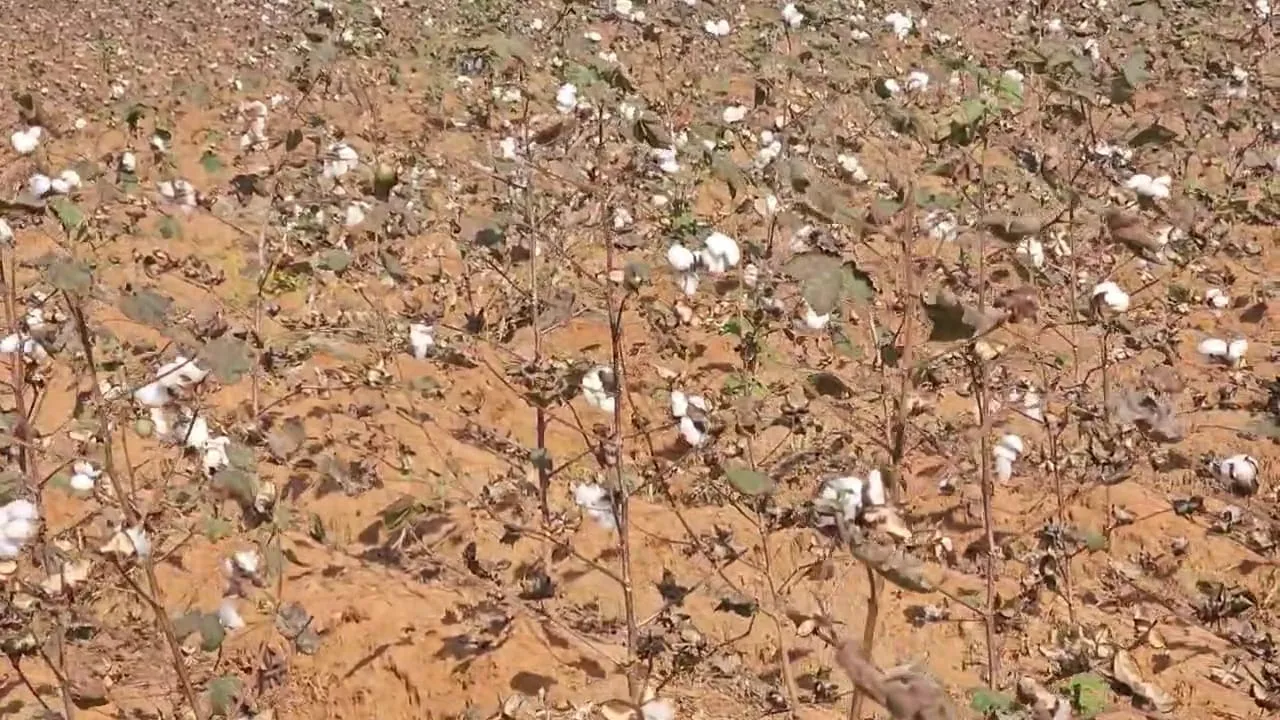
The single biggest hurdle to forming this cluster is substandard seeds. A major organic cotton scam recently surfaced in the district. Registered entities have been accused of supplying cheap, uncertified seeds instead of certified, high-yield varieties. Due to these poor seeds, plants in several areas fail to develop cotton bolls even after full vegetative growth, causing losses of thousands of rupees per hectare. While certain agencies siphon off crores of rupees using forged organic farming certificates, genuine farmers struggle just to secure the Minimum Support Price (MSP). According to agricultural experts, turning Kalahandi into a genuine cluster requires strict border checkpoints and enforcement squads to halt illegal seeds, greater Cotton Corporation activity in mandis like Kesinga and Karlapada, and encouraging farmers to source exclusively from government-registered agencies.
The soil of Kalahandi holds immense potential. But unless this 'white gold' is protected from counterfeit seeds and corruption, the vision of a cotton cluster risks remaining confined to paper. In several border areas, the influx of illegal, unapproved seeds from neighboring states—such as unverified BG-III or herbicide-tolerant varieties—is rising. Though not government-approved, outside traders push them onto farmers with promises of bumper yields.
Also Read: Beyond the lights: Discovering Bhubaneswar through Durga Puja
Substandard seeds lead to poor germination, wiping out a farmer's initial capital investment. They are also far more prone to bollworm infestations, causing vegetative growth without boll formation. Furthermore, cotton grown from inferior seeds yields short, weak fibers that fail to command fair market rates.
Departmental data shows cotton cultivation in Kalahandi has grown over the past decade. Production rose from 584,110 quintals across 58,411 hectares in 2018–19 to 960,000 quintals across 70,780 hectares in 2022–23. Cotton procurement mandis exist under RMCs at Karlapada (Bhawanipatna), Utkela (Kesinga), and Uchhala (Junagarh). However, mandis remained shut during 2021–22 and 2022–23, and cotton cultivation subsequently slowed over the past two years (2025–26). Despite record harvests, the district lacks a single government ginning or spinning mill, relying solely on seven private ginning facilities.
Overall, Kalahandi's soil has the power to yield wealth, but transparency must be enforced from "seed to market." Joint action by the Agriculture Department and district administration is critical to stopping the fake seed trade. Without safeguarding this crop against substandard seeds and corruption, the cotton cluster dream will remain just ink on paper.
.webp)