

.webp)


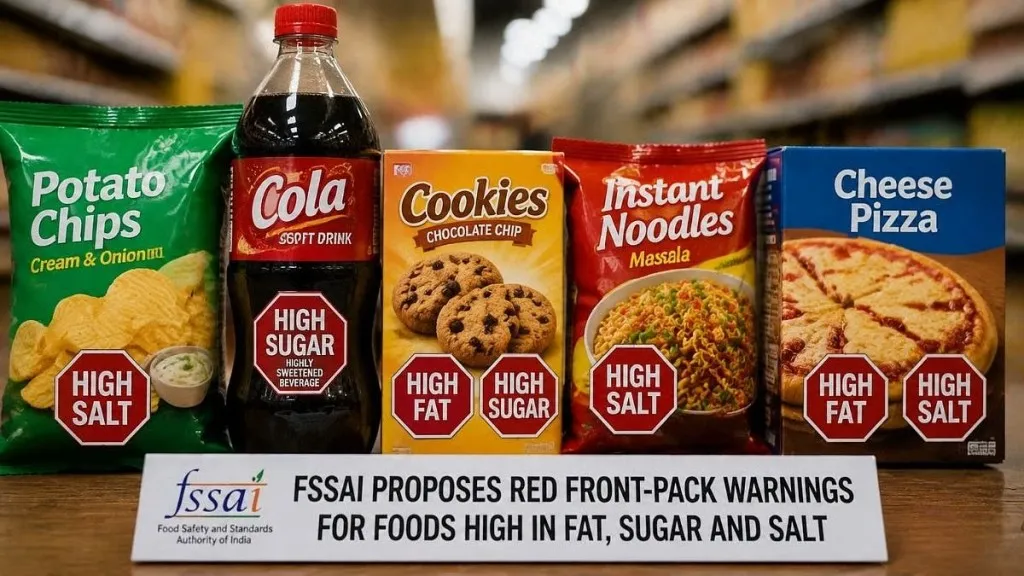
Food regulator suggests red hexagonal labels for unhealthy packaged snacks
India’s food regulatory body has introduced a significant proposal requiring red warning markers on packaged items containing excess fat, sugar, and salt. FSSAI recently submitted this strategic plan to the Supreme Court of India, suggesting a bold front-of-pack labelling system to help buyers easily spot unhealthy products. This regulatory shift aims to directly influence consumer choices at the point of purchase rather than relying on complex nutritional charts printed on the back.
Also Read: Big Price Hike Before Festive Season! Jaggery, Mishri Turn Costlier in Odisha
Supreme Court Intervenes For Public Health
Judicial pressure accelerated this move after health activists filed petitions demanding clearer nutritional transparency for young consumers. Top court justices specifically criticised previous delays by the regulatory authority and demanded a definitive framework within two weeks. Legal representatives for the state firmly rejected claims that these proposed rules would unfairly penalise traditional Indian snacks. Historically, India has debated front-of-pack coding for years, with early suggestions dating back to 2019 facing strong pushback from industry lobby groups.
Red Hexagonal Symbol Details
Under this new framework, food packets must display a distinct red hexagonal symbol if they exceed prescribed limits in at least two of the three key nutrient categories. Shoppers buying chips, biscuits, or sweetened beverages will instantly recognise products carrying high-risk nutrient levels. Multinational corporations like Coca-Cola and Nestle previously resisted stricter warning requirements during earlier industry consultations. Global brands operating in the domestic market now face a clear choice. They must either reformulate their product recipes to reduce sodium and sugar or accept the red label and absorb potential sales impacts. Consumers will directly benefit from easily identifiable labels highlighting excessively sweet beverages or high-sodium foods.
While these rules currently remain in the proposal stage through the court filing, health experts view this development as a necessary shift. FSSAI actively evaluates exact threshold limits for these nutrients before publishing final regulations for food manufacturers.
Image Courtesy: Free Press Journal
.webp)