
.webp)


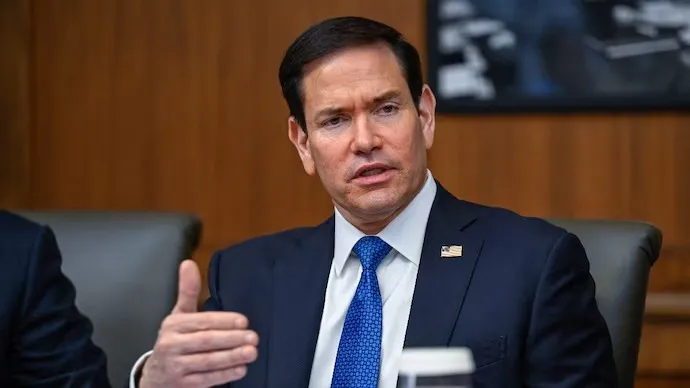
Washington exempts Indian energy purchases to finalise pending trade agreement
United States Secretary of State Marco Rubio confirmed that Washington will waive sanctions on Russian oil purchases to help finalise an impending trade agreement with New Delhi. Speaking in Uzbekistan, Rubio explained that foreign policy decisions must balance complex bilateral relationships and global energy realities rather than focusing entirely on the Russia-Ukraine conflict. His statements follow Washington signing its own diesel purchase contract with Moscow and suspending the Lindsey O. Graham Sanctioning Russia and Iran Act of 2026.
Rubio is scheduled to arrive in Mumbai on October 20 for diplomatic discussions with External Affairs Minister S. Jaishankar. With the threat of steep import tariffs lifted, both nations have reached broad alignment on resolving existing disputes and closing the pending commercial pact. New Delhi recently demonstrated alignment with Washington by banning goods produced using forced labor and issuing a joint G20 commitment to tackle structural overcapacity in sectors like electric vehicles, chemicals, and foundational semiconductors.
Policymakers in both capitals are battling severe inflationary pressures. United States diesel prices recently averaged $6.18 per gallon, pushing domestic inflation to 3.7 percent and raising cost-of-living concerns ahead of upcoming midterm elections. Indian markets face similar challenges, with retail inflation climbing to 5.54 percent last month. Domestic food prices have surged to 7.74 percent, driven by essential commodities, while the global food price index jumped 5.8 percent.
High fuel costs make alternative energy sources difficult for many developing economies to secure. India's Ministry of External Affairs consistently maintains that national energy security requires diversified sourcing driven by evolving market dynamics. New Delhi previously raised concerns with United States representatives regarding how sudden supply disruptions could negatively impact international commodity markets and bilateral ties.
.webp)