
.webp)


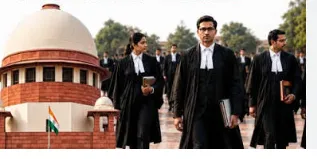
New Delhi, August 22: The Supreme Court has significantly revised the eligibility framework for entry-level judicial service, reducing the mandatory legal practice requirement for Civil Judge (Junior Division) recruitment from three years to one year.
The decision was delivered in a 2:1 verdict by a bench comprising Chief Justice Surya Kant, Justice Augustine George Masih and Justice K. Vinod Chandran, who dissented.
While easing the pre-examination practice requirement, the Supreme Court has retained its emphasis on practical legal experience by introducing a structured training and clerkship programme for candidates selected through the judicial service examination.
Transitional Relief for Fresh Law Graduates
The Court has provided an important transitional arrangement for law graduates affected by the shift in eligibility norms.
Candidates applying for recruitment notifications issued between May 20, 2025, and March 31, 2027, will be allowed to appear for the examination without prior legal practice. For eligibility purposes, they will be deemed to have completed the required one year of practice.
However, for recruitment notifications issued from April 1, 2027, candidates will be required to have at least one year of actual legal practice before appearing for the Civil Judge examination.
Selected Candidates to Undergo Two Years of Training
Clearing the judicial service examination will no longer result in an immediate appointment as a regular Civil Judge.
Under the new framework, successful candidates will initially be appointed as Trainee Judicial Officers. They will undergo one year of intensive training at the State Judicial Academy, followed by another year of structured law clerkship.
The clerkship programme will include six months of training under a district judge or a member of the higher judicial service, followed by six months under a sitting High Court judge.
Candidates will be inducted into regular judicial service only after satisfactorily completing the prescribed training and clerkship.
The Supreme Court's ruling seeks to balance easier access for aspiring judges with the need for practical courtroom exposure. While reducing the period of mandatory practice before the examination, the Court has shifted a substantial part of professional training to the post-selection stage through a structured two-year programme.
.webp)