


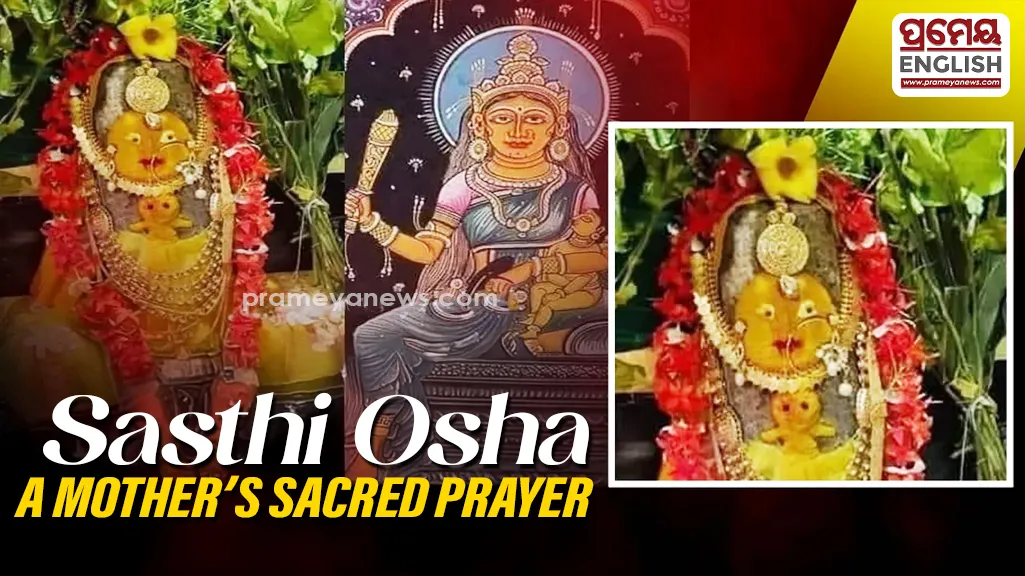
Bhubaneswar, Sept 17: Odisha is known for its rich tradition of local and regional festivals connected with family, agriculture, folklore and religious beliefs. Sathi Osha, also known as Shathi Osha or Shasthi Osha, is one such traditional observance, particularly popular in the erstwhile Puri and Ganjam districts.
Observed on Shukla Shasthi (the sixth lunar day) of the Bhadrab month, the festival is dedicated to Goddess Shasthi, traditionally regarded as the protector and guardian of children. In Hindu tradition, Shasthi is associated with Goddess Durga or Prakriti and is described as the consort of Skanda. She is also known as Devasena and is counted among the Shodasha Matrikas, or sixteen mother goddesses.
According to traditional belief, worshipping Goddess Shasthi brings blessings for children and the well-being of the family. The sixth day after a child's birth is also considered significant in many Odia households. On this day, the goddess may be represented on the wall of the maternity room or through a small idol. Some communities also observe the tradition on the twenty-first day after childbirth. Women with children traditionally observe Shukla Shasthi, particularly Bhadrab Shukla Shasthi, seeking their children's health, longevity and prosperity.
Rituals and offerings
During Sathi Osha, four small representations of Goddess Shasthi are made from clay and turmeric, dressed in yellow cloth and placed on a wooden platform. They are worshipped with flowers, sandalwood paste, incense and lamps.
Food offerings traditionally include six types of vegetable preparations and six varieties of pitha, reflecting the importance of the number six. In some traditions, non-vegetarian food is also offered. Plants and natural materials such as paddy, olua, colocasia, amla, bajramuli, bamboo, ber leaves and mango branches are placed near the deity.
Intricate jhoti and chita, traditional Odia designs, are drawn around the worship area. The rituals are generally performed by an elderly or senior female member of the family, after which the children receive the blessings of the goddess.
The Sathi badia ritual
A distinctive ritual is Sathi Badia. At night, a bundle made from plants such as apamarga, bamboo, paddy, bajramuli and colocasia is gently touched or tapped on children's backs by their mothers and elderly women. Traditionally, this is believed to protect children from childhood misfortunes and ailments, and to promote their health and longevity.
A sacred thread known as Sathi Budhi is also touched to the deity and tied around the children's wrists as a symbol of protection.
The observance traditionally continues for seven days, after which the representations of Goddess Shasthi and other ritual materials are immersed in water.
Sathi Osha reflects Odisha's enduring folk-religious heritage and the traditional belief that children are the greatest wealth of a family. Through its rituals, offerings and family-centered practices, the festival expresses the hopes of parents and elders for the health, safety, longevity and prosperity of their children.