
.webp)

By Santosh SinghDeo
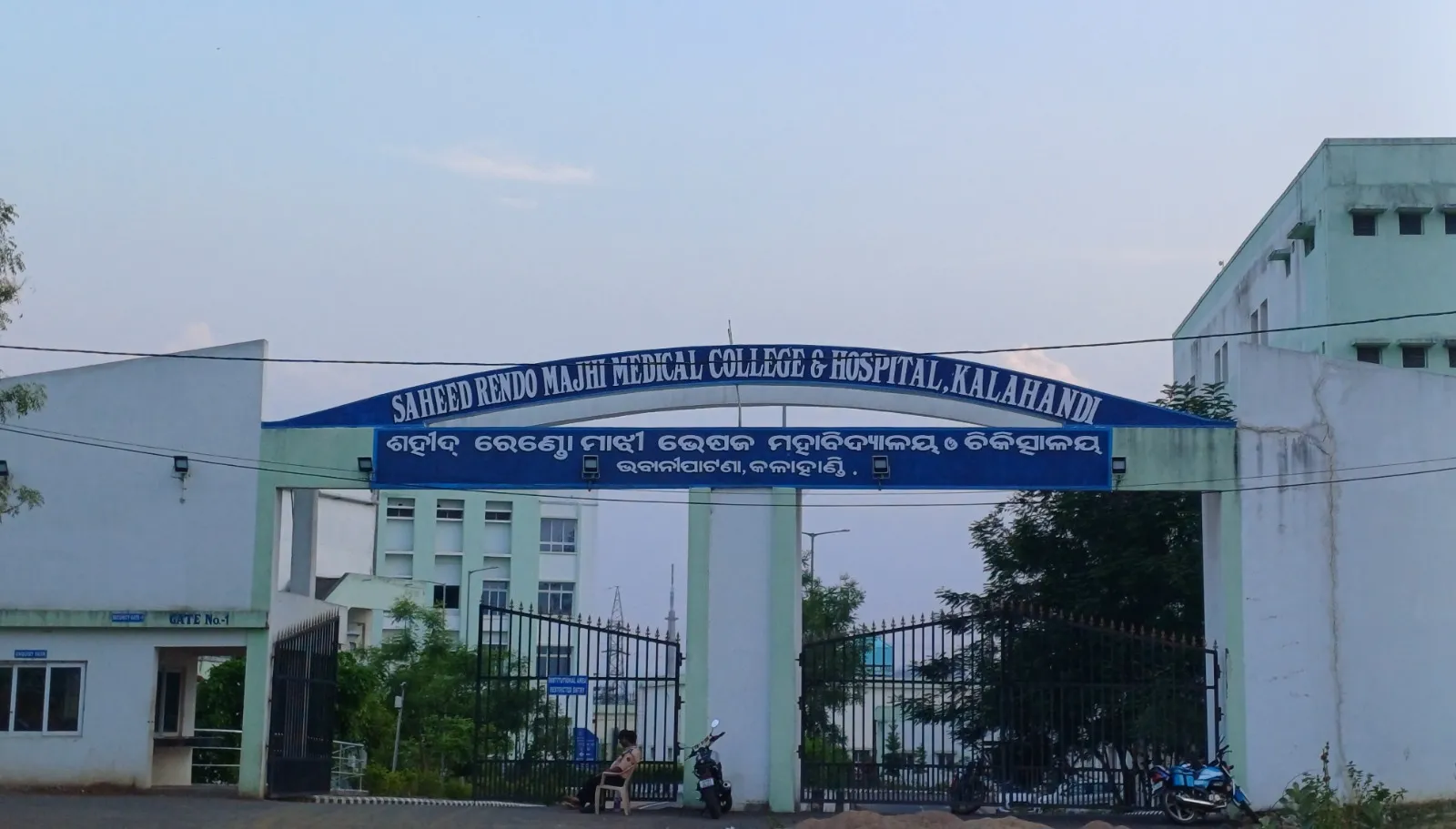
Bhawanipatna: When the Saheed Rendo Majhi Medical College and Hospital (MCH) was inaugurated in Kalahandi district in 2023, it was hailed as the dawn of a new era for local healthcare. Built at a cost of around Rs 481 crore, this state-of-the-art facility has completed three years, yet it remains bogged down by numerous problems. While the institution has succeeded in academic education, it has fallen far short of expectations when it comes to patient care and treatment.
The medical college is a primary lifeline not only for Kalahandi district, but also for neighbouring Nabarangpur and parts of Chhattisgarh. However, a fully functional Neonatal Intensive Care Unit (NICU) has not been set up yet. Currently, it operates only a basic Special Newborn Care Unit (SNCU). As a result, critically ill infants are referred to Burla or Bhubaneswar for treatment. This long 5 to 7-hour journey often turns into a death trap for innocent babies. Local intellectuals have already petitioned the Chief Minister's Office demanding a Level-3 NICU.
The Saheed Rendo Majhi Medical College has infrastructure, but lacks facilities. On paper, it is a cutting-edge institution: a 43-acre campus equipped with smart classrooms and high-tech labs. But reality tells a different story. The hospital wing still depends heavily on the old district hospital. All major departments function within the District Headquarters Hospital (DHH) premises, causing severe inconvenience to both staff and patients. Senior Residents, Assistant Professors, and Professors assigned to the medical college spend very little time attending to patients at the main hospital. Like a temple without a deity, the severe shortage of doctors paints a grim picture.
Also Read: Known and unknown Waterfalls of Kalahandi
According to guidelines, there should be one doctor for every 1,000 people. Yet, persistent hiring hurdles in Kalahandi have led to growing public anger. While the state government has posted doctors to various needy districts, KBK districts like Kalahandi continue to be left out. The government has mandatory service rules: every doctor is required to serve for five years in remote areas like KBK, including three years in tribal regions. However, once medical students earn their government doctor credentials, many lose interest in public service and move away for better earnings. Others focus primarily on private practice, while doctors posted in tribal and remote pockets fail to attend to patients regularly. Consequently, ordinary patients often end up in critical condition due to neglect.
Official data shows Kalahandi district should have 606 doctors, but only 199 are currently working. More than 238 doctor posts have remained vacant for years. In Dharmagarh Sub-Divisional Hospital alone, 34 out of 49 sanctioned posts lie vacant. The rural scenario is worse: most Primary Health Centres (PHCs) and Community Health Centres (CHCs) run without doctors, leaving healthcare in the hands of pharmacists or visiting doctors on shift. Most health centres lack specialists entirely.
Even at the Kalahandi Medical College, while several doctors have joined, they are reluctant to serve at the district headquarters hospital. Although faculty numbers have increased, there is a shortage of specialists and senior residents, leaving expensive medical machinery lying idle and unused.
It is no exaggeration to say this institution is a boon for students, but a bane for patients. Saheed Rendo Majhi Medical College builds bright futures for its students, while ordinary patients continue to struggle. Every year, 100 MBBS students enroll and enjoy modern amenities. Meanwhile, more than 3,000 patients visiting daily wait for hours just for basic care. For major surgeries and ICU support, people still must travel outside the district.
Even in 2026, Saheed Rendo Majhi Medical College and Hospital has failed to emerge as a complete, fully functioning medical facility. For the people of Kalahandi, it needs to be a lifesaver, not merely a teaching school. Concerned citizens say that until specialist doctors and advanced treatment facilities are made available, mere ribbon-cutting and red-tape hold no real value.
.webp)