

.webp)


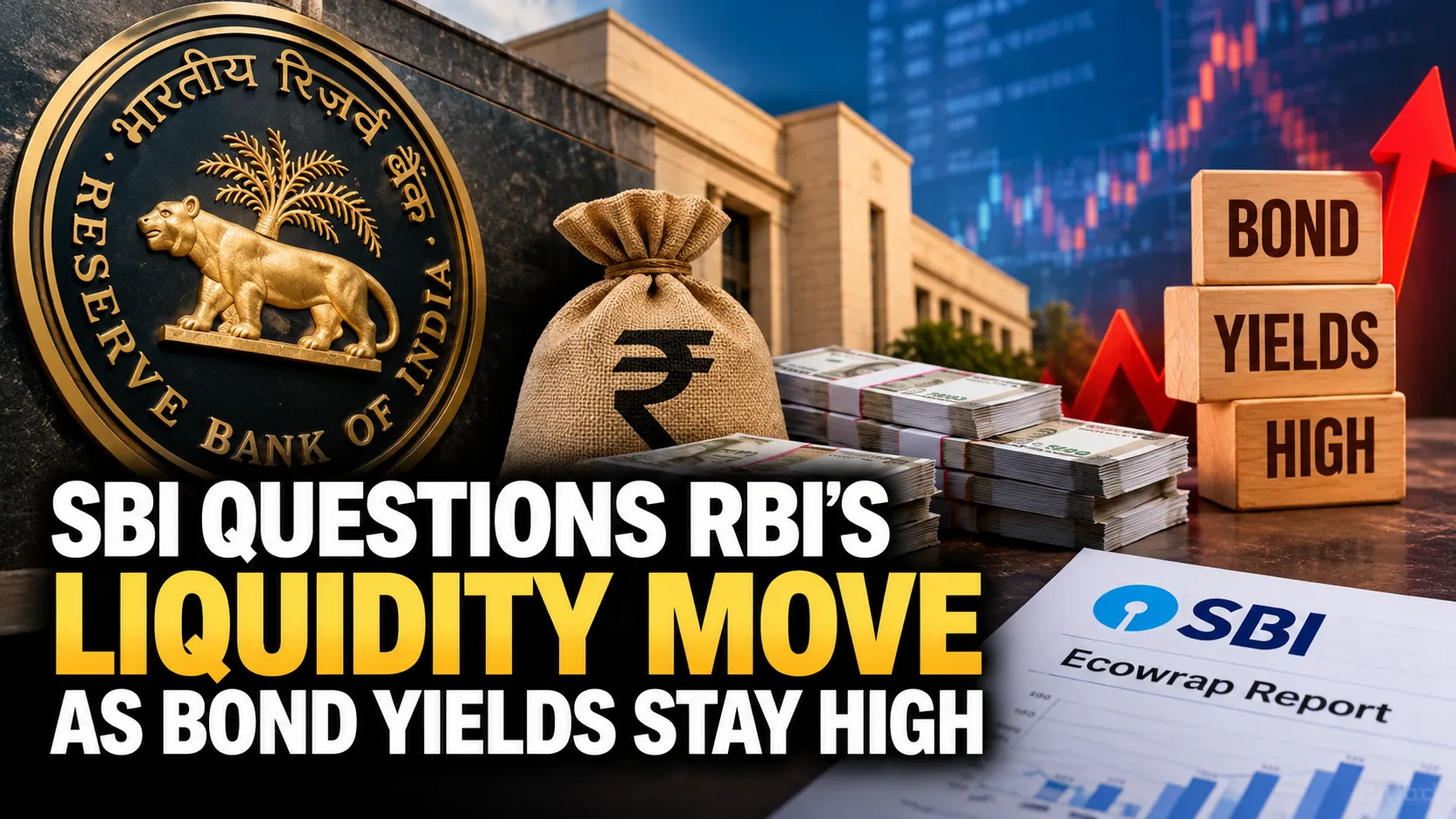
New Delhi, Oct 23:The Reserve Bank of India's (RBI) decision to inject Rs 2.5 lakh crore into the banking system has raised questions over its liquidity management approach, with the State Bank of India (SBI) saying the move appears difficult to reconcile with the central bank's efforts to keep monetary policy tight to control inflation.
In its latest Ecowrap report, SBI said the RBI had consistently signalled a tighter monetary policy through its policy decision, the Governor's statement and the minutes of the Monetary Policy Committee (MPC). Against this backdrop, the large liquidity infusion could make it harder for markets to understand the central bank's immediate priorities.
The RBI injects liquidity by lending money to banks, helping them meet their funding needs and manage day-to-day transactions. However, when the central bank is trying to keep financial conditions tight to contain inflation, adding large amounts of money to the banking system can appear to send a different signal.
Also read:As gold prices fall, jewellers bet on a brighter festive season
SBI noted that the RBI had moved its operating rate towards the upper end of its policy corridor, a step consistent with tighter financial conditions. It also pointed to the cancellation of Treasury bill auctions, saying the measures could be interpreted by markets as efforts to influence movements in government bond yields.
Despite these actions, SBI expects Indian government bond yields to remain elevated. Higher crude oil prices could add to inflationary pressures and increase concerns about India's import bill, while developments in global bond markets could also influence domestic borrowing costs.
Bond yields generally move in the opposite direction to bond prices. When investors demand higher returns to compensate for inflation and other risks, existing bond prices tend to fall, pushing yields up. This can increase borrowing costs for the government and influence interest rates across the economy.
SBI also highlighted a widening difference between Indian government bond yields and US Treasury yields, which it said had reached 250 basis points, or 2.5 percentage points. The spread was moving towards normalisation, but elevated crude oil prices could prevent Indian yields from declining significantly.
The report further noted a shift in the RBI's assessment of economic risks. Compared with its August minutes, the October MPC minutes placed greater emphasis on external conditions and financial stability, while giving less attention to liquidity and the way monetary policy affects borrowing costs.
This suggests the RBI is increasingly concerned about risks from widening geopolitical conflicts and their potential impact on India's external stability, even as inflation remains a key policy concern.
SBI recommended that the RBI avoid injecting and withdrawing liquidity at the same time. Instead, it favoured widening the Liquidity Adjustment Facility (LAF) corridor, the range within which short-term interest rates can move around the RBI's policy rate. A wider corridor, the bank argued, could allow market rates to adjust more flexibly when financial conditions become uncertain. (with ANI inputs)
.webp)