

.webp)

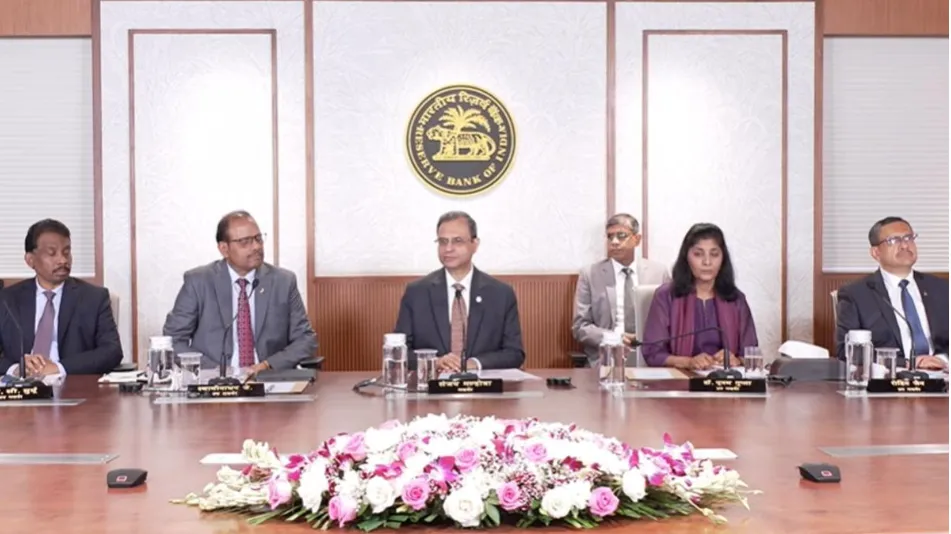
Bhubaneswar, Oct 8: The Reserve Bank of India’s decision to raise the repo rate by 25 basis points may not immediately change the price of a television, car or festive gift, but it could make one thing costlier for households this festive season — borrowing money to buy them.
With the repo rate now at 5.50 per cent, borrowers with floating-rate loans could face higher interest costs, while those planning big-ticket purchases on EMIs may have to factor in a higher repayment burden. Savers, meanwhile, could eventually benefit if banks raise deposit rates.
The RBI’s Monetary Policy Committee unanimously raised the repo rate from 5.25 per cent to 5.50 per cent at its October 5-7 meeting and shifted its stance from “neutral” to “calibrated tightening.”
For consumers, the key question is: What happens to EMIs and festive spending?
The repo rate is the rate at which the RBI lends money to banks. When it rises, borrowing costs can move higher, although the extent and timing of the impact varies across banks and loans. Borrowers with loans linked to external benchmarks are likely to feel the change more quickly.
The RBI’s data show that lending-rate transmission has not been uniform. Between February 2025 and August 2026, the repo rate had fallen cumulatively by 125 basis points, while weighted average lending rates on fresh rupee loans declined by 72 basis points.
A borrower with a Rs 50 lakh home loan for 10 years at 8 per cent could see the monthly EMI rise by around Rs 662, to Rs 61,326, if the full 25-basis-point increase is passed on to the lending rate. Similarly, on Rs 10 lakh car loan for 5 years at 9 percent, a full 25-bps pass-through would raise the EMI roughly by Rs 122 a month to Rs 20880 a month. The monthly EMI of five-year personal loan of Rs 5 lakh would rise by Rs 63 a month, increasing the monthly EMI to Rs 11185 a month. However, the actual impact will depend on the lender and the loan’s reset mechanism.
What does it mean for festive shopping?
The festive season typically brings higher spending on cars, two-wheelers, electronics, furniture, jewellery, travel and other discretionary items. A significant part of such spending is financed through loans or EMIs. A higher borrowing cost does not make a Rs 40,000 refrigerator more expensive. Instead, it can increase the financing cost of the purchase. For households already servicing several EMIs, this could mean postponing a purchase, opting for a cheaper product or making a larger upfront payment.
However, the RBI’s report shows that consumer demand remains strong. Private consumption was healthy in the first quarter of 2026-27, while discretionary consumption remained buoyant. Retail credit also continued to grow strongly, led by housing, gold and vehicle loans.
Also read:Bloodbath: Sensex crashes 1,045 points, Nifty hits fresh 52-week low
Why is the RBI tightening policy?
The answer is inflation. The RBI’s October report said headline Consumer Price Index (CPI) inflation rose sequentially during June-August, driven largely by food and fuel, while core inflation also picked up. It flagged higher energy prices, adverse weather conditions and the West Asia conflict as key risks. The central bank has raised its average inflation projection for 2026-27 to 5.2 per cent, with inflation projected at 4.9 per cent in Q2, 6 per cent in Q3 and 5.7 per cent in Q4.
The rate hike is already being felt in the stock market. On Thursday, the markets witnessed a freefall with the Sensex plummeting to 71593.24, down by 1045.46 points, and Nifty 50 falling 371.25 points to 22231.80. The sell-off was broad-based with auto, realty, metal sectors coming under pressure.
For banks, the rate hike could provide some near-term support to net interest margins (NIM) if lending rates reprice faster than deposit costs. However, the benefit could be limited if banks are forced to raise deposit rates to attract funds. The RBI’s data show that transmission has varied across banks and loan categories, making the impact on NIM uneven across lenders.
Are savers worse off?
Not necessarily. Borrowers are likely to feel the immediate pressure, but savers could benefit if banks increase deposit rates. However, there is no guarantee that deposit rates will rise immediately or by the same extent as lending rates. The bigger message from the MPC meeting is the shift to “calibrated tightening.” The Times of India reported that the change signals that rate cuts are off the table in the near term.
For consumers, the takeaway is simple: festive spending can continue, but borrowing may need more calculation. Those planning large purchases on EMIs should look beyond the sticker price and consider the total interest cost, while existing floating-rate borrowers should prepare for a possible increase in repayment costs.
.webp)