
.webp)



Bhubaneswar, Nov 24: Vehicle owners in Odisha are facing growing difficulties due to stringent transport regulations enforced by the state’s Transport Department. From obtaining Pollution Under Control Certificates (PUCC) to vehicle registration, fitness certification and driving licences, several procedures have become increasingly complicated, leaving vehicle owners struggling with delays, additional expenses and hefty penalties.
Under the existing system in Odisha, vehicles with pending traffic challans are not eligible for Pollution Under Control Certificates (PUCC). Vehicle fitness tests must be conducted at Automated Testing Stations (ATS), while driving licence tests are carried out at Automated Driving Testing Centres (ADTCs). Applicants seeking heavy vehicle driving licences are required to undergo one month of training before appearing for the examination. Even existing heavy vehicle licence holders must complete three days of training to renew their licences. Furthermore, buses may be denied registration if their chassis does not comply with prescribed standards.
These strict measures have triggered questions over why Odisha appears to be implementing central government transport regulations more rigorously than several other states. Vehicle owners in neighbouring West Bengal, Chhattisgarh, Andhra Pradesh, Jharkhand and Telangana reportedly face fewer procedural hurdles while obtaining driving licences, vehicle fitness certificates and registration for new vehicles.
The disparity has raised concerns among transport operators and vehicle owners, who question whether central regulations are being implemented uniformly across the country. Many allege that while Odisha residents are burdened with strict compliance requirements and financial penalties, similar services are comparatively easier to access in other states.
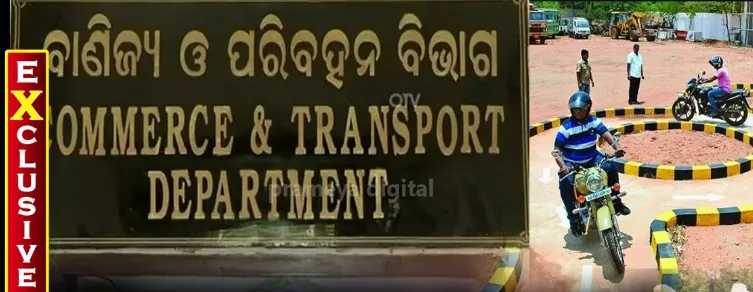
The state Transport Department has introduced automated driving testing centres at RTO offices across Odisha. These centres use camera-based automated systems to assess driving skills. Department officials have reportedly defended the arrangement by pointing out that similar systems are used in countries such as the United States and the United Kingdom.
Also Read: Stricter enforcement of PUCC checks in Odisha
However, the system has drawn criticism over its practical implementation. Applicants who wish to practise driving at these centres are required to pay a fee for every attempt. Critics argue that such charges and procedures create additional financial pressure, particularly when neighbouring states reportedly offer comparatively simpler processes for obtaining driving licences.
The requirements for heavy vehicle driving licences have also become a major concern. Applicants must undergo a month-long training programme at a designated training centre in Chandikhole before taking the examination. Similarly, licence holders seeking renewal must attend a three-day training programme at the same centre. Transport operators argue that these requirements make the process unnecessarily difficult compared with neighbouring states.
The PUCC system has also come under scrutiny. In Odisha, vehicles with outstanding traffic challans cannot obtain pollution certificates. However, allegations have emerged that vehicles registered in Odisha can obtain PUCCs from other states despite having pending challans, raising questions about differences in enforcement and monitoring.
Strict scrutiny of vehicle chassis specifications, particularly for newly manufactured buses, has created further challenges. Buses that fail to meet the prescribed chassis standards are reportedly denied registration in Odisha. Consequently, some bus operators are allegedly registering their vehicles in other states before bringing them into Odisha.
The Transport Department maintains that these measures are intended to improve road safety and reduce accidents. However, critics point out that road accidents in Odisha continue to increase every year, raising questions about the effectiveness of the stringent regulatory framework.
The implementation of High-Security Registration Plates (HSRP) a few years ago had also triggered considerable public inconvenience. Thousands of vehicle owners had crowded RTO offices and showrooms to comply with the requirement, resulting in long queues and widespread frustration. Critics alleged that Odisha residents were made to face the system before similar arrangements were widely implemented elsewhere in the country.
Senior Transport Department officials have maintained that they are simply implementing the directives of the Union Ministry of Road Transport and Highways and the Supreme Court. However, the question remains: if these are central government requirements, why does their implementation appear to differ from one state to another?
There are also allegations that certain officials are using the implementation of central regulations as an opportunity to benefit private agencies engaged in various transport-related services. These allegations have further intensified demands for transparency and uniform enforcement of transport rules.
Responding to the concerns, Additional Commissioner of the State Transport Authority (STA), Samarendra Pattnaik, said that following traffic and transport regulations was not solely the government's responsibility. He emphasised that citizens must also comply with the rules to help reduce road accidents and improve road safety.
As vehicle owners continue to face mounting compliance requirements, the debate over Odisha's transport policies has gained momentum. The key question is whether the stringent regulations are genuinely improving road safety or placing an unnecessary burden on ordinary citizens and transport operators. The demand for transparent, practical and uniform implementation of transport rules across states is growing.
.webp)