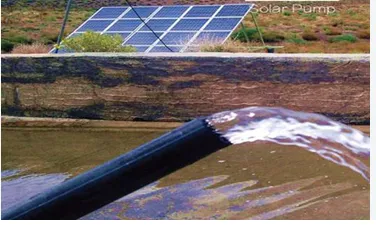
Bhubaneswar, September 7: The Odisha Cabinet, chaired by Chief Minister Mohan Charan Majhi, on Monday approved 18 proposals, including a major irrigation scheme aimed at expanding assured irrigation facilities in water-deficit areas of the state through deep borewells equipped with solar and non-solar pumping systems.
The Cabinet approved the scheme titled “Creation of Irrigation Potential through Deep Bore Well with Solar & Non-Solar Pumping System”, with a total outlay of Rs 8,653.04 crore. The scheme will be implemented using the state’s own resources over five years, from FY 2026-27 to 2030-31.
Under the initiative,1,50,000 deep borewell projects will be installed across 26 districts and 256 blocks, creating an estimated irrigation potential of 7,50,000 hectares.
The scheme is particularly aimed at addressing irrigation challenges in the state’s highland and hilly regions, Western Odisha, KBK districts and other hard-rock areas, where the scope for flow irrigation is limited. The lack of assured irrigation in these regions has contributed to low agricultural productivity and restricted Rabi cultivation.
The state government expects the initiative to boost both irrigation and cropping intensity, while improving agricultural productivity through greater adoption of modern technologies and efficient use of agricultural inputs.
The scheme is also expected to promote crop diversification and commercial farming, generate employment opportunities and improve the overall welfare of farming households. It will further support farm mechanisation and help reduce farmers’ dependence on rainfed agriculture.
The government also expects the expanded irrigation network to reduce seasonal migration from the state by creating more sustainable livelihood opportunities in rural and agricultural areas.