

.webp)

Strict biosecurity and canopy habitats ensure orangutan survival rates
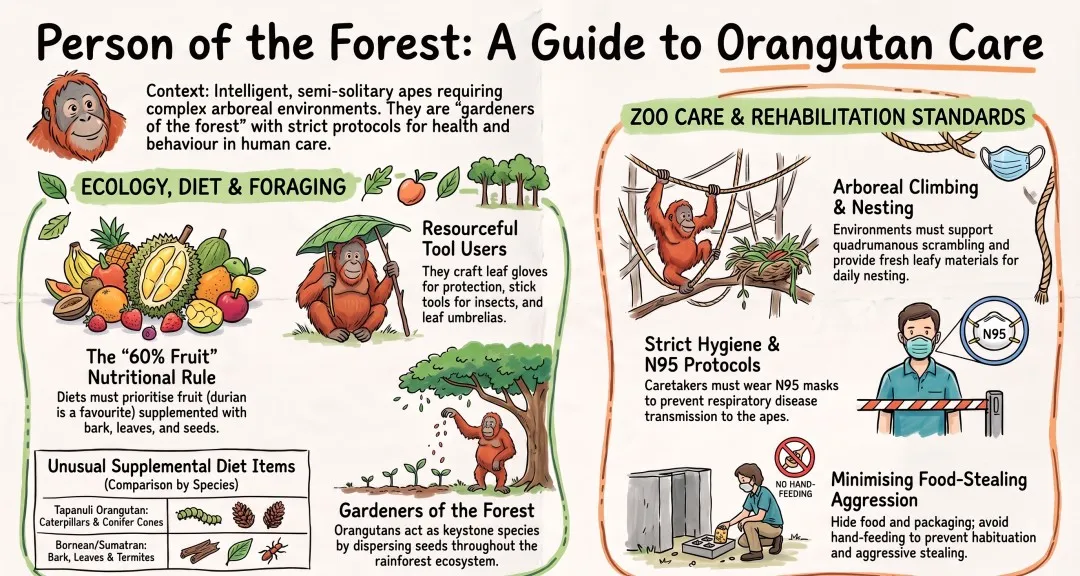
Sharing over 97 percent of human DNA makes orangutans highly susceptible to our diseases, prompting strict new safety rules for wildlife centers. These great apes have long served as vital seed dispersers across Southeast Asian islands, maintaining ecological balance. Caretakers must now wear N95 respirator masks and undergo regular health screenings to prevent the spread of illnesses like tuberculosis and influenza.
📲Follow our WhatsApp Channel for the latest news, breaking updates, and important headlines. Stay connected with us for more updates!
Dietary Habits and Forest Roles
Fruits make up roughly 60 percent of a wild orangutan diet. They specifically prefer energy-rich options like durian. When fruit becomes scarce, they eat leaves, tree bark, seeds, and insects. This foraging behavior spreads seeds over large areas, earning them a reputation as natural gardeners. They also show remarkable intelligence in the wild. Some modify twigs to reach insects hidden in trees or use leaves to hold prickly fruits safely.
Designing Better Captive Habitats
Because they are the largest tree-dwelling mammals globally, orangutans spend 90 to 95 percent of their time in the forest canopy. Captive enclosures must match this physical reality. Rehabilitation centers need elevated platforms and thick ropes to encourage natural climbing. Facilities should provide fresh branches daily so the animals can build essential nests. Keepers should scatter food at various heights to mimic natural foraging rather than handing meals directly to the apes.
Also Read: Orangutans in Odisha's forest: Black Thar spotted on CCTV; STF scans airports, railway stations & waterways
Managing Social and Health Needs
Rescued individuals must complete a strict quarantine period with full medical evaluations upon arrival. Solitary by nature, orangutans need plenty of personal space and visual barriers in their enclosures. Forcing them into crowded spaces causes severe chronic stress, which lowers their immune defenses. Reducing loud noises and limiting visitor access helps keep these sensitive primates healthy and calm during rehabilitation.
Graphics are for representative purpose only
.webp)