

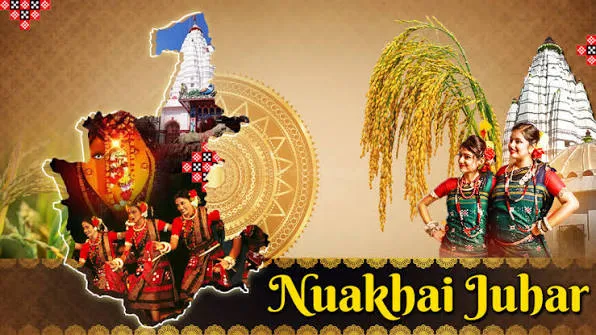
Bhubaneswar, Sept 15: The much-awaited moment is almost here. Preparations are complete, homes are buzzing with activity, and the festive spirit of Nuakhai, western Odisha’s great agrarian festival, has taken over villages and towns alike.
For families across the region, Nuakhai is more than a festival—it is a homecoming. Those who live and work far away have returned, bringing with them the warmth of reunion. Houses that had remained quiet for months are now overflowing with laughter, conversations and preparations. Courtyards are fragrant with the aroma of traditional pitha and other delicacies as families come together to celebrate the harvest and their shared roots.
At the heart of the celebrations is the revered, where preparations are in their final stages for the offering of the season’s first harvest, or Nabanna, to Maa Samaleswari, the presiding deity of western Odisha.
This year, the sacred offering will be made on Tuesday, on the auspicious occasion of Bhadrab Shukla Panchami. Following the decision of the Brahmapura Temple Trust Board and the prescribed rituals determined by the priests, Nabanna will be offered to Maa Samaleswari between 9:40 am and 9:54 am, during Tula Lagna and Makara Navamsha.
The ritual marks the ceremonial offering of the first grain harvested during the year. Once the offering is made to Maa Samaleswari, Nabanna will be offered to the associated deities. Only thereafter will families across western Odisha offer the new rice to their household deities before partaking of it themselves.
The preparations for the sacred offering began well in advance. A special variety of newly harvested paddy, known as Nua Saria, reached the chief priest of Maa Samaleswari five days ago. The rice prepared from this grain will form the Nabanna to be offered at the temple.
Across western Odisha, meanwhile, the festival is bringing families together. Relatives who had travelled long distances have returned home, turning ordinary households into vibrant centres of celebration. The kitchen and courtyard have become the focal points of activity, with different varieties of pitha being prepared as families revive culinary traditions passed down through generations.
Yet beneath the festive mood lies a quieter concern.
For many farmers, particularly those in rain-fed areas, this year’s Nuakhai does not carry the same sense of exuberance. Despite receiving heavy rainfall, farmers continue to grapple with problems surrounding registration for agricultural procurement and the shortage of fertilisers.
Many farmers have spent days making repeated trips to PACS and cooperative societies, trying to complete registration formalities. The shortage of fertilisers and allegations of black-market sales have added to their difficulties, leaving many cultivators frustrated at a time when they should ideally be celebrating the fruits of their labour.
For the farming community, therefore, Nuakhai this year is a celebration tinged with uncertainty.
Still, the spirit of the festival refuses to fade.
After all, Nuakhai is deeply woven into the cultural and emotional fabric of western Odisha. It is a festival that honours the soil, celebrates the harvest and brings families together. And even when circumstances are difficult, farmers continue to uphold its traditions.
With preparations complete, the farmer—the son of the soil—is ready to worship Mother Earth, offer the first grain to the divine and sit down with his family to share the sacred new harvest.
Because Nuakhai is not merely about eating the first rice of the season. It is about gratitude—to the earth, to the harvest, to the gods and, above all, to the people who make a homecoming worth celebrating.