

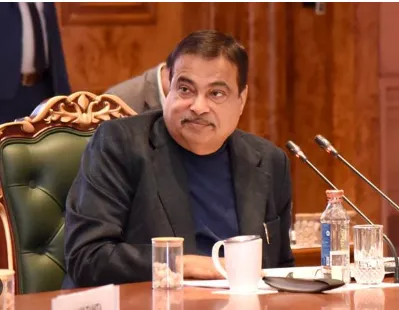
New Delhi, March 27: Union Minister Nitin Gadkari on Friday praised the Centre's decision to cut excise duty on petrol and diesel, emphasizing that the move demonstrates the government's firm dedication to public welfare. In a post on X, Gadkari described the reduction as a "citizen-focused step" taken amidst rising global fuel prices, largely driven by the ongoing conflict in West Asia.
"In the face of the escalating fuel crisis in West Asia, which has driven global energy prices higher, the Government of India has made a timely and people-centered decision to reduce excise duty on petrol and diesel," Gadkari said. He highlighted that while many nations are raising fuel prices, this decision under Prime Minister Narendra Modi's leadership reflects India's strong commitment to safeguarding the public's interests.
The Union Minister further stated that this reduction would offer relief to both households and businesses, showcasing a governance model that aims to shield citizens from global economic disruptions.
However, the decision has sparked criticism from the Congress party, which has raised concerns about its political motivations. Congress MP Jairam Ramesh, in a post on X, pointed out that during previous global declines in crude oil prices over the past 12 years, the government had not reduced fuel prices in India. Ramesh argued that the latest move was solely driven by the approaching elections and suggested waiting until after April 30 for further developments. "When global crude oil prices fell on seven separate occasions in the last 12 years, consumer prices in India weren't reduced. Today's announcement is politically motivated because of the elections," his post stated.
In a Gazette notification under the Central Excise Act, 1944, the government reduced the excise duty on petrol by Rs 3 per litre and eliminated it for diesel. A windfall tax of Rs 21.5 per litre was also imposed on diesel exports.
This decision comes amid escalating tensions in West Asia, especially involving the United States, Israel, and Iran. The conflict has disrupted the Strait of Hormuz, a critical shipping lane that handles about 20% of the world’s crude oil supply, a route through which India imported 12-15% of its oil. While the duty cuts are expected to ease pressure on oil marketing companies grappling with soaring crude prices, the retail prices of petrol and diesel have remained steady.
The government has assured that fuel supplies remain stable across the country. The Ministry of Petroleum and Natural Gas released an official statement confirming that "all retail outlets are operating normally" and that "adequate stocks of petrol and diesel are available at all petrol stations." The Ministry also urged citizens to refrain from panic buying, amid circulating rumors