



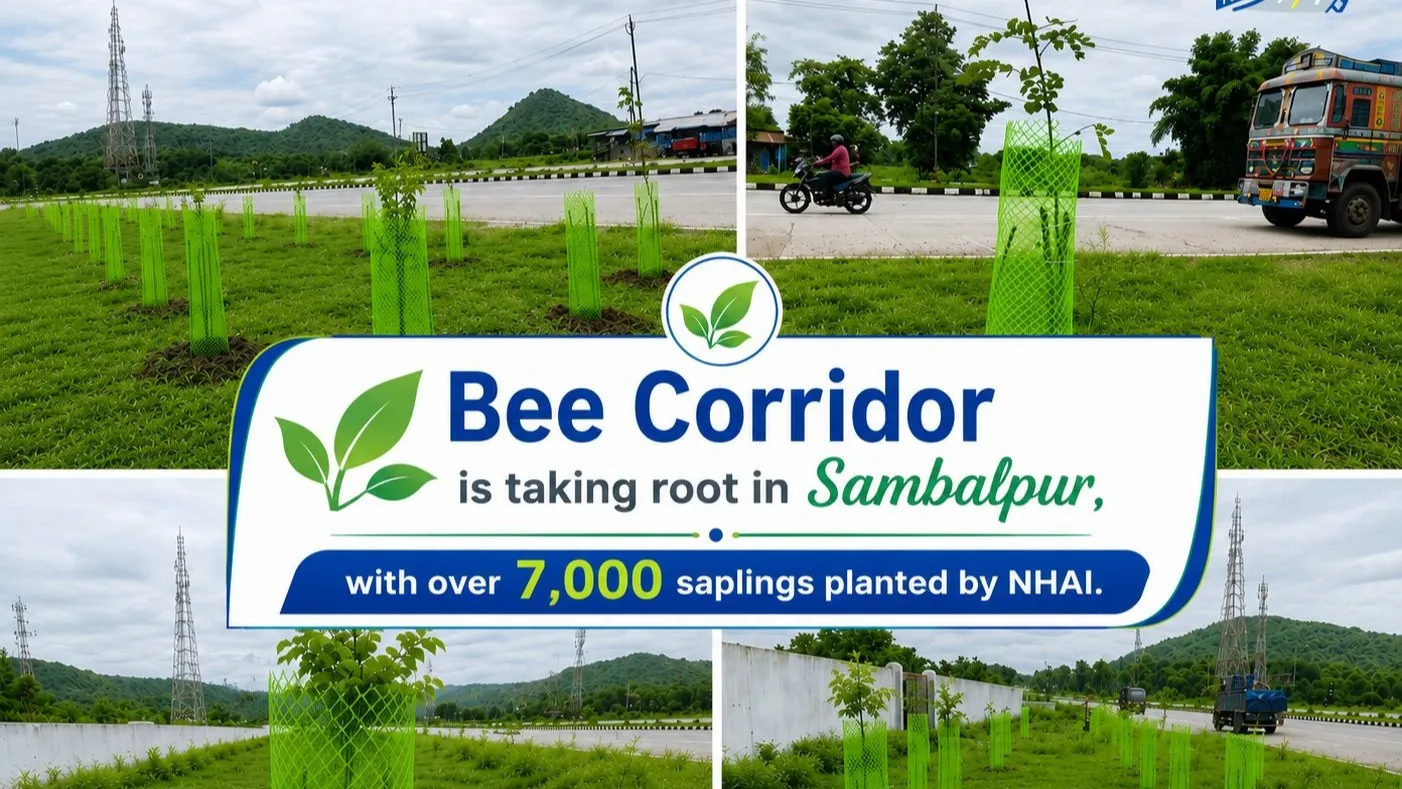
Bhubaneswar, August 8: Marking a shift from ornamental to ecological plantations, the National Highways Authority of India (NHAI) is developing a ‘Bee Corridor’ in Sambalpur by planting more than 7,000 indigenous saplings.
Honeybees play a crucial role in pollination which is essential for agricultural and horticultural productivity and maintaining healthy ecosystem.
The project aims to promote biodiversity and strengthen honeybee conservation along major highway stretches. As part of the initiative, more than 7,000 indigenous species and flowering and environmentally beneficial plants such as Neem, Karanj, Arjun, Kadamba, Jamun, Tamarind and Kanchan, have been planted along national highways passing through Sambalpur.
“The initiative will ensure a year-round supply of nectar and pollen for honeybees and other pollinators, while contributing to biodiversity conservation and ecological balance. It reflects NHAI's strong commitment to environmentally sustainable National Highway development,” said NHAI Regional Office (Odisha).
The initiative will also help reduce the increasing ecological stress faced by honeybees and other pollinators, which is adversely impacting pollination services, agricultural and horticultural productivity, and overall ecological balance.
The plantation drive of indigenous species is also expected to create a continuous green corridor which will provide a sustainable habitat and food source for honeybees and other pollinators throughout the year and also contribute to pollution reduction, carbon absorption and improved aesthetics along highways.
NHAI has set a target to plant around 40 lakh saplings in FY 2026–27, with nearly 60% under the Bee Corridor initiative across the country.
The ‘Bee Corridor’ will have a continuous linear stretch of bee-friendly vegetation comprising flowering trees and plants that will ensure the availability of nectar and pollen throughout the year.