
.webp)


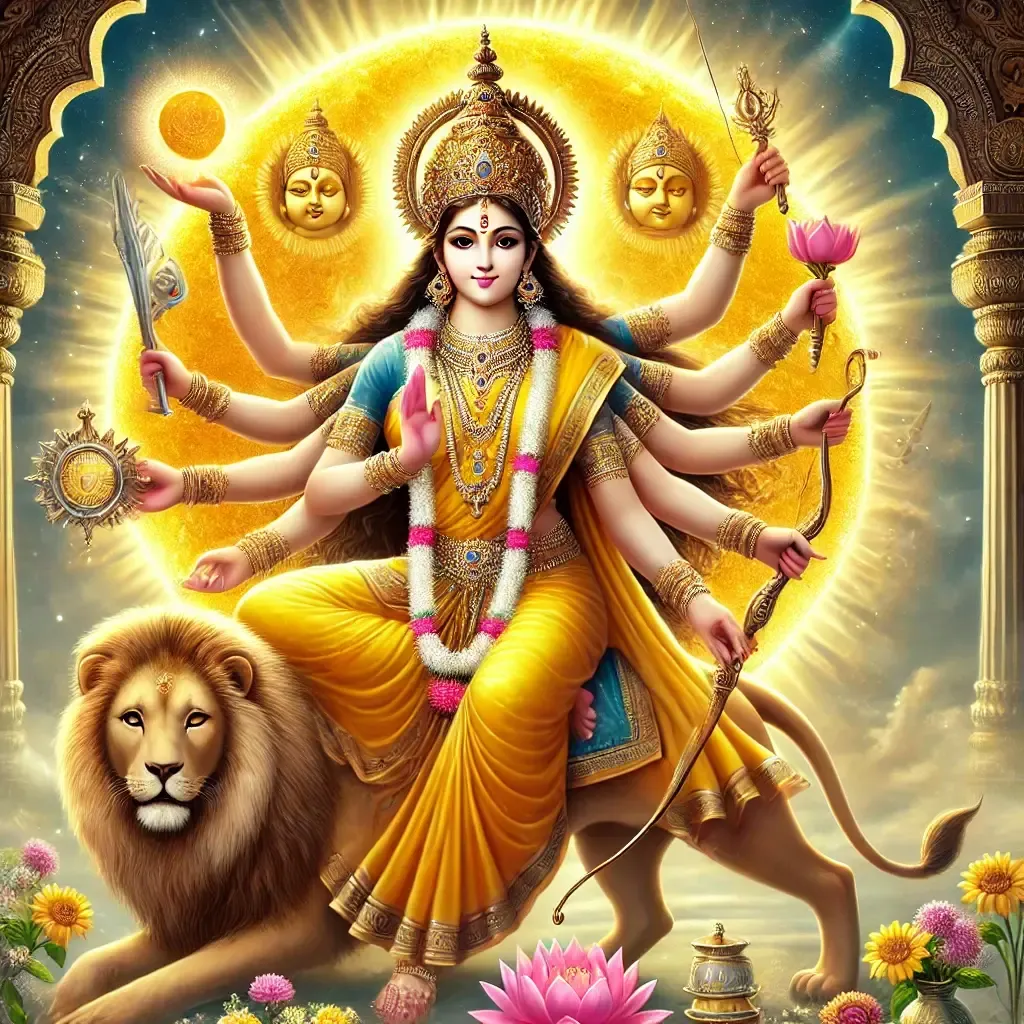
The fourth day of Navratri is dedicated to the worship of Maa Kushmanda, the fourth manifestation of Goddess Durga, revered as the source of cosmic energy, light and creation. In Hindu tradition, she is believed to have brought the universe into existence with her gentle smile, illuminating the vast darkness that prevailed before creation. Her name carries profound symbolism: Ku signifies a little, Ushma means warmth or energy, and Anda refers to the cosmic egg, representing the universe. Together, these elements reflect her association with the origin and sustenance of life.
Often depicted seated on a lion, Maa Kushmanda is portrayed with eight hands, earning her the name Ashtabhuja Devi. She holds various divine objects, including a bow, arrow, discus, mace, lotus, pot of nectar and rosary, symbolising strength, wisdom, prosperity and spiritual enlightenment. Her radiant presence represents the life-giving energy of the Sun, while her association with cosmic creation underscores the belief that divine power permeates every aspect of existence.
The worship of Maa Kushmanda on the fourth day of Navratri holds special significance for devotees seeking health, happiness, courage and prosperity. According to Hindu belief, her blessings help dispel darkness, remove obstacles and awaken the inner strength required to overcome life's challenges. Devotees offer prayers, flowers and bhog, seeking her grace for peace and abundance. The day is also associated with the Anahata Chakra, or heart chakra, which symbolises love, compassion and emotional balance in certain spiritual traditions.
Beyond religious rituals, the story of Maa Kushmanda offers a timeless message about the power of positivity and creation. Her smile, believed to have illuminated the universe, serves as a reminder that even a small expression of hope can transform darkness into light. In a world often marked by uncertainty and stress, her symbolism encourages people to nurture optimism, embrace resilience and recognise the creative potential within themselves.
Navratri, a celebration of feminine divinity and the triumph of good over evil, invites devotees to reflect on the many dimensions of Shakti, the primordial energy that sustains the universe. Through Maa Kushmanda, this divine feminine force is celebrated as the very beginning of existence—the energy that gives life, nurtures growth and inspires renewal.
As devotees observe the fourth day of Navratri, the worship of Maa Kushmanda becomes an occasion to seek not only material well-being but also inner illumination. Her divine radiance reminds us that light is never merely something we seek outside ourselves; it is also something we can cultivate within. With faith, compassion and courage, every individual has the potential to bring warmth and positivity into the world.
On this auspicious day, may Maa Kushmanda's blessings illuminate every home with happiness, every heart with hope and every life with prosperity.
.webp)