
.webp)

Puri, Jul 26: A day after the grand Suna Besha, where the sibling deities of the Shree Jagannath Temple, Lord Jagannath, Devi Subhadra, and Lord Balabhadra are adorned in dazzling golden attire, the ancient and unique ritual of Adhara Pana takes place on the holy chariots.
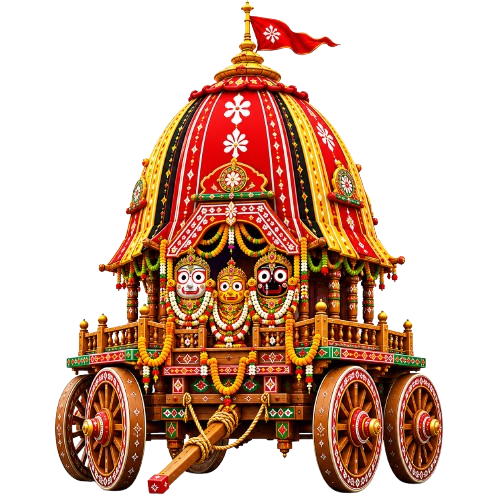
The ‘Adhara Pana Niti’ is meant for appeasing the exterior powers believed to have surrounded the holy chariots of the trinities. As part of the rituals, a sacred aromatic juice, prepared in three separate clay-tumblers is dedicated to the invisible beings, those are said to have escorted Lord Jagannath and his siblings along with the Charkraraj Sudarshan during the 9-day sojourn.
On this day, huge pots filled with the sweet, flavorful drink are carried onto the three chariots as offerings to the deities.
The ceremony, which occurs on Asadha Sukla Pakhya Dwadashi, sees these large terracotta pots placed on the chariots stationed near the Lion Gate of the 12th-century shrine.
The pots are carefully positioned so that they reach the lips of the gods, symbolizing divine refreshment, so its name the ‘Adhara Pana’ rituals.
As part of the ritual, Pania Apata Sevakas bring water in brass-bell metal pots from a well located at the Chhauni Matha, close to the Singha Dwara of the Shree Jagannath Temple.
Following this, the Supakaras(traditional cooks) prepare the sweet drink, known as Pana, by blending milk cream, cheese, sugar, bananas, camphor, nutmeg, black pepper, and a mix of other aromatic spices.
Once prepared, the Patribadu, Suarabadu, Garabadu Palia Sevaka, and Pujapanda Sevaka offer the Pana in a first to the deities. As the face of the tumblers filled with Pana touch the deities’ lips, the pots are immediately broken to liberate the spirits or souls that may reside in & around the chariots.
According to Pundits and avid research fellows of the Shree Jagannath Cult, the sacred Adhara Pana Rituals are performed to purify the Raths and its immediate environment.
The ‘Adhara Pana’ tradition holds deep religious significance, as it is believed that the Adhara Pana is meant solely for the gods and goddesses who have remained on the chariots during the Rath Yatra to protect and guard the sacred vehicles.
These deities are often referred to as the 'Rath Rakhyak' or "Chariot Guardians." Devotees are strictly forbidden from partaking in this offering.
The massive terracotta pots used in this ritual are made by the skilled potters of Kumbharpada, a locality known for its master pottery in Puri.
In earlier times, 12 clay pots were used for this offering, but currently, only nine are prepared for the event.
The Adhara Pana is typically offered after the Madhyahna Dhupa and is followed by the Sodasha Upachara Puja completing the sacred rituals associated with this important day in the Rath Yatra festivities.
This ancient tradition, rich in symbolism and devotion, continues to be a central and cherished part of the Rath Yatra celebrations in Puri, attracting pilgrims and visitors from all over the world.
.webp)