

.webp)
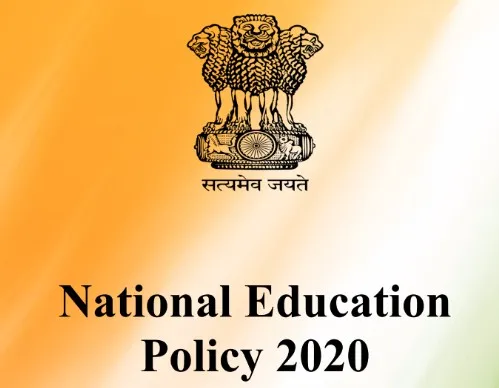
New Delhi, July 26: Education has emerged as one of the central pillars of the Narendra Modi government's vision of building a Viksit Bharat (Developed India). Anchored in the transformative framework of the National Education Policy (NEP) 2020, the government has introduced wide-ranging reforms aimed at improving access, quality, inclusivity, skill development, research, and global competitiveness in India's education system.
Examination system
One of the government's key priorities has been restoring trust in public examinations. Following concerns over examination irregularities, several reforms were introduced to strengthen transparency and accountability.
The National Testing Agency (NTA) successfully conducted the NEET (UG) 2026 examination by implementing recommendations of the Radhakrishnan Committee, which was constituted in 2024 to improve the integrity of public examinations. Demonstrating a zero-tolerance approach towards malpractice, the government handed over the NEET paper leak investigation to the CBI, resulting in the arrest of 13 individuals. Parliament also enacted the Public Examinations (Prevention of Unfair Means) Act, 2024, India's first comprehensive anti-paper leak legislation, while the Union Cabinet approved further amendments introducing fast-track courts and stricter penalties.
Expanding access and improving learning
To ensure equitable access to quality education, the government has strengthened the Samagra Shiksha programme, covering education from Balvatika to Class XII in line with NEP 2020.
The initiative focuses on foundational literacy and numeracy, teacher development, digital learning, vocational education, and improved school infrastructure. The implementation of a minimum admission age of six years for Grade I across 30 States and Union Territories has also promoted age-appropriate learning.
School enrolment has shown notable improvement. Between 2013-14 and 2025-26, the Gross Enrolment Ratio (GER) increased from 86.7% to 89.6% at the Upper Primary level, 73.8% to 81.5% at the Secondary level, and 44.5% to 61.7% at the Higher Secondary level, indicating better access and higher student retention.
Teacher training has also received significant attention through NISHTHA, described as the world's largest teacher capacity-building programme. Around 64 lakh teachers have been trained, strengthening classroom practices across the country. In higher education, the Four-Year Undergraduate Programme (FYUP) has been introduced in 718 universities, promoting multidisciplinary education and greater academic flexibility.
Promoting Indian languages and knowledge systems
The Modi government has placed Bharatiya Bhashas at the centre of education reforms by encouraging multilingual learning and preserving India's linguistic heritage.
The Common University Entrance Test (CUET) is now conducted in 12 Indian languages, with participation from 242 universities, making higher education more accessible to students from diverse linguistic backgrounds.
To strengthen educational resources, the government launched the Bharatiya Bhasha Pustak Pariyojana and the ASMITA initiative, under which more than 22,000 textbooks are being developed in 22 Indian languages.
The government has also integrated Indian Knowledge Systems (IKS) into higher education through internships, faculty training, and research initiatives. More than 5,500 internships have been offered under IKS programmes, while over 1,200 faculty members and 300 master trainers have been trained. Additionally, the establishment of the Maharshi Sandeepani Rashtriya Veda Sanskrit Shiksha Board aims to mainstream Vedic and Sanskrit education.
Strengthening equity and inclusion
Inclusive education has remained a major focus, particularly for children with special needs through technology-enabled learning support.
The school dropout rate has declined significantly. Between 2013-14 and 2025-26, the primary-level dropout rate reduced from 4.67% to 0.3%, while the secondary-level rate declined from 14.54% to 9.5%.
In higher education, enrolment among Other Backward Classes (OBCs) has grown substantially. OBC enrolment increased by 60.2%, while OBC female enrolment rose by 72%, with women now accounting for half of all OBC enrolments.
Technology driving education
Digital transformation has become a key driver of educational reforms.
The government established the Rashtriya e-Pustakalaya, a national digital library providing books in 22 Indian languages to promote reading among children and youth.
The Central Board of Secondary Education (CBSE) has also introduced a Computational Thinking and Artificial Intelligence (CT & AI) curriculum for students from Classes III to VIII, integrating AI education into school learning.
Skill development and employability
Skill education has witnessed significant expansion under NEP 2020, with greater emphasis on vocational education, career guidance, experiential learning, and industry collaboration.
Twenty-nine State Boards have registered on the Kaushalverse portal, while several have progressed towards becoming recognised assessment bodies.
To help students make informed career choices, the government launched a Career Guidance Book featuring 500 career pathways. Guidelines for 10 Bagless Days were also introduced to encourage experiential learning.
The National Apprenticeship Training Scheme (NATS) has emerged as a major platform for industry exposure. Over the past five years, 12.94 lakh apprentices have been engaged under the scheme, including 5.23 lakh apprentices during FY 2024-25, more than double the previous year's figure.
Rising literacy rate
According to the Periodic Labour Force Survey (PLFS) 2025, India's overall literacy rate has increased to 81.1%, compared to 74.04% recorded in Census 2011, reflecting sustained progress in literacy across both rural and urban India.
Boosting research and innovation
To improve access to global research resources, the government launched the One Nation One Subscription (ONOS) initiative with an allocation of ₹6,000 crore for the period 2025-2027. The programme provides researchers, faculty members, and students with access to leading international scholarly journals and databases.
India's rising global standing
India's higher education ecosystem has gained increasing international recognition.
According to the document, 52 Indian institutions feature in the QS World University Rankings 2027, compared to just 11 institutions in 2015, highlighting the growing global competitiveness of Indian universities under the vision of NEP 2020.
.webp)