

.webp)
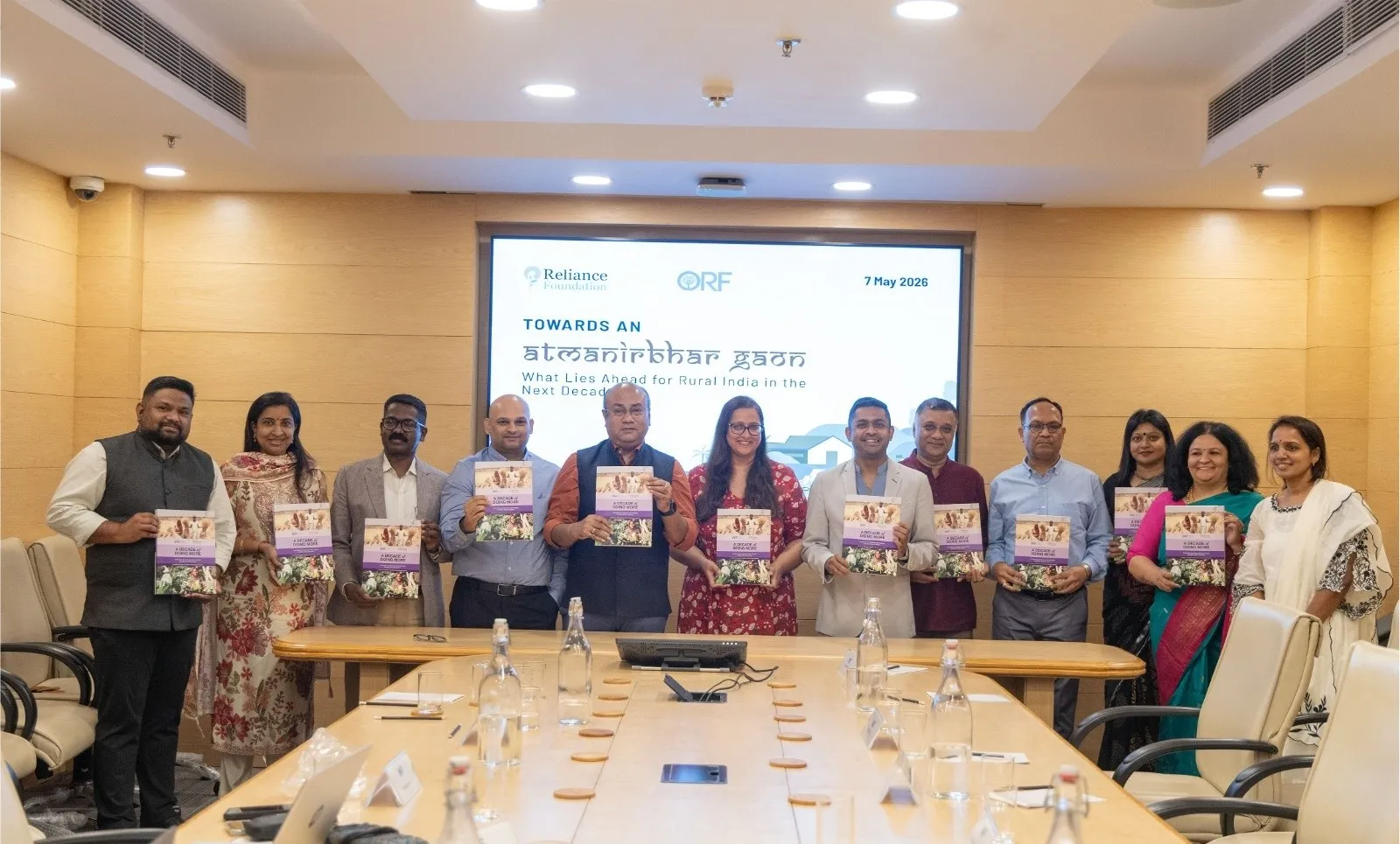
New Delhi, May 11: Reliance Foundation, in collaboration with the Observer Research Foundation (ORF), presented key findings from a decade-long study on rural development in nearly 3,000 villages across four Indian states, highlighting pathways to create “Atmanirbhar Gaon” or self-reliant villages.
The study, which examined long-term interventions across Balangir (Odisha), Mandla (Madhya Pradesh), Adoni (Andhra Pradesh), and Radhanpur (Gujarat), focused on the role of strong local institutions and community participation in driving sustainable rural transformation. Insights were shared during a roundtable discussion titled “Towards an Atmanirbhar Gaon: What Lies Ahead for Rural India in the Next Decade”, attended by policymakers, development experts, and sector leaders.
Dr Soumya Bhowmick (ORF) and Dr Saji M. Kadavil (Reliance Foundation) presented the evidence-based findings, highlighting how integrated, community-led models are contributing to improved livelihoods, stronger governance, and enhanced living standards for over 2,100 households studied across the four clusters.
Nilanjan Ghosh, Vice President, Development Studies, ORF, stressed the importance of context-driven progress. “True progress is rooted in resilience, inclusion, and sustainability. When institutions evolve, communities find agency, and stakeholders work together, we move beyond poverty alleviation towards creating self-reliant ecosystems that are robust, replicable, and built for long-term change,” he said.
Sudarshan Suchi, Chief Development Officer, Reliance Foundation, highlighted community ownership as a cornerstone of rural self-reliance. “An Atmanirbhar Gaon is built when communities find their voice, strengthen local institutions, and co-create solutions. Through collaboration and collective action, Reliance Foundation aims to continuously raise the bar for self-reliance,” he added.
Abhinav Sen, Head of the Rural Transformation Programme at Reliance Foundation, emphasized the role of technology. “Through convergence, community participation, and the power of data and AI, Gram Panchayats can strengthen local governance, helping create resilient, inclusive, and future-ready villages,” he noted.
The roundtable discussion also highlighted strategies to enhance women and youth participation, responsible use of digital technology, livelihood improvements, and environmental protection in rural development planning.
The session concluded with a shared commitment to building stronger village institutions and promoting sustainable, self-reliant rural communities across India.
.webp)