
.webp)
Indian cars will soon communicate to prevent deadly collisions
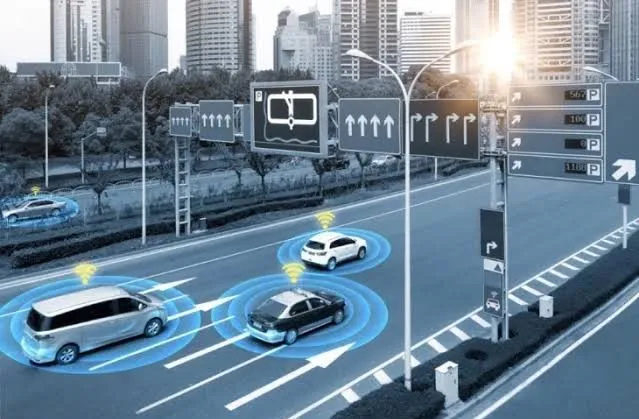
Starting from October 1, 2028, new vehicles in India will share data wirelessly to prevent accidents. Government officials at the Ministry of Road Transport and Highways (MoRTH) drafted a proposal making Vehicle-to-Vehicle (V2V) communication mandatory. This regulation directly amends the Central Motor Vehicles Rules (CMVR) of 1989. Vehicles will routinely exchange real-time details like speed, location, and braking status. India has always battled severe road fatality rates, making early warning technologies crucial for saving lives on increasingly crowded highways.
How vehicles will communicate
Unlike camera systems limited by direct lines of sight, V2V detects hidden dangers further down the road. Drivers will receive immediate alerts for sudden braking several cars ahead, wrong-way traffic, or approaching emergency units. These wireless systems will operate seamlessly on the 5.875 GHz to 5.925 GHz spectrum. The Department of Telecommunications officially exempted this frequency band from licensing on June 10, 2026, clearing the path for wide commercial use.
Phased rollout and strict safety guidelines
Policymakers planned a two-stage process for automakers to adapt. By October 1, 2027, any new Category L (two and three-wheelers), M (passenger vehicles), and N (goods trucks) choosing to install V2V must meet the AIS-230 standard. One year later, on October 1, 2028, these AIS-230 compliant systems become entirely compulsory across all new manufacturing lines.
This specific technical framework requires Cellular Vehicle-to-Everything (C-V2X) technology and factory-fitted On-Board Units. It strictly demands strong cybersecurity protocols and precise GNSS positioning to manage features like Emergency Brake Alerts. The Task Force on Intelligent Transportation Systems originally recommended this standard, and technical committees reviewed it on May 7, 2026. Officials are currently gathering public feedback on the draft for 30 days before officially finalising these lifesaving rules.
.webp)